
The Significance of War Elephants in Ancient Indian Military Campaigns

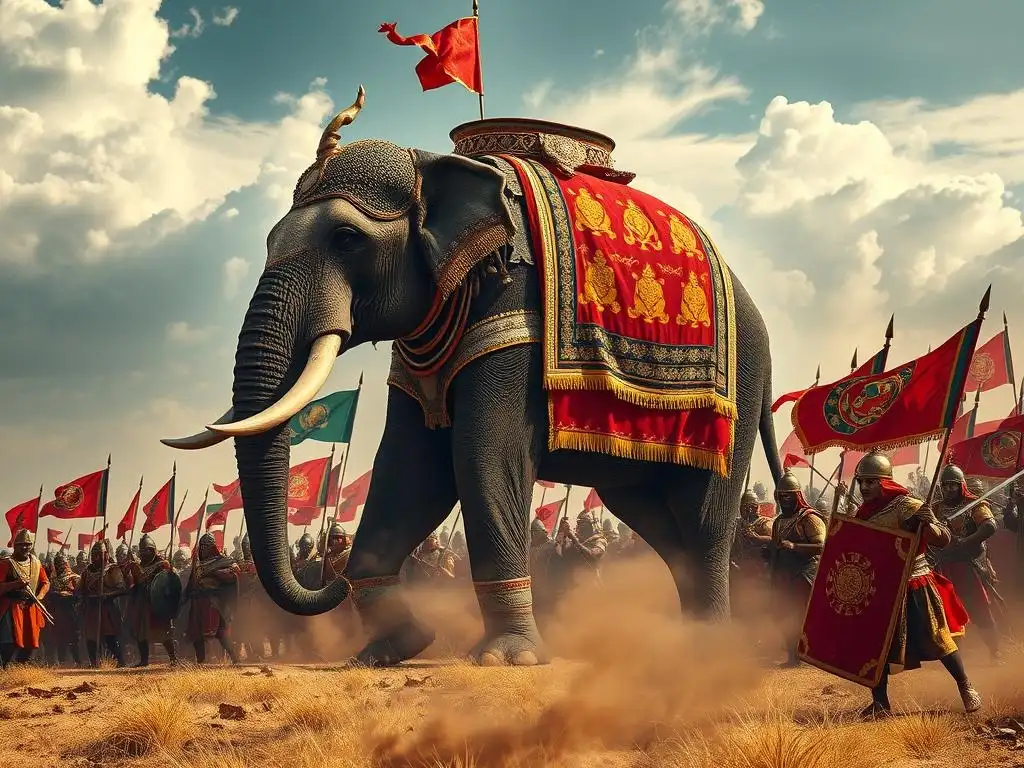
Welcome to Ancient India History, where we delve into the captivating tapestry of India's rich and diverse past. Prepare to uncover the legendary role of war elephants in ancient India, revered not just as symbols of power, but as formidable assets on the battlefield. In our featured article, "The Significance of War Elephants in Ancient Indian Military Campaigns," we invite you to explore how these majestic creatures shaped military strategies and influenced the outcomes of pivotal conflicts.
Discover the fascinating narratives and cultural significance behind these enormous warriors as you journey through the annals of time. Your adventure into the depths of India's ancient military prowess awaits!
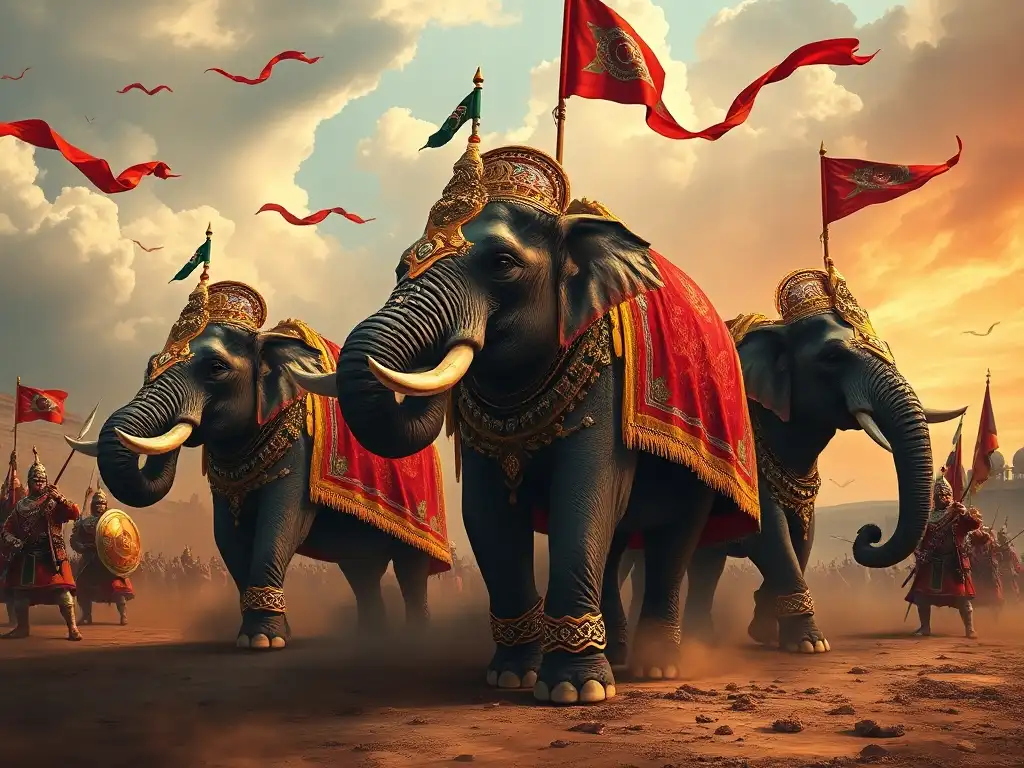
In the annals of ancient Indian military history, few symbols evoke as much intrigue and admiration as war elephants. These magnificent creatures not only served as formidable beasts of burden but also played a pivotal role in shaping the outcomes of numerous battles and conquests.
The use of war elephants in ancient India reflects not only the ingenuity of military strategies but also the deep cultural significance attached to these animals. As we explore the intricate dynamics of war elephants in ancient India, we will uncover how their presence on the battlefield influenced military tactics, instilled psychological fear in enemies, and ultimately contributed to the rise and fall of empires.
Introduction to War Elephants in Ancient India
Definition and Overview of War Elephants
War elephants, or "Hastis" as they were known in Sanskrit, were trained and equipped for combat, serving various functions on the battlefield. These elephants were often adorned with armor and carried soldiers or archers on their backs, enabling them to charge into enemy lines with devastating results. Their size and strength made them effective in breaking through formations and creating chaos among enemy troops. The training and deployment of war elephants were not merely military decisions but also showcased the wealth and power of kings and empires.
Historical Context of Military Use in Ancient India
The historical use of war elephants can be traced back to the Indus Valley Civilization (c. 3300–1300 BCE), where evidence suggests their early domestication. However, it was during the Maurya Empire (c. 322–185 BCE) and later the Gupta Empire (c. 240–550 CE) that war elephants became integral to military campaigns.
Prominent rulers like Chandragupta Maurya and Ashoka the Great utilized elephants not only for their brute force but also for their ability to transport troops and supplies across challenging terrains. The elephants' significant presence in battle formations became a hallmark of Indian warfare, influencing tactics both within and beyond India’s borders.
The Role of War Elephants in Military Strategy
Tactical Advantages of War Elephants in Battles
War elephants provided several tactical advantages during military engagements:
- Breakthrough Capability: Their sheer mass allowed them to charge through infantry lines, causing disarray.
- Psychological Warfare: The sight and sound of charging elephants often instilled fear in opposing forces, leading to decreased morale.
- Mobile Command Centers: Commanders could direct troops from atop elephants, maintaining a vantage point over the battlefield.
The strategic deployment of war elephants often turned the tide in crucial battles, making them a sought-after asset in ancient Indian military planning.
Psychological Impact on Opponents During Warfare
The psychological impact of war elephants was profound. The thunderous roar, combined with the sight of these colossal creatures, was enough to intimidate even seasoned warriors. For instance, during the Battle of Ganges, the sight of war elephants caused panic among enemy ranks, leading to significant victories for Indian forces. The fear induced by these majestic beasts not only disrupted enemy formations but also played a crucial role in shaping the narratives of warfare in ancient India.
The significance of war elephants in ancient Indian military campaigns transcends their physical presence on the battlefield; they symbolize the intersection of culture, strategy, and power that defined ancient Indian warfare. Understanding their role provides valuable insights into the military history of the region, illustrating how these magnificent creatures contributed to the legacy of ancient Indian civilizations.
Historical Examples of War Elephants in Ancient Indian Campaigns
War elephants played a pivotal role in numerous military campaigns throughout ancient Indian history. These majestic creatures were not merely used for brute strength; they symbolized power and were integral to the strategy employed by various kingdoms. One of the earliest recorded uses of war elephants can be traced back to the Indus Valley Civilization, where they were likely utilized in ceremonial and possibly military contexts.
The Maurya Empire further exemplified the strategic importance of war elephants, particularly during the reign of Chandragupta Maurya and his grandson Ashoka the Great. Their armies included significant numbers of elephants, which were instrumental in providing a psychological advantage on the battlefield. The Kalinga War is a prime example where war elephants were extensively used, showcasing their effectiveness in breaking enemy lines and causing chaos among opposing troops.
Additionally, during the period of the Gupta Empire, war elephants continued to be a critical aspect of military engagements. Historical texts document their use in battles against foreign invaders and rival kingdoms, demonstrating their enduring significance across centuries.
Notable Battles Featuring War Elephants
Several battles stand out in history for their impactful use of war elephants.
- Battle of the Hydaspes (326 BCE): Fought between Alexander the Great and King Porus, this battle featured a significant number of war elephants, which Porus utilized to challenge Alexander's forces. Although ultimately defeated, Porus's strategy highlighted the tactical advantages elephants could provide.
- Battle of Kalinga (261 BCE): This battle marked a turning point for Emperor Ashoka, who employed war elephants to great effect. The sheer size and force of the elephants were pivotal in breaking the Kalingan defenses.
- Battle of the Ganges (c. 400 CE): Under the leadership of the Gupta Empire, this battle showcased the use of war elephants against rival forces, emphasizing their role in establishing dominance during territorial expansions.
These battles illustrate not only the military utility of war elephants but also their symbolic representation of royal power and authority throughout ancient India.
Case Study: The Use of War Elephants by Chandragupta Maurya
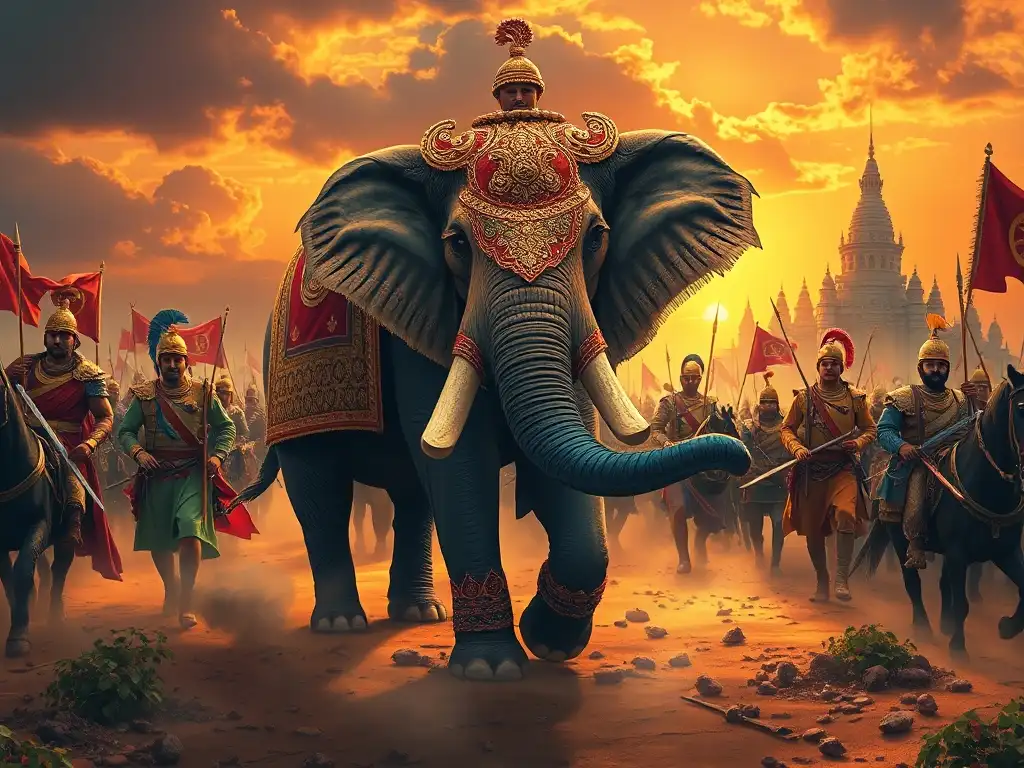
Chandragupta Maurya's military campaigns during the formation of the Maurya Empire are notable for their strategic incorporation of war elephants. He recognized the elephants' psychological impact on the battlefield, employing them as a means to intimidate enemy forces and break their formations.
Chandragupta's army included a contingent of war elephants that were trained to charge into enemy ranks, creating disruption and panic. Historical records suggest that he managed to maintain a formidable number of elephants, which not only served as war machines but also as symbols of his sovereignty.
The success of his campaigns can be attributed to the effective use of these elephants, particularly during his confrontations with the Nanda Dynasty. The captures of key territories were often facilitated by the decisive action of war elephants, which allowed Chandragupta to establish one of the first great Indian empires.
Training and Management of War Elephants
Training and management of war elephants were crucial for their effectiveness in military campaigns. The process involved meticulous attention to selection, breeding, and training techniques that ensured these animals were battle-ready.
Selection and Breeding of Elephants for Warfare
The selection of war elephants began with identifying the right species, primarily the Asian elephant, known for its strength and intelligence. Breeding programs were established to produce elephants with desirable traits such as size, temperament, and endurance.
- Criteria for Selection:
- Physical Strength: Elephants needed to be robust to endure the rigors of battle.
- Temperament: A calm disposition was essential to prevent panic during chaotic battle scenes.
- Age and Size: Younger elephants were often trained to ensure they could be molded effectively for warfare.
These criteria were critical in ensuring that only the best elephants were chosen for military service, leading to a more effective and reliable cavalry unit.
Training Techniques for Battle-Ready Elephants
Training techniques for war elephants were comprehensive and often began at a young age. Mahouts (elephant trainers) employed various methods to condition the elephants for battle scenarios.
- Desensitization: Elephants were gradually exposed to loud noises, weapons, and the general chaos of battle to prevent fear responses.
- Commands and Control: Training involved teaching elephants specific commands to execute maneuvers on the battlefield, such as charging or retreating.
- Simulated Combat: Elephants were trained in mock battles, allowing them to learn how to behave in realistic combat conditions without the immediate threat of enemy forces.
These techniques ensured that war elephants were not only physically capable but also mentally prepared for the challenges of warfare, contributing significantly to their effectiveness in ancient Indian military campaigns.
Cultural Significance of War Elephants in Ancient Indian Society
War elephants played a pivotal role not only in military strategy but also in the cultural fabric of ancient Indian society. These magnificent creatures were symbols of power, strength, and royal authority. The presence of war elephants in the armies of Indian kings signified their wealth and military might. The use of elephants in warfare was deeply intertwined with the socio-political dynamics of the time, as they were often used to lead charges into battle, instilling fear in the enemy ranks.
Moreover, elephants were integral to royal ceremonies and rituals, representing auspiciousness and grandeur. They adorned the processions of kings and were often featured in religious ceremonies, symbolizing the divine power and protection bestowed upon the rulers. This cultural reverence for elephants extended beyond their military utility; they were also regarded as sacred animals, often associated with various deities in Hinduism and Buddhism.
Symbolism of War Elephants in Indian Culture
In Indian culture, war elephants embodied not just brute force but also wisdom and loyalty. They were seen as guardians of the land and protectors of the kingdom. The elephant-headed deity Ganesha, revered as the remover of obstacles, further solidified the symbolic connection between elephants and auspiciousness in Indian society.
War elephants were often depicted in inscriptions and coins, signifying their importance in the royal iconography. The sight of an elephant charging into battle was not merely a display of military might but also a powerful symbol of the king’s divine right to rule. This association was vital in reinforcing the legitimacy of a ruler's authority and the stability of their reign.
Representation in Art and Literature of Ancient India
The significance of war elephants extended into the artistic and literary realms of ancient India. They were prominently featured in sculptures, paintings, and temple carvings, often depicted alongside kings in heroic poses. This artistic representation served to immortalize the valor associated with both the elephants and their riders.
Literary texts from ancient India, such as the Mahabharata and Ramayana, also illustrate the strategic use of elephants in warfare. These epics often describe grand battles where elephants played crucial roles, showcasing their importance in both military strategy and cultural narratives. The detailed descriptions of elephants in these texts reflect their multifaceted role in society, emphasizing their status as symbols of strength and loyalty.
Comparison with Other Civilizations' Use of War Elephants
The use of war elephants was not unique to ancient India; several other civilizations recognized their strategic advantages in battle. A comparative analysis highlights the similarities and differences in the deployment of these formidable animals across various cultures.
War Elephants in Ancient Persia
In ancient Persia, war elephants were utilized primarily during the Achaemenid Empire. The Persians adopted the use of elephants from their encounters with Indian armies, recognizing their effectiveness in instilling fear among adversaries. Persian war elephants were often equipped with armor and used to break enemy lines, much like their Indian counterparts.
However, the Persian approach to training and employing elephants differed. Persian generals often relied on their cavalry to complement the elephants, creating a combined arms approach to warfare. This strategy showcased the flexibility of using elephants within a broader military framework, emphasizing their impact on the battlefield while maintaining the importance of other military units.
War Elephants in Hellenistic Warfare
The use of war elephants became particularly prominent during the Hellenistic period, especially following Alexander the Great's campaigns in India. The Greeks were introduced to war elephants through their encounters with Indian armies and quickly recognized their potential. Hellenistic rulers, such as the Seleucids and Ptolemies, incorporated elephants into their military forces, adapting their strategies to include these powerful animals.
In contrast to Indian tactics, Hellenistic generals often employed elephants in a more supportive role, utilizing them to protect flanks and serve as a mobile reserve force. The Greeks also developed specialized tactics for countering enemy elephants, highlighting an evolving understanding of their strengths and weaknesses in warfare.
The strategic use of war elephants transcended cultural boundaries, with each civilization adapting their employment based on their unique military needs and contexts. The shared appreciation for these majestic animals in warfare underscores their significance across different cultures in ancient history.
The Decline of War Elephants in Military Use
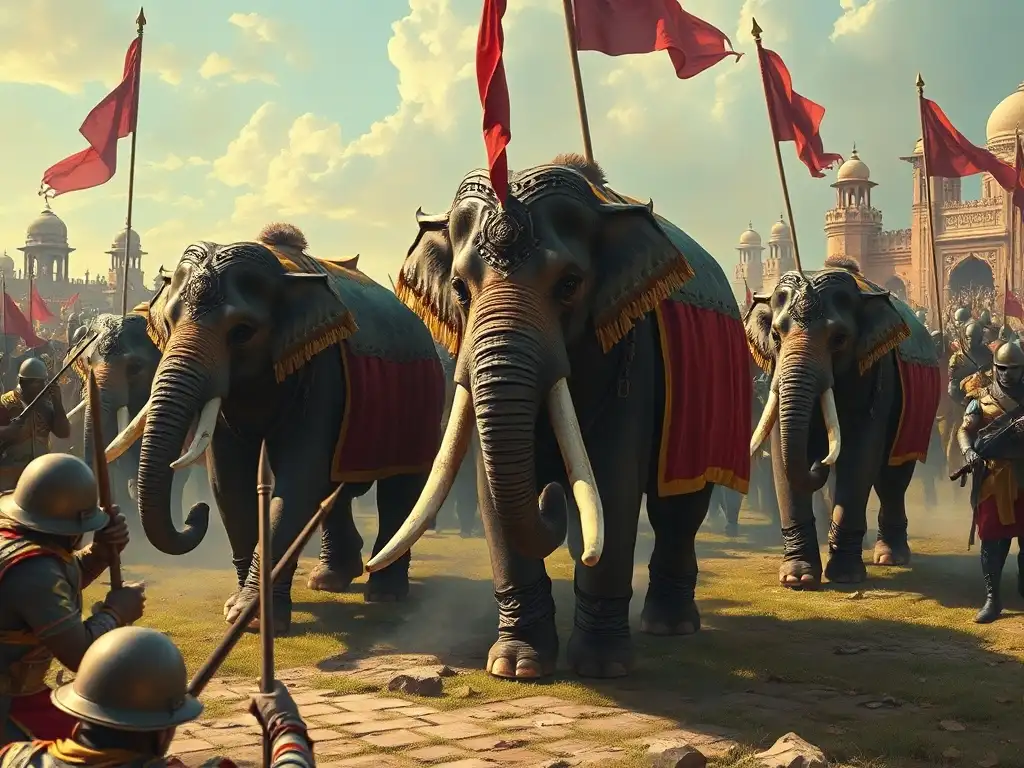
The use of war elephants in ancient Indian military campaigns, once a symbol of power and a strategic advantage, began to decline significantly by the medieval period. This decline can be attributed to a combination of changing warfare tactics, economic factors, and the evolution of military technology. As armies adapted to new challenges, the role of elephants diminished, leading to their eventual obsolescence in military contexts.
Factors Leading to the Reduction of War Elephant Usage
Several key factors contributed to the waning of war elephants in military engagements:
- Changing Warfare Tactics: As warfare evolved, strategies shifted towards more mobile and flexible tactics that did not rely on heavy infantry formations. Cavalry units became more prominent, allowing for faster maneuvers and engagements.
- Vulnerability to New Weapons: The development of more advanced weaponry, such as crossbows and firearms, posed a significant threat to war elephants. Once seen as invulnerable, elephants could now be easily incapacitated by ranged attacks, diminishing their effectiveness on the battlefield.
- Logistical Challenges: Maintaining and transporting elephants required substantial resources and infrastructure. As military campaigns became more extensive and complex, the logistical burden of supporting elephants in the field became increasingly untenable.
- Economic Considerations: The cost of training, feeding, and housing war elephants was considerable. As states faced financial constraints, particularly during prolonged conflicts, the investment in elephants became less justifiable compared to other military assets.
Transition to Modern Military Technologies
The transition to modern military technologies marked a watershed moment in military history, further contributing to the decline of war elephants. Key developments included:
- Artillery and Gunpowder Weapons: The introduction of cannons and gunpowder-based weapons revolutionized warfare. These technologies allowed armies to breach fortifications and engage enemies from a distance, reducing the reliance on traditional melee combat where elephants excelled.
- Professional Armies and Tactics: The rise of professional standing armies shifted military focus from traditional formations to more diverse units, including specialized infantry and cavalry. This transformation led to a strategic environment where elephants were no longer a central component of military planning.
Conclusion: Legacy of War Elephants in Ancient Indian Military History
Despite their decline, war elephants left a profound legacy on the military history of ancient India. Their use had significant implications for military strategies and practices that influenced subsequent generations.
Lasting Impact on Military Strategies
The strategies developed around the use of war elephants laid foundational principles for military organization and tactics in ancient India. Commanders learned valuable lessons about:
- Psychological Warfare: The sheer size and presence of war elephants instilled fear in enemy troops, demonstrating the importance of morale in warfare.
- Integration of Combined Arms: The effective use of elephants often required coordination with infantry and cavalry, promoting early concepts of combined arms operations that are still relevant today.
- Logistical Planning: The complexities involved in managing war elephants led to advancements in logistical planning, a critical component of successful military campaigns.
Influence on Subsequent Generations and Military Practices
The legacy of war elephants endured well beyond their practical military application:
- Cultural Symbolism: War elephants became symbols of power and prestige, influencing art, literature, and the cultural identity of various Indian kingdoms.
- Military Manuals and Treatises: Historical texts, such as the Arthashastra, discussed the use of elephants in warfare, ensuring that the knowledge and tactics associated with their use were preserved for future generations.
- Enduring Influence on Warfare: The principles and tactics developed during the era of war elephants continued to inform military practices, emphasizing the importance of adaptability and innovation in the face of changing technologies and strategies.
While war elephants may have fallen out of favor in military campaigns, their impact on ancient Indian military history remains significant, shaping both the strategies employed by armies and the cultural narrative surrounding warfare in the region.
References and Further Reading
To gain a deeper understanding of the role and significance of war elephants in ancient Indian military campaigns, a variety of resources are available. These resources include scholarly books and research articles that delve into the historical, cultural, and military aspects of these magnificent animals. Below is a curated list of recommended readings that will enrich your knowledge about war elephants in ancient India.
Recommended Books on War Elephants in Ancient India
- "War Elephants" by John M. K. M. C. De P. K. W. Ahluwalia
- This comprehensive work explores the historical usage of war elephants in various cultures, with a significant focus on ancient India. The author examines how these majestic creatures were integrated into military strategies and their impact on warfare outcomes.
- "The Elephant in Indian History" by R. S. Sharma
- This book provides a detailed exploration of the role of elephants throughout Indian history, particularly emphasizing their military significance. Sharma's analysis offers insights into the social and political implications of using elephants in warfare.
- "Warfare in Ancient India" by S. N. B. W. K. S. Pandey
- In this book, Pandey discusses various aspects of military strategy in ancient India, including the pivotal role played by war elephants. The text includes illustrations and historical accounts that highlight the importance of these animals in battle formations.
- "The Historical Significance of War Elephants in the Indian Subcontinent" by M. S. Bhattacharya
- Bhattacharya's work offers a scholarly approach to understanding how war elephants influenced the dynamics of power and warfare in ancient India. This book is particularly useful for those interested in the political strategies involving elephants.
Academic Articles and Research on Military History of Ancient India
-
"The Role of War Elephants in Ancient Indian Battles"
This article examines specific battles in which war elephants played a decisive role, analyzing their effectiveness and strategic deployment. It provides case studies from various ancient Indian kingdoms.
-
"Elephants in Warfare: A Study of Military Technology in Ancient India"
This research paper discusses the technological aspects of using elephants in warfare, including the training and management of these animals. It also delves into how elephants were equipped for battle, enhancing their utility in military campaigns.
-
"Cultural Symbolism of War Elephants in Ancient Indian Society"
This academic piece explores the cultural significance of elephants beyond their military use, analyzing their representation in art, literature, and religious practices throughout ancient India.
-
"War Elephants and Their Strategic Impact on Ancient Indian Empires"
This study provides an overview of how different empires, such as the Maurya and Gupta, utilized war elephants and how these practices affected their military successes and failures.
These resources collectively present a thorough examination of the multifaceted role that war elephants played in ancient Indian military campaigns, providing valuable insights for historians, researchers, and enthusiasts of military history.
- Introduction to War Elephants in Ancient India
- The Role of War Elephants in Military Strategy
- Historical Examples of War Elephants in Ancient Indian Campaigns
- Notable Battles Featuring War Elephants
- Case Study: The Use of War Elephants by Chandragupta Maurya
- Training and Management of War Elephants
- Cultural Significance of War Elephants in Ancient Indian Society
- Comparison with Other Civilizations' Use of War Elephants
- The Decline of War Elephants in Military Use
- Conclusion: Legacy of War Elephants in Ancient Indian Military History
- References and Further Reading
- What role did war elephants play in ancient Indian military campaigns?
- How were war elephants trained for military use?
- What were the advantages of using war elephants compared to traditional cavalry?
- Which ancient Indian civilizations are known for their use of war elephants?
- How did the use of war elephants evolve over time in ancient India?
Frequently Asked Questions
What role did war elephants play in ancient Indian military campaigns?
War elephants served as powerful assets on the battlefield, providing mobility and intimidation against enemy forces. Their size and strength allowed them to break enemy lines and create chaos among troops.
How were war elephants trained for military use?
Training involved a rigorous process where elephants were taught to respond to commands and endure the stress of battle. Handlers, known as mahouts, played a crucial role in their training and care.
What were the advantages of using war elephants compared to traditional cavalry?
War elephants offered significant advantages, including greater strength, the ability to carry heavy weaponry, and the capability to trample infantry. Their presence could demoralize opposing troops, creating a psychological edge.
Which ancient Indian civilizations are known for their use of war elephants?
The Maurya and Gupta Empires are particularly noted for their extensive use of war elephants in military campaigns, showcasing their importance in ancient Indian warfare.
How did the use of war elephants evolve over time in ancient India?
Initially used for transport and ceremonial purposes, their role expanded to include combat as military tactics evolved. Over time, specialized tactics and formations were developed to maximize their effectiveness in battles.
Final Reflection: The Enduring Legacy of War Elephants in Ancient India
The significance of war elephants in ancient Indian military campaigns resonates profoundly in today's context, highlighting the intricate relationship between culture and warfare. As we explore the strategic and symbolic roles these majestic creatures played, we recognize that their impact transcends mere historical interest; it serves as a reminder of how innovation and adaptation in warfare can shape civilizations. The legacy of war elephants is not just a relic of the past but a testament to the ingenuity of ancient military strategies that continue to influence modern tactics.
The cultural and social landscape of ancient India was indelibly marked by the presence of war elephants, which symbolized power, prestige, and the might of empires. Their use in battle not only altered the dynamics of warfare but also fostered a rich tapestry of stories and traditions that continue to inspire awe. The elephant is a symbol of strength and wisdom, embodying the spirit of the land it roams.
This observation underscores the ongoing influence of war elephants, as they remain emblematic of the resilience and strategic prowess that defined ancient Indian military campaigns.
As we reflect on the lessons from the past, let us consider how the themes of strength, strategy, and cultural significance embodied by war elephants can inspire us today. I invite you to contemplate the ways in which you can harness the lessons of history in your own life, whether through leadership, resilience, or the pursuit of knowledge. Just as war elephants once charged into battle, let us charge forward with the wisdom of our ancestors, embracing the complexities of our own journeys and the legacies we wish to leave behind.
Unleash the Power of Knowledge: Explore the Legacy of War Elephants!
Thank you for diving into the fascinating world of ancient military strategies and the significant role war elephants played in shaping history. You've uncovered the remarkable impact these majestic creatures had on battles and their enduring legacy in various cultures. Now, it's time to take your newfound knowledge to the next level!
Here are a few ways you can further engage with this captivating topic:
- Dive deeper into history by exploring additional articles on ancient military tactics available on our website.
- Share your thoughts and insights about war elephants in the comments below—what aspects did you find most intriguing?
- Connect with fellow history enthusiasts by following us on social media and participating in discussions about recent discoveries in ancient history.
What aspect of war elephants fascinates you the most—was it their influence on battle tactics or their symbolism in various cultures? Your insights can ignite an amazing conversation!