
The Role of Faith and Belief Systems in Ancient Marriages

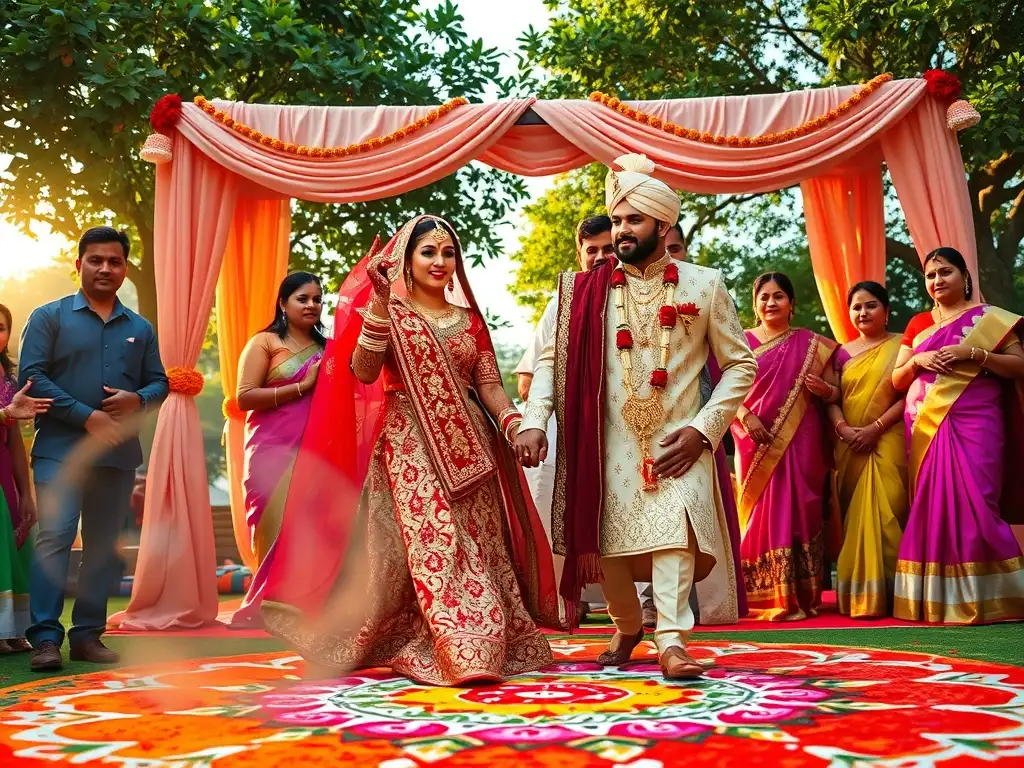
Welcome to Ancient India History, where we embark on a captivating journey through the rich tapestry of ancient Indian civilizations. Discover the intricate marriage customs that shaped societies from the majestic Indus Valley to the illustrious Gupta Empire. In our featured article, The Role of Faith and Belief Systems in Ancient Marriages, we delve into how spirituality and cultural beliefs intertwined to create unique matrimonial traditions.
Prepare to be intrigued as we unveil the secrets of ancient love and commitment, inviting you to explore the fascinating connections between faith and daily life in a world long past. Your adventure into the depths of history begins here!
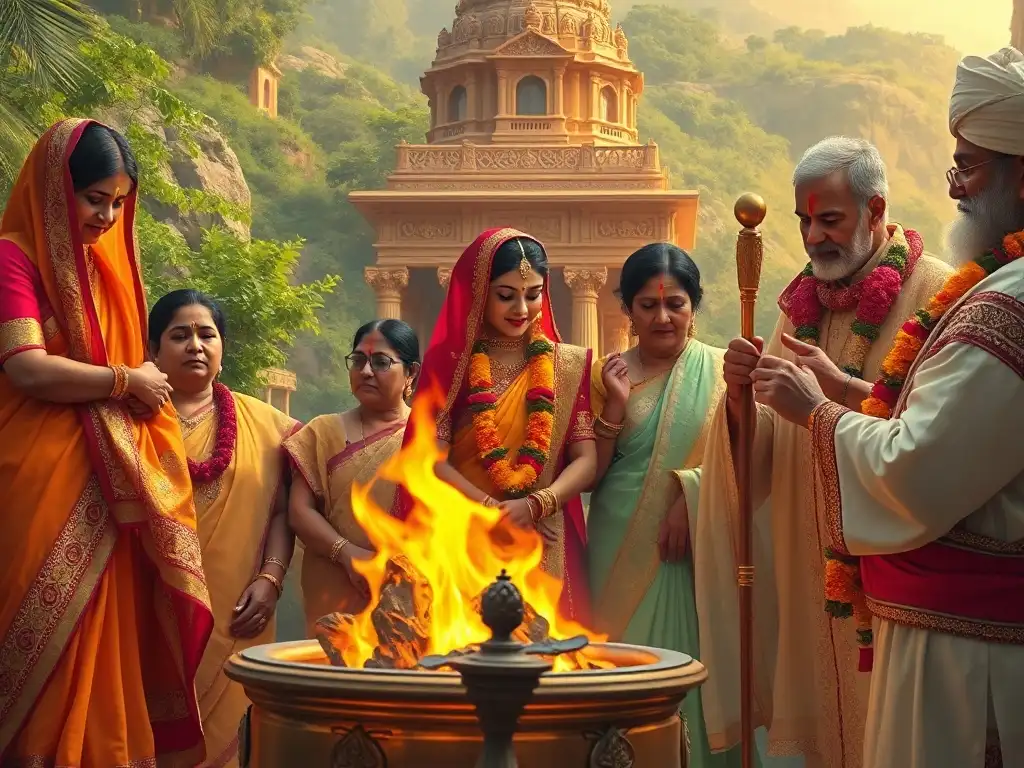
Introduction to Ancient Indian Marriage Customs
The customs surrounding marriage in ancient India represent a fascinating tapestry woven from threads of faith, belief systems, and cultural practices that defined the social fabric of the time. Ancient Indian marriage customs were not merely personal unions but were deeply embedded in the spiritual and societal norms that governed daily life.
From the sacred rites of the Indus Valley Civilization to the elaborate ceremonies during the Gupta Empire, marriage was seen as a pivotal institution that not only united individuals but also families and communities. As we explore the role of faith and belief systems in these ancient marriages, it becomes evident how integral these elements were in shaping the customs that still resonate in many Indian societies today.
The Influence of Religion on Ancient Indian Marriage Practices
Major Religions and Their Impact on Marriage Customs
In ancient India, various religions significantly influenced marriage customs, each contributing unique practices and rituals that reflected their theological and cultural values. The three major religions—Hinduism, Buddhism, and Jainism—each had distinct approaches to marriage:
- Hinduism: Marriage is considered a sacred duty (Dharma) and is often viewed as a sacrament (Samskara). The practice of Swayamvara, where a bride chooses her groom from a group of suitors, and the importance of Kanyadaan (the giving away of the bride) are key elements in Hindu marriage customs.
- Buddhism: While Buddhism does not emphasize marriage as a religious sacrament, it promotes values of mutual respect and compassion within marital relationships. Marriages among Buddhists often incorporate rituals that highlight these values, such as chanting and blessings from monks.
- Jainism: Jain marriages are heavily influenced by their principles of non-violence (Ahimsa) and truth (Satya). The marriage customs often involve rituals that reflect these values, such as the Mangalya Daan (the tying of the sacred thread) which symbolizes the union of two souls in harmony.
Sacred Texts and Their Role in Shaping Marriage Traditions
The sacred texts of ancient India played a crucial role in defining and codifying marriage customs. Key scriptures such as the Manusmriti, Mahabharata, and Ramayana not only outline the norms and expectations surrounding marriage but also provide moral and ethical guidelines for couples.
- Manusmriti: This ancient legal text discusses various forms of marriage, including Brahma, Daiva, and Gandharva, and establishes the framework for marital roles and responsibilities within Hindu society.
- Mahabharata and Ramayana: These epic narratives illustrate the complexities of love, duty, and familial obligations in the context of marriage. They highlight the significance of loyalty and sacrifice, setting ideal examples for future generations.
The interplay of faith and belief systems in ancient Indian marriage customs reveals a profound understanding of the institution's role in society. As we delve deeper into the specific practices and their evolution over time, we uncover the enduring legacy of these traditions in contemporary Indian culture.
Key Belief Systems Guiding Ancient Indian Marriages
In ancient India, marriage was not merely a social contract but a sacred institution deeply embedded in the cultural and religious fabric of society. The belief systems that influenced marriage customs ranged from religious doctrines to philosophical ideas. These systems laid the foundation for marital practices and dictated the roles and responsibilities of individuals within the marriage. Central to these beliefs were concepts such as Dharma, Karma, and various rituals that were believed to sanctify the union.
Marriages were seen as a means of fulfilling one's Dharma, which included not just individual duties but also familial and social obligations. These customs were often supported by spiritual beliefs that linked marital success to divine favor and societal harmony. As such, understanding these belief systems is crucial for grasping the complexities of ancient Indian marriage customs.
Dharma and its Significance in Marriage
Dharma, a fundamental concept in Indian philosophy, refers to the moral and ethical duties that individuals are expected to follow. In the context of marriage, Dharma plays a pivotal role in defining the responsibilities of both partners. It emphasizes the importance of fidelity, respect, and mutual support within the marriage.
Marriage was often viewed as a means to fulfill one's Dharma, not just towards one’s spouse but also towards the family and society at large. This included responsibilities such as raising children, maintaining family honor, and contributing to the social fabric. The adherence to Dharma ensured that marriages were not just personal unions but also vital components of societal stability.
Moreover, the concept of Dharma influenced the choice of a life partner. Families considered various factors, such as social status, education, and family background, to ensure that prospective couples could honor their Dharma effectively. Thus, the significance of Dharma in marriage extends beyond individual relationships, impacting societal norms and values.
Karma and the Concept of Marital Relationships
Karma, the principle of cause and effect, also played a significant role in shaping marital relationships in ancient India. The belief that actions in past lives could influence one's current circumstances created a framework for understanding marital compatibility and challenges.
In the context of marriage, individuals were often encouraged to seek partners with whom they shared good Karmic ties, believing that such unions would lead to a harmonious relationship. The actions of the couple, both positive and negative, were thought to have repercussions not just in this life but in future incarnations as well. This belief underscored the importance of maintaining ethical behavior and mutual respect within the marriage.
Furthermore, Karma shaped the societal views on divorce and separation. In cases where a marriage was deemed unsuccessful, it was often interpreted as a result of negative Karmic influences rather than personal failure. This perspective added a layer of spiritual understanding to the challenges faced in marital relationships.
Rituals and Their Spiritual Importance in Weddings
Rituals have always held a central place in ancient Indian marriages, serving as a means to invoke divine blessings and sanctify the union. These rituals were often laden with symbolism, representing the couple's commitment to one another and their adherence to societal norms.
Key rituals, such as Saptapadi (the seven steps), where the couple takes seven vows together, signify the spiritual and physical union of two individuals. Each step represents a promise, from providing sustenance to supporting each other in spiritual growth.
The spiritual importance of these rituals cannot be overstated; they were believed to ensure the couple's prosperity, happiness, and fulfillment of their Dharma. Families invested significant effort in planning these ceremonies, as they were seen as vital for invoking blessings from deities and ancestors. Thus, rituals served not only as ceremonial acts but also as spiritual affirmations of the couple's commitment.
The Role of Astrology in Ancient Indian Marriages
Astrology was an integral part of ancient Indian culture, influencing various aspects of life, including marriage. The belief that celestial bodies could affect human lives led to the practice of consulting astrologers to determine marital compatibility.
Astrological considerations were often paramount, with families seeking favorable planetary alignments before proceeding with a marriage proposal. This reliance on astrology reflects the broader belief that the cosmos plays a crucial role in individual destinies, particularly in the sacred institution of marriage.
Understanding the Influence of Nakshatras on Marriage Choices
Nakshatras, the lunar constellations in Hindu astrology, were significant in determining personality traits and compatibility between prospective spouses. Each Nakshatra was believed to impart specific characteristics to individuals born under it, influencing their behavior, preferences, and compatibility with others.
Families often consulted astrological charts to assess the Nakshatras of both partners, ensuring they were aligned favorably. This practice was rooted in the belief that harmonious Nakshatras would lead to a successful marital union, while conflicting ones could result in discord and dissatisfaction.
The significance of Nakshatras extended beyond compatibility; they were also linked to auspicious timings for marriage ceremonies. Choosing the right Nakshatra for a wedding date was believed to enhance the couple's prosperity and happiness, further demonstrating the profound influence of astrology on ancient Indian marriage customs.
Matching Horoscopes: A Custom Rooted in Belief
The practice of matching horoscopes, known as Kundali Milan, was a critical step in the marriage process in ancient India. This custom involved comparing the astrological charts of the prospective bride and groom to assess their compatibility based on planetary positions and Nakshatras.
The matching of horoscopes was not merely a ritual but a deeply held belief that a harmonious astrological alignment could predict the success of the marriage. Specific parameters, such as Guna Milan (a scoring system based on different qualities), were evaluated to determine compatibility.
If the horoscopes indicated a strong match, families would proceed with the engagement and wedding preparations. Conversely, unfavorable matches could lead to the rejection of proposals, underscoring the importance of astrology in shaping marital destinies. This practice highlights how intertwined faith and belief systems were with the social customs surrounding marriage in ancient India.
Marriage Customs Across Different Regions of Ancient India
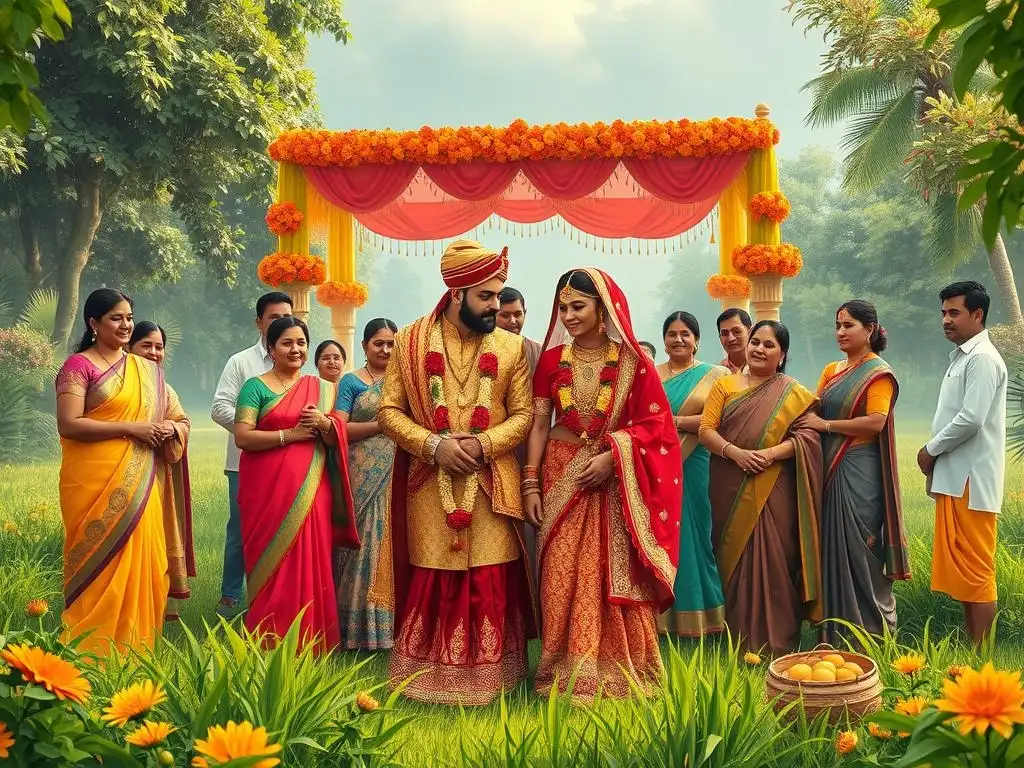
Ancient Indian marriage customs were deeply intertwined with the diverse faith and belief systems that prevailed across various regions. Each area showcased unique traditions shaped by local cultures, religions, and societal norms. These customs often reflected the spiritual beliefs and rituals that families adhered to, demonstrating how integral faith was to the institution of marriage.
The regional diversity in marriage customs can be observed through various practices, rituals, and ceremonial events that were specific to each community. For instance, the auspiciousness of certain days for weddings, the types of rituals performed, and the significance of specific symbols used during ceremonies varied significantly across North, South, East, and West India. This rich tapestry of customs not only highlights the importance of marriage in ancient Indian society but also emphasizes the role that faith played in these unions, providing a sense of continuity and identity through generations.
North Indian Marriage Traditions and Religious Influences
In North India, marriage customs were heavily influenced by Hindu traditions, with a focus on rituals that emphasized the religious sanctity of the union. The Kanyadaan ceremony, where the bride's father gives her away to the groom, is one of the most significant rituals, symbolizing the transition of responsibility from one family to another.
Key religious texts, such as the Vedas and Smritis, dictated many practices, emphasizing the importance of dharma (duty) within marriage. Auspicious dates for weddings, known as muhurats, were meticulously calculated by priests to ensure divine blessings. Rituals such as Saptapadi, where the couple takes seven steps together, signify their commitment to each other and their shared responsibilities.
The influence of local deities and community-specific beliefs also shaped these customs. For example, in regions like Punjab, the influence of Sikhism introduced unique practices such as Anand Karaj, which focuses on the spiritual aspects of marriage. Overall, North Indian marriage traditions reflect a blend of religious influences and local customs, creating a rich cultural heritage.
South Indian Marriage Practices and Local Beliefs
In contrast, South Indian marriage practices are marked by distinct rituals and ceremonies that differ from their northern counterparts. Hinduism remains predominant, but local customs and deities play a crucial role in shaping marriage traditions.
One of the most notable ceremonies is the Mangalsutra tying, where the groom ties a sacred thread around the bride's neck, symbolizing marital commitment. The Kashi Yatra, where the groom pretends to leave for Kashi to renounce worldly life, signifies his acceptance of marital responsibilities after the bride's intervention.
Religious rituals such as Puja (worship) of household deities and ancestors are integral to South Indian weddings, highlighting the importance of familial and spiritual blessings. Additionally, the influence of Dravidian culture introduces unique dance forms and music that accompany marriage celebrations, enriching the overall experience. The emphasis on astrology in determining marital compatibility further underscores the significance of belief systems in these customs.
East and West Indian Marriage Customs: A Comparative Analysis
East and West Indian marriage customs exhibit fascinating contrasts and similarities shaped by regional beliefs and cultural practices. In Eastern India, particularly in Bengal, marriages are characterized by vibrant celebrations with elaborate rituals, such as Bashor (the groom's procession) and Sindoor Daan (the application of vermilion). Here, the influence of Buddhism and local traditions has also played a role in defining marriage customs.
Conversely, Western India, especially in Gujarat and Maharashtra, showcases a blend of Hindu and Jain traditions. The Grihapravesh (housewarming ceremony) after the wedding signifies the bride's arrival into her new home, emphasizing familial connections. The significance of community feasts and the role of local deities in wedding rituals further illustrate how regional beliefs shape marriage customs.
Despite these differences, both regions share common elements such as the importance of family approval, the role of rituals in ensuring marital harmony, and the incorporation of religious practices that invoke blessings from higher powers. This comparative analysis highlights the rich diversity of ancient Indian marriage customs while underscoring the universal themes of faith and family throughout the subcontinent.
The interplay between faith and social norms in ancient Indian marriages was crucial in shaping the institution itself. Marriage was not merely a personal commitment but a societal obligation that echoed the values and beliefs of the community. The rituals and ceremonies surrounding marriage were often steeped in religious significance, reinforcing the idea that unions should be sanctified by divine powers.
Faith served as a guiding principle in defining marital roles, responsibilities, and expectations. The adherence to religious texts and practices ensured that marriages were conducted with the utmost reverence, often involving the blessings of priests and elders. This intertwining of faith and social norms fostered a sense of belonging and continuity within families and communities, as individuals were expected to uphold traditions that had been passed down through generations.
Caste System and Its Impact on Marital Choices
One of the most significant influences on marital choices in ancient Indian society was the caste system. This hierarchical structure dictated not only social interactions but also marriage prospects, leading to practices such as endogamy, where individuals married within their caste. The belief that marriage should preserve caste purity reinforced these norms, often prioritizing social standing over personal choice.
Religious texts and societal expectations further legitimized the caste system's role in marriage, creating a rigid framework that individuals were expected to navigate. Families often sought alliances that would enhance their social status or maintain their caste identity, leading to a system where love marriages were often viewed with skepticism. As a result, arranged marriages became the norm, deeply rooted in the cultural fabric of ancient Indian society.
Arranged Marriages vs. Love Marriages in Ancient Indian Society
The contrast between arranged marriages and love marriages in ancient Indian society highlights the complexities of personal choice versus societal expectations. Arranged marriages were predominant, often orchestrated by families based on social standing, caste, and economic considerations. This practice was widely accepted, as it aligned with the values of duty and familial obligation that permeated ancient Indian culture.
However, love marriages did exist, albeit less frequently and often facing societal disapproval. These unions were typically characterized by deeper emotional bonds between partners and sometimes challenged the established norms of caste and family expectations. Stories from historical texts and folklore often romanticized love marriages, depicting them as defiant against societal constraints.
While arranged marriages were the prevailing custom, the existence of love marriages reflects the nuanced interplay of personal desires within the confines of a rigid social structure, illustrating the evolving nature of ancient Indian marriage customs.
Conclusion
The intricate tapestry of ancient Indian marriage customs is deeply woven with threads of faith and belief systems. From the Vedic traditions that sanctified marriages with religious rites to the regional variations influenced by local deities, the significance of spirituality in matrimonial practices remains evident. The understanding of marital relationships through the lens of dharma, karma, and divine intervention not only shaped the customs but also ensured that these practices were imbued with a sense of purpose and moral responsibility.
Summary of the Role of Faith in Shaping Ancient Indian Marriage Customs
Faith served as the cornerstone of ancient Indian marriage customs, influencing various aspects from the selection of partners to the rituals performed during the ceremonies. Marriages were often seen as sacred unions that transcended mere social contracts; they were perceived as spiritual alliances between families, communities, and deities.
- Rituals and Rites: Many marriage ceremonies were accompanied by rituals that invoked blessings from gods and ancestors. These rites were believed to ensure prosperity, happiness, and fertility in the union.
- Caste and Class Considerations: Faith systems dictated the norms around caste and class, which played a crucial role in marriage arrangements. Many families adhered strictly to caste-based practices, believing that such unions would maintain social order and divine favor.
- Astrological Alignments: The significance of astrological compatibility in partner selection was rooted in the belief that the stars and planets could influence marital harmony and longevity.
Reflection on the Legacy of Ancient Beliefs in Modern Marriages
The legacy of ancient beliefs continues to influence modern marriage customs in India. While contemporary practices have evolved and adapted to changing social norms, the foundational elements rooted in spirituality and faith still resonate today.
- Cultural Continuity: Many modern weddings reflect ancient traditions, incorporating rituals that honor ancestors and invoke blessings, demonstrating a continuity of cultural heritage.
- Spiritual Significance: Today, couples often seek spiritual guidance and perform rituals that align with ancient beliefs, recognizing the importance of faith in fostering a successful marriage.
- Evolving Interpretations: The interpretation of ancient customs has also evolved, allowing for greater flexibility and inclusiveness in marital practices, such as interfaith and intercaste marriages, which reflect a dynamic interplay between tradition and modernity.
References
Suggested Reading on Ancient Indian Marriage Customs and Belief Systems
- Marriage and Family in India: A Sociological Perspective by R. K. Sharma
- The Hindu Marriage Act: A Historical and Sociological Analysis by Shobha Rani
- Customs and Traditions of India by Anjali Sharma
- Vedic Rites and Rituals: A Study of Ancient Indian Marriage Practices by Deepak Kumar
- Faith and Matrimony in Ancient India: The Role of Religion in Marital Unions by Meera Gupta
These resources provide valuable insights into the historical context, practices, and belief systems that have shaped ancient Indian marriage customs, enriching our understanding of their legacy in contemporary society.
- Introduction to Ancient Indian Marriage Customs
- The Influence of Religion on Ancient Indian Marriage Practices
- Key Belief Systems Guiding Ancient Indian Marriages
- The Role of Astrology in Ancient Indian Marriages
- Marriage Customs Across Different Regions of Ancient India
- The Interplay of Faith and Social Norms in Marriage
- Conclusion
- References
- What were the primary belief systems influencing ancient Indian marriage customs?
- How did faith impact the rituals in ancient Indian marriages?
- Were there any specific marriage customs unique to certain regions of ancient India?
- What role did family play in the marriage customs of ancient India?
- How did ancient Indian marriage customs evolve over time?
Frequently Asked Questions
What were the primary belief systems influencing ancient Indian marriage customs?
The primary belief systems were Hinduism, Buddhism, and Jainism, which shaped various practices and rituals associated with marriage throughout ancient India.
How did faith impact the rituals in ancient Indian marriages?
Faith played a crucial role by dictating the rituals, including the significance of sacred vows and the presence of religious leaders to bless the union, ensuring divine approval.
Were there any specific marriage customs unique to certain regions of ancient India?
Yes, marriage customs varied significantly across regions, with local traditions and practices often intertwining with religious beliefs, leading to a rich tapestry of matrimonial celebrations.
What role did family play in the marriage customs of ancient India?
Family was central to ancient Indian marriage customs, often determining arranged marriages and ensuring that unions aligned with social status and cultural values.
How did ancient Indian marriage customs evolve over time?
Ancient Indian marriage customs evolved through cultural exchanges, the influence of foreign invasions, and the integration of new belief systems, leading to a more diverse array of practices by the time of the Gupta Empire.
Final Reflection: The Enduring Legacy of Faith in Ancient Indian Marriage Customs
The exploration of ancient Indian marriage customs reveals that faith and belief systems were not merely ceremonial aspects but foundational pillars that shaped societal norms and personal identities. Today, as we navigate a world increasingly influenced by globalization and cultural exchange, the echoes of these ancient practices remind us of the profound impact that belief systems have on our relationships and community structures. The way we understand love, commitment, and partnership can often be traced back to these historical roots, highlighting the timeless nature of these customs.
Cultural practices surrounding marriage continue to evolve, yet the essence of faith remains a guiding force in many societies. The values instilled by ancient traditions still resonate in contemporary relationships, influencing how individuals perceive their roles within a partnership. As noted by cultural anthropologist Dr. Anjali Rao, The threads of faith woven into the fabric of marriage not only bind individuals but also connect generations, creating a tapestry of shared beliefs and values.
This ongoing influence underscores the importance of understanding our past as we forge our future, reminding us that our beliefs shape our realities.
As we reflect on the lessons drawn from ancient Indian marriage customs, I invite you to consider how your own beliefs and values inform your relationships today. Take a moment to explore the traditions that resonate with you and think about how they can enrich your understanding of love and commitment. In a world that often feels disconnected, let us embrace the wisdom of the past to foster deeper connections in the present, ensuring that the legacy of faith continues to guide us into a harmonious future.
Embrace the Wisdom of Ancient Unions!
Thank you for diving into the rich tapestry of ancient marriages and the integral role of faith and belief systems! You've uncovered valuable insights into how these elements shaped personal and societal bonds. Now, it’s time to take that knowledge and transform it into action.
Here’s how you can further explore and engage with this fascinating topic:
- Reflect on your beliefs: Take a moment to journal or discuss with friends how your faith influences your relationships today, drawing parallels to ancient practices.
- Join a community: Seek out local or online groups focused on exploring ancient cultures and their significance in modern life. Share your discoveries and learn from others!
- Share your insights: Write a blog post or social media update about what you learned and how it has impacted your view on relationships, encouraging others to delve into this subject.
Which belief from ancient marriage traditions resonates most with you, and how might it inspire your relationships today?