
Key Figures in Ancient Indian Military History: Leaders and Strategists

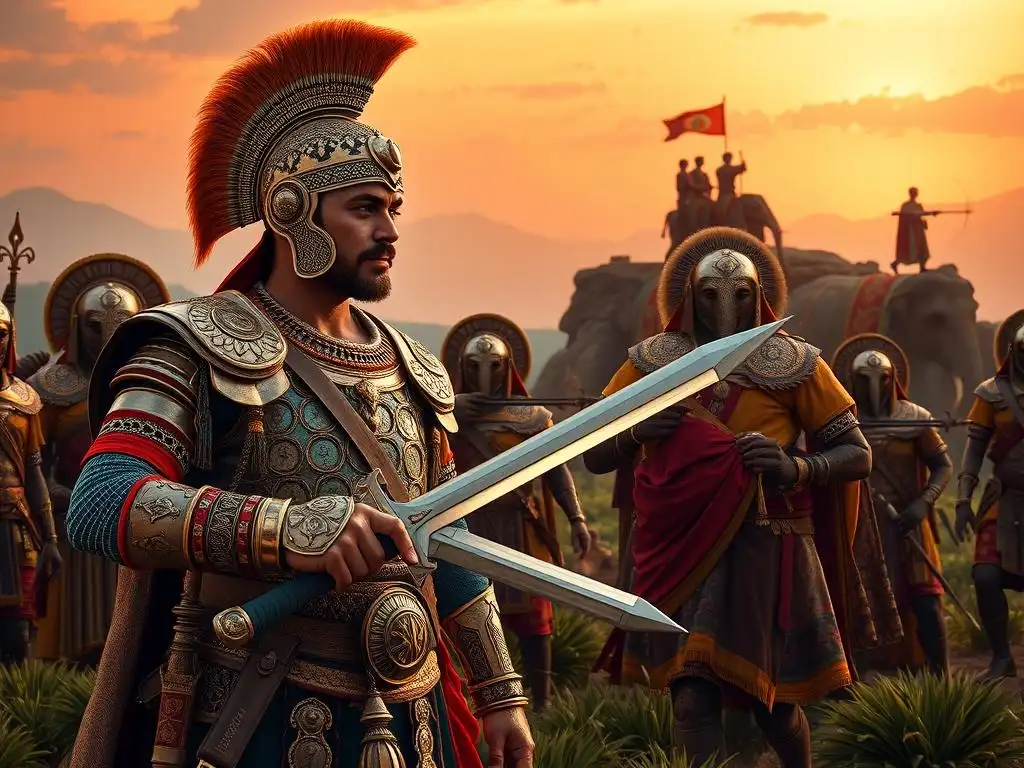
Welcome to Ancient India History, where we embark on a fascinating journey through time to unveil the rich tapestry of ancient Indian civilizations. In this exploration of courage, strategy, and valor, we delve into the lives of the remarkable Ancient Indian military leaders who shaped the course of history. Discover how these strategists and visionaries navigated the complexities of warfare, leaving a legacy that resonates even today.
Join us as we uncover the stories behind their triumphs and challenges in our featured article, "Key Figures in Ancient Indian Military History: Leaders and Strategists." Get ready to be inspired and intrigued—your adventure into the past begins now!
- Introduction to Ancient Indian Military Leaders
- Major Ancient Indian Military Leaders
- Key Strategies and Tactics of Ancient Indian Military Leaders
- Influential Military Texts and Their Authors
- The Role of Women in Ancient Indian Military History
- Military Innovations and Technology in Ancient India
- Conclusion: Legacy of Ancient Indian Military Leaders
- References and Further Reading
-
Frequently Asked Questions
- Who were the prominent military leaders in ancient India?
- What role did strategy play in ancient Indian military history?
- How did the geography of India influence military campaigns?
- What were the key contributions of ancient Indian military leaders?
- How did ancient Indian leaders maintain control over their territories?
- Final Reflection: The Enduring Legacy of Ancient Indian Military Leaders
- Unveil the Secrets of Ancient Indian Warfare!
Introduction to Ancient Indian Military Leaders
Throughout history, military leaders have played a pivotal role in shaping the destinies of civilizations. In ancient India, this was no different, as a variety of influential figures emerged who not only commanded armies but also shaped military strategies and technologies that defined their eras. From the formidable generals of the Mauryan Empire to the strategic minds during the Gupta period, these ancient Indian military leaders left an indelible mark on the military landscape of the region.
This article seeks to explore the rich tapestry of ancient Indian military history, highlighting the key figures whose leadership and strategic prowess were instrumental in the numerous campaigns that forged the historical narrative of India. By delving into their contributions and contextualizing their significance, we aim to shed light on the broader implications of military leadership in ancient Indian society.
Overview of Ancient Indian Military History
Ancient Indian military history is characterized by a complex interplay of various kingdoms and empires, each contributing to the evolution of warfare in the subcontinent. The earliest recorded military activities can be traced back to the Indus Valley Civilization, where fortified cities showcased the need for defense against potential invaders. As history progressed, the Vedic period introduced concepts of organized warfare, with the emergence of kshatriyas (warrior class) who upheld the code of honor and valor in battle.
Key periods in ancient Indian military history include:
- Mauryan Empire (322–185 BCE): Under the reign of Chandragupta Maurya and later Ashoka, the Mauryan Empire showcased immense military might, utilizing war elephants and a well-structured army.
- Gupta Empire (c. 240–550 CE): Known as the "Golden Age" of India, this period saw advancements in military technology and strategy, with leaders like Samudragupta earning accolades for their conquests and diplomatic prowess.
The military strategies employed in these eras were not merely about brute force; they involved intricate planning, alliances, and the use of advanced weaponry, including bows, chariots, and later, siege technology. The legacy of these military leaders is evident in the historical texts, such as the Mahabharata and Arthashastra, which offer insights into the art of warfare and governance.
Importance of Military Leaders in Ancient India
The significance of military leaders in ancient India cannot be overstated. They served not only as commanders but also as pivotal figures in the socio-political landscape of their times. Their leadership styles and strategic decisions often determined the outcomes of battles, influencing the rise and fall of empires.
Key roles and impacts of military leaders include:
- Unification of Territories: Leaders like Ashoka not only expanded their empires but also worked towards unifying diverse regions under a single rule, fostering a sense of cultural and social cohesion.
- Innovation in Warfare: Many military leaders were responsible for the introduction and adaptation of new technologies and tactics, which significantly enhanced the effectiveness of their armies.
- Cultural Influence: The military campaigns often led to interactions between different cultures, resulting in a rich exchange of ideas, art, and traditions that shaped the Indian subcontinent.
The legacy of ancient Indian military leaders is a testament to their strategic acumen and the lasting impact they had on the military history of India. Their stories serve as a source of inspiration and an essential part of understanding the broader narrative of ancient Indian civilization.
Major Ancient Indian Military Leaders
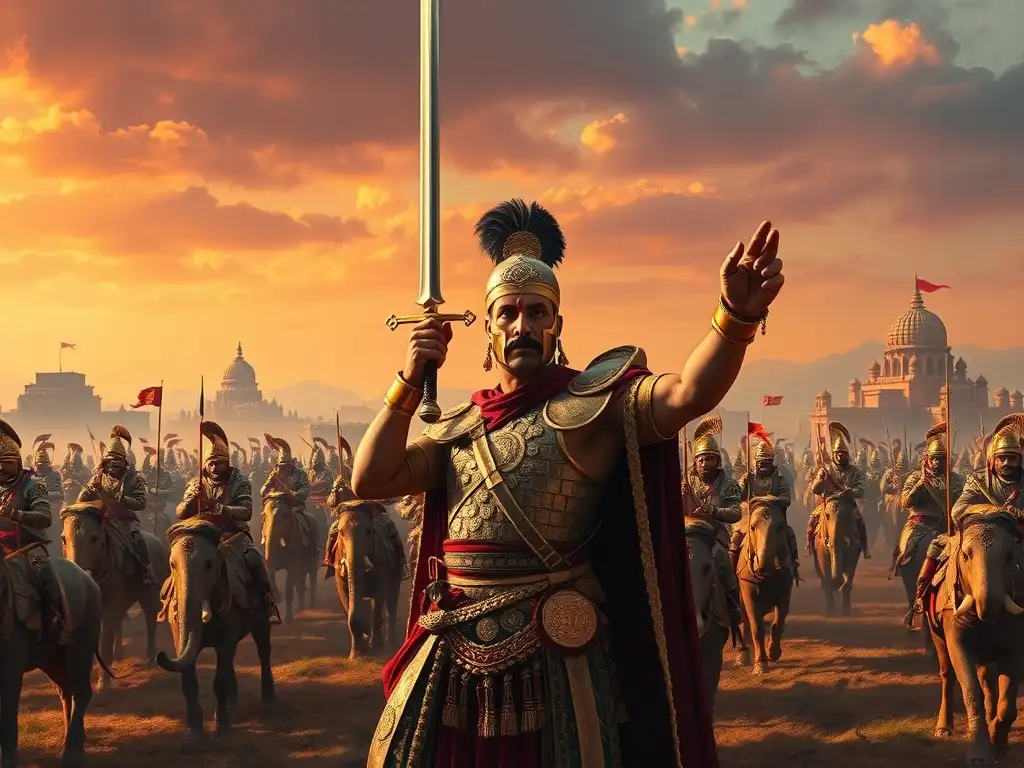
Ancient Indian military leaders played pivotal roles in shaping the history of the subcontinent. Their strategies, leadership, and innovations in warfare not only expanded territories but also influenced the cultural and political landscapes of their times. Below, we explore three of the most significant military leaders in ancient India, examining their contributions and legacies.
Chandragupta Maurya: The Founder of the Maurya Empire
Chandragupta Maurya (c. 340–297 BCE) is renowned for founding the Maurya Empire, one of the largest empires in ancient India. His military acumen and strategic prowess allowed him to overthrow the Nanda dynasty and establish a unified Indian subcontinent.
- Military Tactics: Chandragupta employed a combination of guerrilla warfare and traditional battlefield strategies. His use of cavalry, infantry, and war elephants was revolutionary. The elephants provided a significant psychological advantage in battles, creating fear among enemy troops.
- Key Campaigns: Notably, he engaged in a series of battles against the Nandas, culminating in the decisive battle at Pataliputra, which led to their downfall. His military campaigns extended into the northwest, where he encountered the forces of Alexander the Great.
- Advisor and Strategist: Chandragupta was advised by Chanakya (Kautilya), a brilliant strategist and political thinker. Chanakya's treatise, the Arthashastra, laid the foundation for statecraft and military tactics, emphasizing the importance of espionage and subterfuge.
Chandragupta’s reign marked the beginning of a new era in Indian history, characterized by centralized governance and military organization.
Ashoka the Great: From Warrior to Peacekeeper
Ashoka (c. 268–232 BCE), the grandson of Chandragupta, is celebrated for his transformation from a fierce warrior to a proponent of peace and non-violence after the Kalinga War (c. 261 BCE).
- The Kalinga War: This conflict illustrated Ashoka's military capabilities, where he led a massive army to conquer the Kalinga kingdom. The war resulted in high casualties and suffering, profoundly impacting Ashoka's outlook on life. He is often quoted as stating, "What is victory if it brings suffering?"
- Promotion of Buddhism: Following the war, Ashoka embraced Buddhism and focused on spreading its teachings. He prioritized diplomatic strategies over military conquest, leading to a period of stability and prosperity.
- Edicts and Governance: Ashoka's edicts, inscribed on pillars and rocks throughout his empire, promoted ethical governance and social welfare. His focus on dharma (moral duty) over militarism set a new paradigm for leadership in ancient India.
Ashoka’s legacy is significant not only for his military achievements but also for his efforts to cultivate a more peaceful and ethical society.
Samudragupta: The Conqueror of the Known World
Samudragupta (c. 335–375 CE), known as the "Napoleon of India," is one of the most celebrated military leaders of the Gupta Empire. His reign marked a period of unprecedented military expansion and cultural flourishing.
- Military Campaigns: Samudragupta conducted numerous campaigns, as detailed in the Prayag Prashasti, a poem that extols his victories. He is credited with defeating multiple kingdoms in northern India, including the powerful kingdoms of Magadha and the Kshatrapas.
- Innovative Warfare: His military tactics included the use of cavalry and well-coordinated infantry units. Samudragupta was known for his rapid movements and ability to adapt strategies according to the battlefield conditions.
- Cultural Impact: Beyond his military conquests, Samudragupta is remembered for his patronage of arts and culture. His reign saw the flourishing of literature, sculpture, and architecture, establishing the Gupta Empire as a golden age of Indian civilization.
Samudragupta's legacy as a military leader is marked by his conquests and the cultural renaissance that followed, firmly establishing the Gupta Empire as a dominant force in ancient India.
Prithviraj Chauhan: The Last Hindu King of Delhi
Prithviraj Chauhan, also known as Prithviraj III, was a prominent ruler of the Chahamana (Chauhan) dynasty in northern India during the late 12th century. His reign is marked by significant military achievements and resistance against foreign invasions, particularly the incursions of Muhammad Ghori. Prithviraj is often celebrated as the last Hindu king to rule Delhi, and his legacy has left an indelible mark on Indian history.
Born around 1166 CE, Prithviraj ascended to the throne at a young age and quickly gained a reputation for his valor and strategic prowess. His military campaigns extended across a vast territory, including parts of present-day Haryana, Rajasthan, and Uttar Pradesh. He is best known for his successful defense against the invading forces of Muhammad Ghori in the first battle of Tarain in 1191 CE, where he emerged victorious, showcasing his tactical acumen and the valor of his troops.
However, Prithviraj's fortunes changed in the subsequent battle in 1192 CE, where he faced Ghori again at Tarain. Despite his earlier victories, Prithviraj was defeated and subsequently captured. His defeat marked a significant turning point in Indian history, leading to the establishment of Muslim rule in northern India, which would last for several centuries.
Prithviraj Chauhan's legacy extends beyond his military exploits. He is also remembered for his patronage of arts and literature, with the famous poet Chand Bardai chronicling his life and exploits in the epic poem "Prithviraj Raso." This work not only celebrates Prithviraj's bravery but also emphasizes the cultural richness of the period he ruled.
In contemporary times, Prithviraj Chauhan is often regarded as a symbol of Hindu resistance against foreign domination, and his story continues to inspire various cultural narratives in India. His life and struggles reflect the complexities of ancient Indian military history, illustrating the interplay between valor, strategy, and the socio-political landscape of the time.
Key Strategies and Tactics of Ancient Indian Military Leaders
Use of Elephants in Warfare
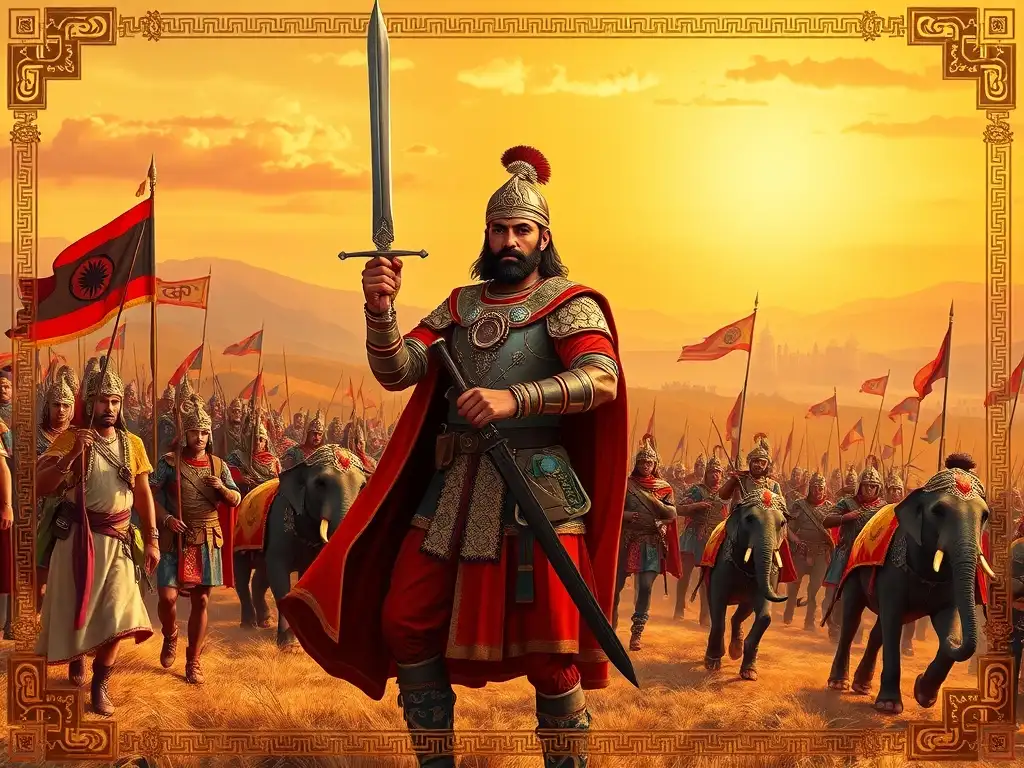
The use of elephants in warfare was a hallmark of ancient Indian military strategy, profoundly influencing the tactics and outcomes of battles. Elephants served multiple purposes on the battlefield: they acted as both a form of cavalry and a psychological weapon, instilling fear in enemy ranks. Their sheer size and strength made them formidable opponents, capable of trampling infantry and breaking through enemy lines.
Historical Context
The earliest recorded use of war elephants dates back to the Maurya Empire (circa 322-185 BCE). Emperor Chandragupta Maurya and his grandson Ashoka the Great utilized elephants effectively to enhance their military capabilities. Notably, during the Kalinga War, Ashoka deployed a large contingent of war elephants, which played a crucial role in his victory.
Tactical Advantages
- Shock Troops: Elephants were often used as shock troops, leading the charge into battle and disrupting enemy formations.
- Transport and Logistics: They could carry heavy loads, including weapons and supplies, facilitating mobility in difficult terrains.
- Psychological Warfare: The sight and sound of approaching elephants created panic among opposing forces, often leading to premature routs.
Notable Battles
One of the most famous examples of the effective use of elephants is the Battle of Ganges, where the Mauryan army's war elephants helped secure a decisive victory over rival kingdoms. Additionally, the use of elephants in the armies of the Gupta Empire further solidified their importance in ancient Indian warfare.
The Phalanx Formation: A Tactical Innovation
The phalanx formation, a rectangular mass military formation, is often associated with Greek warfare, but ancient Indian military leaders adapted similar tactics with their unique variations. This formation allowed for organized and disciplined movements, maximizing the effectiveness of infantry units in battle.
Adaptation in Indian Warfare
In ancient India, military leaders such as Chandragupta Maurya and later, the Gupta emperors, recognized the importance of cohesive formations. They employed a modified version of the phalanx, integrating infantry, archers, and cavalry in a unified front.
Key Features of the Formation
- Interlocking Shields: Soldiers positioned their shields to create a wall, providing protection and a strong front against enemy attacks.
- Depth and Density: The formation was deep, allowing for multiple ranks of soldiers to engage the enemy while maintaining pressure.
- Flexibility: While primarily defensive, the formation could quickly adapt to offensive maneuvers, providing a versatile strategy during battles.
Impact on Warfare
The use of such formations enabled ancient Indian armies to effectively counter various threats, particularly during conflicts with invading forces. The success of the phalanx formation in battles like the ones fought against the Greeks under Alexander the Great is a testament to its effectiveness.
Naval power played a significant yet often overlooked role in ancient Indian military history. With its extensive coastline, ancient India developed a formidable naval presence that allowed it to engage in trade, protect its shores, and conduct military operations across water.
Historical Development
During the Mauryan and Gupta empires, naval forces were crucial in securing trade routes and establishing dominance over neighboring regions. The Mauryan fleet was documented to have engaged in both defensive and offensive operations, including patrolling trade routes and launching maritime campaigns.
Strategic Importance
- Protection of Trade Routes: The Indian Ocean was a vital trade network, and maintaining naval superiority allowed for the protection of merchant vessels from piracy and foreign threats.
- Invasion and Conquest: Naval power enabled the projection of military force into maritime territories, facilitating invasions and the establishment of control over coastal regions.
Notable Naval Campaigns
One of the most significant naval engagements was during the reign of Chandragupta Maurya, where his fleets played a crucial role in securing alliances with islands and coastal kingdoms. The Gupta Empire also expanded its naval capabilities, contributing to the overall military strength of ancient Indian civilizations.
The strategies and tactics employed by ancient Indian military leaders, including the innovative use of elephants, the adaptation of the phalanx formation, and the development of naval power, highlight the sophistication of military operations in ancient India. These elements not only reflect the military prowess of the time but also the strategic thinking that shaped the course of Indian history.
Arthashastra by Kautilya: A Treatise on Statecraft
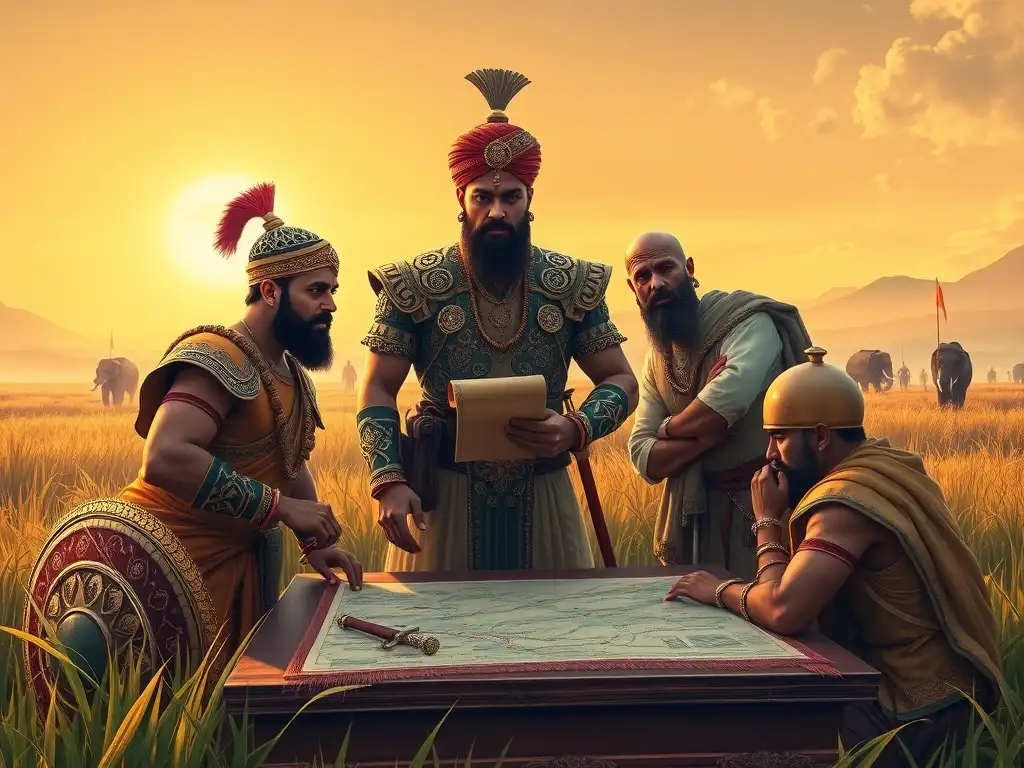
The Arthashastra, attributed to the ancient Indian scholar Kautilya (also known as Chanakya), is one of the most significant military texts in Indian history. Composed around the 4th century BCE, this treatise is not merely a manual on warfare but a comprehensive guide to statecraft, economics, and military strategy. Kautilya's insights are still relevant today, showcasing the complexity and depth of ancient Indian military thought.
Key Themes of the Arthashastra
- Realpolitik: Kautilya emphasizes pragmatic politics over idealism. His approach advocates for a ruler to pursue power through cunning and strategic deception. This aspect is crucial in military leadership, where advantage often lies in outmaneuvering opponents.
- Spying and Intelligence: Kautilya places great importance on espionage as a means to gather information about enemies. He categorizes spies into different types based on their capabilities, highlighting the significance of intelligence in warfare.
- Diplomacy and Alliances: The text discusses various diplomatic strategies, including the formation of alliances. Kautilya advises rulers to use diplomacy as a tool to weaken adversaries and strengthen their own position before engaging in direct conflict.
This text has influenced military leaders in ancient India and beyond, shaping their strategies and approaches to warfare. The Arthashastra remains a cornerstone of understanding ancient Indian military leaders’ philosophies.
The Mahabharata: Lessons from the Kurukshetra War
The Mahabharata, an epic narrative that encompasses a vast array of narratives, is not just a tale of familial conflict but also serves as a rich source of military wisdom. Central to the epic is the Kurukshetra War, which provides profound insights into the ethics of warfare, strategies, and the dynamics of leadership.
Military Strategies in the Mahabharata
- Dharma Yuddha (Righteous War): The epic emphasizes the concept of dharma (righteousness), advocating that wars should be fought for just causes. Leaders like Arjuna grapple with moral dilemmas, showcasing the internal conflicts experienced by ancient Indian military leaders.
- Use of Chariots and Cavalry: The Mahabharata details various military formations and tactics employed during the war, including the iconic use of chariots, which were crucial in ancient Indian warfare. The text describes formations such as the Chakra Vyuha, demonstrating strategic planning in battle.
- Psychological Warfare: The narrative illustrates how psychological tactics were used to demoralize the enemy. Characters like Krishna employ wisdom and strategy to influence the thoughts and actions of warriors, reflecting the importance of mental fortitude in leadership.
The Mahabharata serves as a timeless source of knowledge, revealing the complexities of ancient Indian military leaders and their approaches to conflict. Its lessons transcend time, offering insights into the balance of power, ethics, and the human condition in warfare.
The Role of Women in Ancient Indian Military History
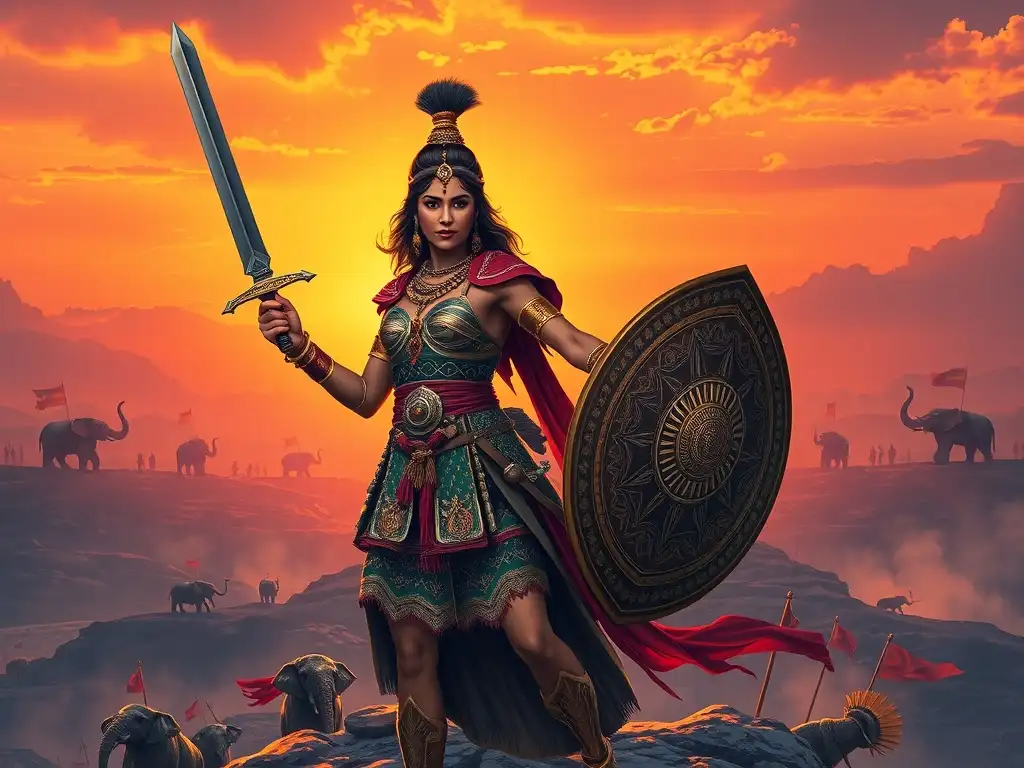
The contributions of women in ancient Indian military history have often been overlooked, yet they played significant roles in various capacities, from warriors to strategists. While the majority of military narratives primarily focus on male figures, women such as queens and noblewomen demonstrated exceptional leadership and bravery, challenging traditional gender roles and making substantial impacts on their kingdoms and the broader socio-political landscape.
Women in ancient India were not merely passive figures; they participated actively in warfare, often leading armies into battle and employing tactical acumen that rivaled their male counterparts. Their involvement in military affairs often stemmed from personal or familial motives, including the defense of their kingdoms or avenging losses suffered by their families. This unique aspect of ancient Indian military history emphasizes the multifaceted roles women played, not just in society but also in the military domain.
Rani Durgavati: The Warrior Queen
Rani Durgavati, the queen of Gondwana in Central India during the 16th century, stands out as one of the most remarkable figures in ancient Indian military history. Born into a royal family, she was trained in archery and combat from a young age, which prepared her for leadership during critical moments in her reign.
Durgavati's most notable military engagement was against the Mughal emperor Akbar's forces. In 1564, after her husband's death, she took command of the kingdom and successfully defended it against the Mughal invasion.
- Tactical Brilliance: Rani Durgavati employed guerrilla warfare tactics, utilizing her intimate knowledge of the terrain to outmaneuver the larger Mughal army.
- Symbol of Resistance: Her valor inspired her troops, and she became a beacon of resistance against Mughal expansion. Despite ultimately facing defeat, her bravery and leadership left an indelible mark on history.
- Legacy: Today, she is celebrated not only as a warrior queen but also as a symbol of female empowerment in India, representing the courage and strength of women in a predominantly patriarchal society.
Rani Durgavati’s legacy continues to inspire modern narratives around women in leadership and military roles, reinforcing the importance of recognizing female contributions to ancient Indian military history.
Other Notable Female Leaders in Ancient Indian Warfare
Beyond Rani Durgavati, several other women played pivotal roles in ancient Indian warfare, showcasing the diversity and depth of female leadership in military contexts.
- Rani Rudrama Devi (1259-1289):
- As a ruler of the Kakatiya dynasty, she was known for her administrative prowess and military strength.
- She led troops into battle and effectively managed her kingdom during turbulent times, illustrating the capability of women to govern and defend.
- Chennamma of Kittur (1778-1829):
- A prominent figure during the British colonial expansion, she led a formidable resistance against British forces in her quest to protect her kingdom's sovereignty.
- Her strategic alliances and battlefield tactics exemplified her leadership in warfare, making her a legendary figure in Indian resistance.
- Laxmibai of Jhansi (1828-1858):
- One of the most famous figures of the Indian Rebellion of 1857, she became a symbol of resistance against British rule.
- Laxmibai not only fought valiantly but also inspired her troops by embodying resilience and bravery in the face of overwhelming odds.
- Queen Avantibai (1826-1858):
- She led her forces during the 1857 uprising and fought courageously against the British.
- Her leadership and tenacity in battle solidified her status as a formidable leader in the struggle against colonial powers.
These women demonstrate that the narrative of ancient Indian military leaders is incomplete without acknowledging the significant contributions of female figures. Their stories are a testament to the diverse and rich history of women's involvement in military leadership, providing inspiration for future generations and enriching the understanding of ancient Indian military history.
Military Innovations and Technology in Ancient India
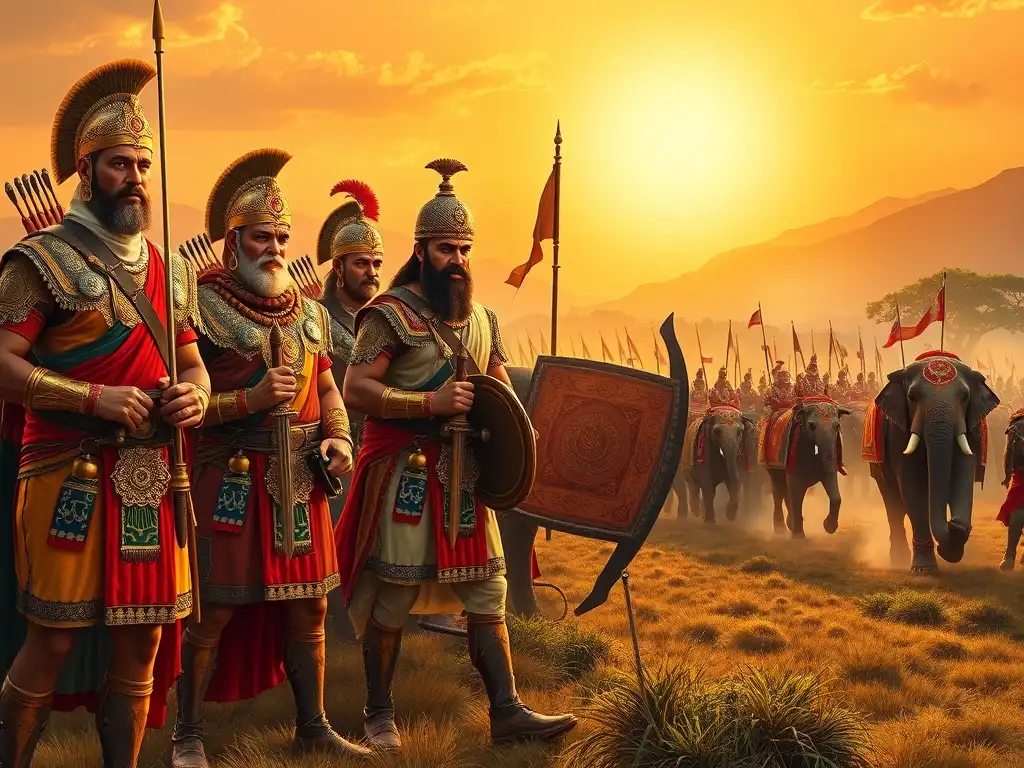
Development of Weapons and Armor
Ancient Indian military history is marked by significant advancements in weaponry and armor, which played a crucial role in the effectiveness of military leaders and their strategies. The evolution of weapons in ancient India can be traced back to the Indus Valley Civilization, where archaeological findings suggest the use of bronze tools and weapons.
By the Vedic period, the sophistication of military technology had increased, with the introduction of various weapons, such as the bow and arrow, swords, spears, and axes. Notably, the Kshatriyas, the warrior class, were trained in the use of these weapons, emphasizing martial skills as part of their education.
Key Weapons and Their Significance:
- Bows and Arrows: Crafted from flexible woods and reinforced with animal sinew, these became essential for both ranged combat and hunting. The legendary archer Arjuna, from the Mahabharata, exemplifies the skill associated with these weapons.
- Swords: The khanda and scimitar were prominent in battles, often made from high-quality iron or steel, showcasing the metallurgical advancements of the period.
- Spears and Javelins: Used for both throwing and close combat, these weapons were effective for the cavalry and infantry, allowing for versatile battle strategies.
Armor also saw noteworthy developments, with soldiers donning protective gear made from leather, bronze, and later, iron. The chaharaina, a type of armor that covered the chest and shoulders, was widely used, providing crucial protection during battle.
The Use of Fortifications and Defensive Architecture
Fortifications played a pivotal role in ancient Indian military strategy, reflecting the ingenuity of military leaders in safeguarding territories. The construction of forts, city walls, and defensive structures was common, particularly during periods of conflict.
Notable Fortifications:
- Ajanta and Ellora Caves: While primarily known for their artistic and religious significance, these caves also served defensive purposes, showcasing the dual use of architecture in ancient India.
- The Great Wall of India: The Kumbhalgarh Fort, often referred to as the Great Wall of India, is an example of extensive defensive architecture that protected against invasions.
Key Features of Defensive Architecture:
- Thick Walls: Built from stone and mud, the walls were designed to withstand sieges.
- Watchtowers: Positioned strategically, these allowed for the surveillance of enemy movements and early warning systems.
- Moats and Ditches: Used to deter attackers and provide an additional layer of defense.
The strategic placement of these fortifications in hilly terrains, along rivers, or near important trade routes exemplifies the foresight of ancient Indian military leaders. By integrating natural landscapes into their defensive strategies, they were able to create formidable barriers against invasions.
The advancements in weapons and armor, along with the effective use of fortifications, underline the resourcefulness and strategic acumen of ancient Indian military leaders. These innovations not only contributed to successful military campaigns but also laid the foundation for the sophisticated warfare that characterized ancient Indian civilizations.
Conclusion: Legacy of Ancient Indian Military Leaders
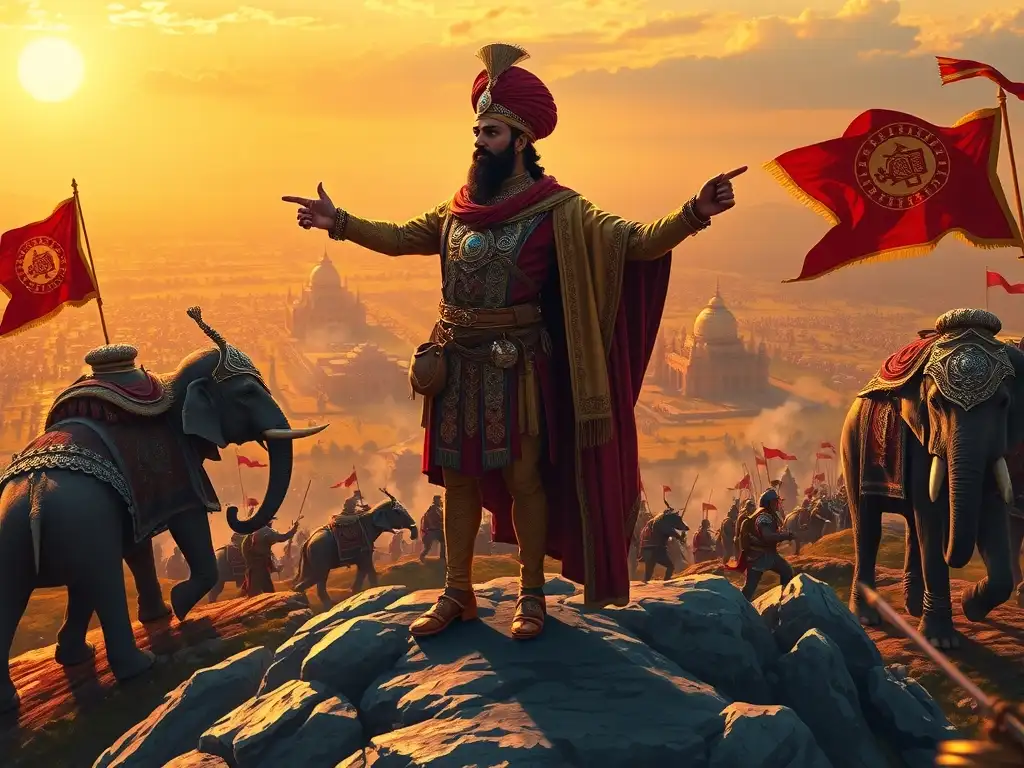
The legacy of ancient Indian military leaders is deeply woven into the fabric of India's historical narrative. These figures not only shaped the military tactics and strategies of their time but also left an indelible mark on the socio-political landscape of the subcontinent. Their contributions extended beyond warfare; they influenced governance, diplomacy, and the art of statecraft.
The strategic brilliance of leaders like Chandragupta Maurya and Ashoka the Great set precedents that resonated throughout Indian history. Their ability to unify vast regions under their command while managing diverse cultures has become a model for subsequent rulers. The Mauryan Empire, for instance, showcased how military might could be effectively combined with administrative efficiency, leading to one of the largest empires in ancient Indian history.
Moreover, the valor and strategies employed by figures like Raja Raja Chola and Prithviraj Chauhan played pivotal roles in the defense and expansion of their territories. Their legacy is evident in the military doctrines that emerged, which emphasized not only brute strength but also strategic alliances and the importance of naval power, particularly during the Chola period.
Impact on Subsequent Indian History
The influence of ancient Indian military leaders extends into the medieval and modern eras. Their strategies and organizational structures laid the groundwork for future military leaders in India, who adopted and adapted these principles to meet the challenges of their times.
- Military Organization: The well-structured armies established by figures like Ashoka provided a template for later dynasties, emphasizing the importance of logistics and supply chain management in warfare.
- Diplomacy and Alliances: The diplomatic strategies employed by Chandragupta Maurya in forging alliances with neighboring states and tribes highlight the importance of diplomacy in military success, a lesson that remains relevant in contemporary military strategy.
- Cultural Integration: The military campaigns of these leaders often facilitated cultural exchanges, resulting in the spread of ideas, technologies, and religions across regions. This cultural diffusion enriched Indian civilization, particularly during the Gupta Empire, which is often referred to as the Golden Age of India.
- Inspiration for Future Leaders: The stories of valor and strategic acumen exhibited by these leaders have inspired countless generations, serving as a source of pride and aspiration for future military leaders and historians alike.
Lessons Learned from Ancient Indian Military Strategies
The myriad strategies utilized by ancient Indian military leaders offer valuable lessons that remain applicable to modern military thought:
- Terrain Utilization: Ancient generals like Shivaji Maharaj showcased the importance of understanding and utilizing terrain to their advantage. The strategic use of hills, forests, and waterways became crucial in outmaneuvering larger and better-equipped forces.
- Adaptability: The ability to adapt to changing circumstances was a hallmark of ancient Indian military strategy. Leaders often modified their tactics based on the strengths and weaknesses of both their forces and those of their opponents.
- Psychological Warfare: Ancient leaders employed psychological tactics to demoralize their enemies. This included the use of propaganda and showcasing strength through displays of valor, which can be observed in the accounts of battles fought by figures like Samudragupta.
- Training and Discipline: The emphasis on rigorous training and the maintenance of discipline within the ranks ensured that ancient Indian armies remained effective and cohesive. This principle is fundamental in military training programs even today.
- Naval Power: The Chola Dynasty's advancements in naval warfare illustrate the importance of controlling sea routes and conducting amphibious operations, a lesson that has gained renewed significance in contemporary military strategies.
The study of ancient Indian military leaders and their strategies not only provides insight into the past but also offers timeless lessons that continue to influence military thought and practice. Their legacy is a testament to the ingenuity and resourcefulness of ancient Indian civilizations, shaping the course of history for centuries to come.
References and Further Reading
Recommended Books on Ancient Indian Military History
-
"The Art of War in Ancient India" by K. R. C. S. Reddy
This book provides an in-depth analysis of military strategies employed by ancient Indian leaders, exploring texts like the Arthashastra and their relevance to warfare tactics.
-
"War in Ancient India" by R. C. Majumdar
A comprehensive examination of military conflicts in ancient India, detailing notable battles, the evolution of warfare, and profiles of significant military leaders.
-
"Ancient Indian Warfare: Rethinking Early Sources" by Shonaleeka Kaul
This work challenges traditional narratives of ancient Indian military history, offering fresh perspectives based on archaeological findings and ancient texts.
-
"The Gupta Empire: A Historical Perspective" by R. S. Sharma
Focusing on the Gupta period, this book discusses military organization, strategies, and the leadership of notable figures that defined this era of ancient Indian history.
-
"Kautilya and the Arthashastra: A Study in Ancient Indian Political Thought" by Rajendra Prasad
An exploration of Kautilya's Arthashastra, this book provides insights into ancient Indian military strategy and governance, emphasizing the role of military leaders.
Online Resources for Exploring Ancient Indian Leaders and Strategies
-
Digital South Asia Library
A repository of texts and resources related to South Asian history, including military history. It offers access to ancient texts and modern interpretations.
-
Internet Archive
This platform has digitized numerous books on ancient Indian military history, including treatises on warfare and profiles of military leaders.
-
Ancient History Encyclopedia
An online resource that features articles on various aspects of ancient Indian civilizations, including military leaders, strategies, and technologies.
-
The Indian Military History Society
This site provides articles, discussions, and research papers focusing on different eras of Indian military history, including profiles of key figures.
-
YouTube Channels on Ancient History
Channels like "Epic History TV" and "History Time" offer video documentaries that delve into aspects of ancient Indian military history, highlighting significant leaders and battles.
By utilizing these resources, readers can deepen their understanding of ancient Indian military leaders, their strategies, and the broader context of military history in ancient India.
Frequently Asked Questions
Who were the prominent military leaders in ancient India?
Some of the most notable military leaders include Chandragupta Maurya, the founder of the Maurya Empire, and Samudragupta, known for his extensive conquests.
What role did strategy play in ancient Indian military history?
Strategy was crucial in ancient Indian warfare, with leaders employing various tactics such as guerrilla warfare and deception to outmaneuver their enemies.
How did the geography of India influence military campaigns?
The diverse geography of India, including mountains and rivers, significantly affected military strategies, often determining the routes and tactics used in campaigns.
What were the key contributions of ancient Indian military leaders?
Ancient Indian military leaders contributed to the development of advanced weaponry, fortifications, and military tactics that influenced later civilizations.
How did ancient Indian leaders maintain control over their territories?
Ancient Indian leaders maintained control through a combination of strong military presence, alliances, and effective governance, often integrating local customs to ensure loyalty.
Final Reflection: The Enduring Legacy of Ancient Indian Military Leaders
The exploration of ancient Indian military leaders reveals not only their strategic brilliance but also their profound impact on the cultural and historical fabric of India today. As we delve into the lives and tactics of these remarkable figures, we uncover a narrative that resonates with contemporary themes of leadership, resilience, and the art of warfare. The lessons drawn from their experiences remain relevant, reminding us that the principles of strategy and courage are timeless, transcending the boundaries of time and geography.
The influence of these ancient military leaders extends far beyond the battlefield; they have shaped the very essence of Indian identity and pride. Their stories of valor and ingenuity continue to inspire generations, fostering a sense of unity and purpose. As noted by historian Romila Thapar, The past is not just a record of what has happened; it is a living part of our present.
This sentiment underscores the importance of recognizing how these leaders have contributed to our understanding of governance, strategy, and the complexities of human conflict, which are still pertinent in today's world.
As we reflect on the legacies of these ancient military figures, let us invite ourselves to draw inspiration from their lives and apply their lessons to our own journeys. Consider how the values of leadership, strategic thinking, and resilience can empower you in your personal and professional endeavors.
In a world that often feels fragmented, embracing the wisdom of the past can guide us toward a more cohesive future. Let us honor these leaders by embodying their spirit of courage and innovation in our daily lives, ensuring that their legacies continue to thrive in the hearts and minds of future generations.
Unveil the Secrets of Ancient Indian Warfare!
Thank you for diving into the fascinating world of ancient Indian military history! We've explored the remarkable leaders and strategists who shaped the battlefield, and now it's your turn to take action.
Here are some steps you can take to deepen your understanding and engage with this captivating subject:
- Dive Deeper: Explore further by reading biographies or historical accounts of influential figures in ancient Indian warfare.
- Share Your Thoughts: Join the conversation! Discuss your favorite leader or strategist with friends or in online forums dedicated to military history.
- Connect with Others: Find like-minded enthusiasts by participating in local history clubs or online communities to share valuable insights and perspectives.
What aspects of ancient Indian military strategy do you find most intriguing, and why do you think they continue to resonate in modern times?