
Ashoka the Great: The Emperor Whose Words Echo Through Time

Welcome to Ancient India History, where we embark on a fascinating journey through time to uncover the rich tapestry of India's past. Here, we delve into the remarkable stories and contributions of ancient civilizations, from the enigmatic Indus Valley to the illustrious Gupta Empire. In our featured article, “Ashoka the Great: The Emperor Whose Words Echo Through Time,” we invite you to explore the profound legacy of one of history's most revered rulers.
What drove Ashoka to transform from a fierce conqueror into an advocate for peace? Join us as we unravel the intriguing chapters of his life and discover how his philosophies continue to resonate in today's world. Dive deeper and let the echoes of history inspire your understanding of this monumental figure!
- Ashoka the Great History: An Overview of the Emperor's Impact
- Ashoka's Ascension to the Throne
- The Transformation of Ashoka: From Warrior to Peacekeeper
- Ashoka's Contributions to Ancient India
- Ashoka's Legacy in History
- Conclusion: The Enduring Echo of Ashoka the Great
- Frequently Asked Questions
- Final Reflection: The Enduring Legacy of Ashoka the Great
- Unveil Your Inner Emperor!
Ashoka the Great History: An Overview of the Emperor's Impact
Introduction to Ashoka the Great
Ashoka the Great, often hailed as one of the most influential rulers in ancient India, stands as a beacon of moral leadership and visionary governance. Born into the Mauryan dynasty around 304 BCE, Ashoka ascended to the throne in a period marked by significant political turmoil and expansionist aspirations.
His reign, which lasted from 268 to 232 BCE, transformed the Indian subcontinent and left an indelible mark on its history. More than just a conqueror, Ashoka's commitment to spreading the principles of Dharma—rooted in compassion, non-violence, and social welfare—redefined the role of a ruler in an era where might often overshadowed morality.
The legacy of Ashoka the Great is particularly significant due to his profound shift from a life of military conquest to one of spiritual enlightenment and ethical governance. His edicts, inscribed on pillars and rocks throughout his empire, serve as historical documents reflecting his ideals and policies.
The Ashoka Chakra, a symbol of his commitment to justice and peace, continues to be an important emblem in modern India, showcasing the emperor's lasting influence on the nation's ethos. This exploration of Ashoka's history invites us to delve deeper into the multifaceted aspects of his reign, illustrating how his words and deeds continue to resonate through time.
The Historical Context of Ashoka's Reign
To fully appreciate the significance of Ashoka the Great, it is essential to understand the historical context of his reign. The Mauryan Empire, founded by Chandragupta Maurya in the late 4th century BCE, was characterized by its vast territorial expanse and intricate administrative systems. Following Chandragupta, his grandson Ashoka inherited a powerful empire that stretched across much of the Indian subcontinent, from present-day Afghanistan in the northwest to Bengal in the east.
Ashoka's early rule was marked by militaristic endeavors, including the Kalinga War around 261 BCE, which was pivotal in shaping his future policies. The immense loss of life and suffering witnessed during this conflict profoundly affected Ashoka, prompting a radical transformation in his approach to governance. This war not only highlighted the futility of violence but also laid the groundwork for his embrace of Buddhism and the promotion of non-violence (Ahimsa) as a guiding principle of his administration.
The sociopolitical landscape of ancient India during Ashoka's reign was complex, with various kingdoms and tribal societies coexisting alongside the Mauryan Empire. Understanding this diversity is crucial to grasping the challenges Ashoka faced as he sought to unify his empire under a banner of ethical governance while simultaneously respecting the rich tapestry of cultures and traditions within his realm.
The Mauryan Empire: Foundations and Expansion
The Mauryan Empire was a remarkable achievement in the history of ancient India, laying the foundations for centralized governance that would influence subsequent dynasties. Established in 322 BCE, the empire reached its zenith under Ashoka, who expanded its territories significantly through both military conquest and diplomatic alliances. The Mauryan administration was characterized by a sophisticated bureaucracy, a network of roads, and trade routes that facilitated economic growth and cultural exchange.
| Key Features of the Mauryan Empire | Description |
|---|---|
| Founding | Established by Chandragupta Maurya |
| Territorial Extent | Covered most of the Indian subcontinent |
| Governance | Centralized administration, with local governors |
| Economy | Agriculture-based, supported by trade |
| Cultural Exchange | Interaction with various regional cultures and ideas |
Under Ashoka's leadership, the Mauryan Empire not only expanded geographically but also witnessed a significant cultural and ideological transformation. The emperor's commitment to the principles of Buddhism and Dharma fostered an environment where art, architecture, and philosophy flourished. The construction of stupas, monasteries, and the famous Ashoka Pillars are testaments to this cultural renaissance, embodying the spiritual and ethical ideals that Ashoka championed.
Through this exploration of Ashoka the Great's history, we gain insight into how his reign not only shaped the Mauryan Empire but also set a precedent for future Indian rulers, emphasizing the importance of moral governance and social welfare that resonates in contemporary discussions on leadership and ethics.
Ashoka's Ascension to the Throne
Early Life and Influences on Ashoka
Ashoka the Great, born in 304 BCE, was the son of Emperor Bindusara, the second Mauryan emperor, and a descendant of the illustrious Chandragupta Maurya. His early life was marked by a backdrop of power, ambition, and the intense dynamics of royal court life. Ashoka was raised in a palace that was not only a hub of political power but also a place where he witnessed various cultural and philosophical influences that would later shape his reign.
Raised alongside his siblings, Ashoka's education included military training, statecraft, and the arts, which were essential for anyone in line for the throne. However, it was his relationship with his mother, Queen Dharma, that left a lasting impact on him. She instilled in him values of compassion and empathy, which would later resonate in his policies as emperor. Furthermore, Ashoka was influenced by the teachings of Buddhism, which he encountered during his early adult years. This exposure would profoundly shape his worldview and approach to governance.
His interactions with different religious and philosophical schools of thought, including Jainism and the early forms of Buddhism, contributed to his understanding of dharma (moral duty). It was this early melding of influences that prepared Ashoka for the challenges and responsibilities that lay ahead.
Key Events Leading to His Ascension
Ashoka's rise to power was not straightforward; it was marked by a series of key events that shaped his destiny. Following the death of his father, Bindusara, in 273 BCE, Ashoka faced a fierce struggle for the throne. The Mauryan Empire, at this time, was vast and diverse, requiring a ruler with not only military prowess but also diplomatic sensitivity.
- Fratricidal Conflict: The succession process was marred by conflict. Ashoka's brothers, particularly his elder brother, Susima, posed significant challenges to his claim. Ashoka, however, emerged victorious through a combination of military strategy and political acumen. This period tested his resolve and leadership skills, laying the foundation for his future rule.
- Consolidation of Power: After securing his position as emperor, Ashoka focused on consolidating power across the empire. He implemented numerous administrative reforms, enhancing the efficiency of governance. His experience in military campaigns, particularly against Kalinga, further solidified his authority. The conquest of Kalinga in 261 BCE was pivotal, not just for territorial expansion but also for its emotional and moral implications.
- Transformation Post-Kalinga: The aftermath of the Kalinga War marked a turning point in Ashoka’s reign. The immense loss of life and suffering led him to reconsider his approach to governance. It was during this period that he embraced Buddhism and began promoting the principles of non-violence, tolerance, and compassion—characteristics that would define his rule and legacy.
Through these key events, Ashoka transitioned from a warrior prince to a ruler who sought to govern through moral and ethical principles, establishing a framework that would resonate in the annals of history. His commitment to fostering a just society laid the groundwork for the rich legacy he would leave behind, making the "Ashoka the Great history" a subject of admiration and study for centuries to come.
The Transformation of Ashoka: From Warrior to Peacekeeper
Ashoka the Great, originally known as Ashoka Maurya, underwent a profound transformation during his reign as the third emperor of the Maurya Dynasty. Initially, Ashoka was recognized as a fierce warrior, embodying the ideals of conquest and expansion. His early campaigns were marked by military prowess and a relentless ambition to extend the boundaries of his empire. However, a pivotal moment in his life catalyzed a dramatic shift in his philosophy and approach to governance.
This transformation can be attributed to the deeply impactful Kalinga War, which not only changed Ashoka's perspective on warfare but also set him on a path toward becoming a proponent of peace and non-violence. The contrast between his initial warrior persona and his later identity as a peacekeeper symbolizes the compelling narrative of Ashoka's life.
The Kalinga War: A Turning Point in Ashoka's Life
The Kalinga War (circa 262-261 BCE) marked a significant turning point in Ashoka's reign. Kalinga, located on the eastern coast of India, was a prosperous kingdom known for its wealth and trade. Ashoka sought to annex Kalinga, leading to a fierce conflict that resulted in extensive loss of life and suffering.
- Casualties and Consequences: Historical records indicate that approximately 100,000 soldiers and civilians died as a result of the war. The devastation wrought upon the land and its people deeply affected Ashoka, causing him to reflect on the true cost of his conquests.
- Ashoka's Realization: Witnessing the aftermath of the Kalinga War, Ashoka was profoundly moved by the suffering of the people. In his own words, he stated, "What have I done? The victory has brought me nothing but sorrow." This moment of introspection led him to reconsider his approach to kingship and the principles by which he would govern.
- End of Expansionism: Following the Kalinga War, Ashoka made a conscious decision to halt further military campaigns. Instead of pursuing territorial expansion, he focused on consolidating his empire and fostering peace among his subjects.
Embracing Buddhism: The Shift in Ashoka's Ideals
The aftermath of the Kalinga War set the stage for Ashoka's embrace of Buddhism. His encounter with the teachings of the Buddha profoundly influenced his philosophical outlook, leading him to adopt the principles of non-violence (ahimsa) and compassion.
- Conversion to Buddhism: Ashoka's conversion was not merely a personal transformation; it had far-reaching implications for the entire Indian subcontinent. He became a patron of Buddhism, promoting its teachings and values throughout his empire.
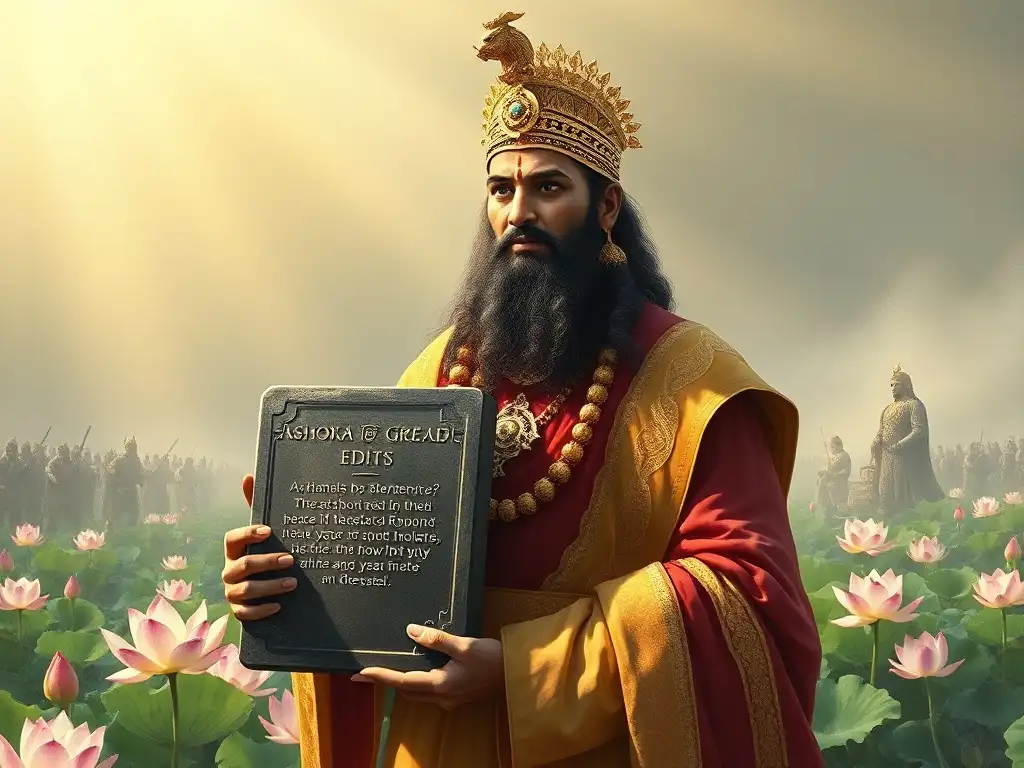
- Edicts of Ashoka: One of the most notable aspects of his reign was the issuance of the Edicts of Ashoka, which were inscribed on pillars and rocks across his empire. These edicts articulated his commitment to moral governance, emphasizing virtues such as tolerance, respect for all faiths, and the importance of ethical conduct. For instance, one edict states, "All religions should reside everywhere, for all of them desire to be heard."
- Cultural Impact: Ashoka's advocacy for Buddhism not only transformed his own governance but also played a crucial role in the spread of Buddhism across Asia. He sent missionaries to various regions, including Sri Lanka, to propagate Buddhist teachings, cementing his legacy as a unifying force for peace and spirituality.
Ashoka's journey from a warrior to a peacekeeper exemplifies the profound effects of personal transformation in leadership. His commitment to peace and ethical governance continues to resonate through history, making him one of the most revered figures in ancient India.
Ashoka's Contributions to Ancient India
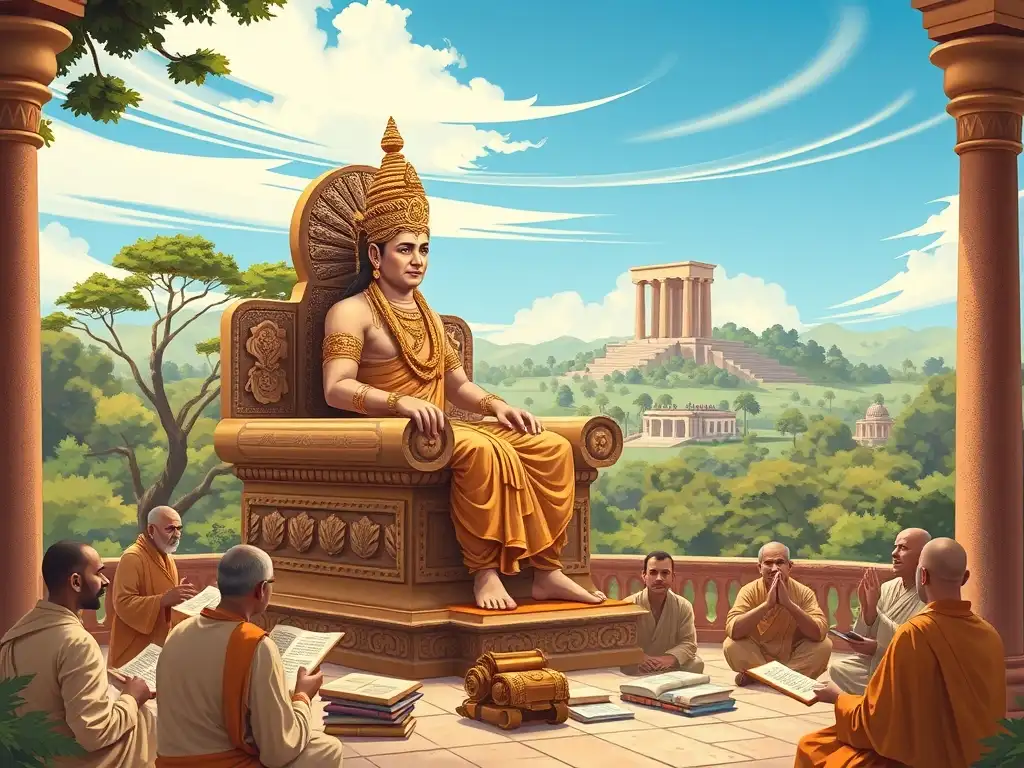
Ashoka the Great, one of the most illustrious emperors of ancient India, made significant contributions that shaped the political, cultural, and spiritual landscape of the subcontinent. His reign marked a pivotal transformation in governance and social values, deeply influencing not just his time but also the future of Indian civilization. This section delves into three key areas of Ashoka's contributions: administrative reforms, the promotion of Buddhism, and the powerful edicts that communicated his ideals.
Administrative Reforms Under Ashoka
Ashoka's administrative reforms were revolutionary and laid the groundwork for a more organized and efficient governance system. His empire, which stretched across much of the Indian subcontinent, required a robust administrative structure to manage its diverse populations and vast territories.
- Decentralization of Power: Ashoka implemented a decentralized approach to governance by appointing provincial governors, known as Rajukas. This allowed for local administration to be more responsive to the needs of the people.
- Justice and Welfare: Ashoka prioritized justice and welfare, establishing a system of courts and promoting the concept of Dharma (moral law). His focus on ethical governance ensured that justice was accessible to all, irrespective of caste or status.
- Infrastructure Development: The emperor invested significantly in infrastructure, including roads, hospitals, and rest houses for travelers. These developments facilitated trade and communication, enhancing the economic stability of his empire.
- Taxation Reforms: Ashoka reformed the taxation system, reducing the burden on farmers and ensuring that taxes were fair and just. This move not only improved agricultural productivity but also contributed to the overall prosperity of the empire.
Through these reforms, Ashoka not only strengthened his rule but also fostered a sense of unity and purpose among his subjects, reflecting his vision of a just and compassionate empire.
Promotion of Buddhism and Its Spread
Perhaps one of Ashoka's most enduring legacies is his role in the promotion and spread of Buddhism. After witnessing the suffering caused by the Kalinga War, Ashoka underwent a profound transformation, embracing the principles of Buddhism and seeking to propagate its teachings.
- Conversion and Advocacy: Ashoka's conversion to Buddhism was not merely personal; he actively advocated for the religion throughout his empire. He supported monasteries, sponsored the construction of stupas, and invited Buddhist monks to spread the teachings.
- International Diplomacy: Understanding the universal appeal of Buddhism, Ashoka sent missionaries to various regions, including Sri Lanka and Central Asia. This not only spread the religion but also established cultural exchanges that enriched both India and the regions influenced by Buddhism.
- Cultural Syncretism: Ashoka's promotion of Buddhism facilitated a blending of cultural practices, fostering a spirit of tolerance and coexistence among diverse religious communities within his empire.
As a result of these efforts, Buddhism flourished during and after Ashoka's reign, becoming one of the major religions in Asia, influencing millions across generations.
The Edicts of Ashoka: Messages of Peace and Governance
The Edicts of Ashoka are a collection of inscriptions that articulate the emperor's philosophies and policies. These edicts serve as a crucial historical source, providing insights into Ashoka's governance and his commitment to Dharma.
- Content and Themes: The edicts, inscribed on rocks and pillars across the empire, emphasize ethical conduct, non-violence, and respect for all living beings. They advocate for social welfare, the importance of truth, and the need for harmony among different communities.
- Public Accessibility: By using local languages and scripts, Ashoka ensured that the edicts were accessible to a wide audience, promoting transparency and accountability in governance. This inclusivity fostered a sense of belonging among his subjects.
- Influence on Future Governance: The principles outlined in the edicts have had a lasting impact on Indian political thought and governance. They inspired future leaders and shaped the ethical framework of rulers who followed.
The Edicts of Ashoka are not merely historical artifacts; they encapsulate the emperor's vision of a just society and continue to resonate with contemporary values of peace and ethical governance.
Ashoka's Legacy in History
The Influence of Ashoka on Later Indian Kings
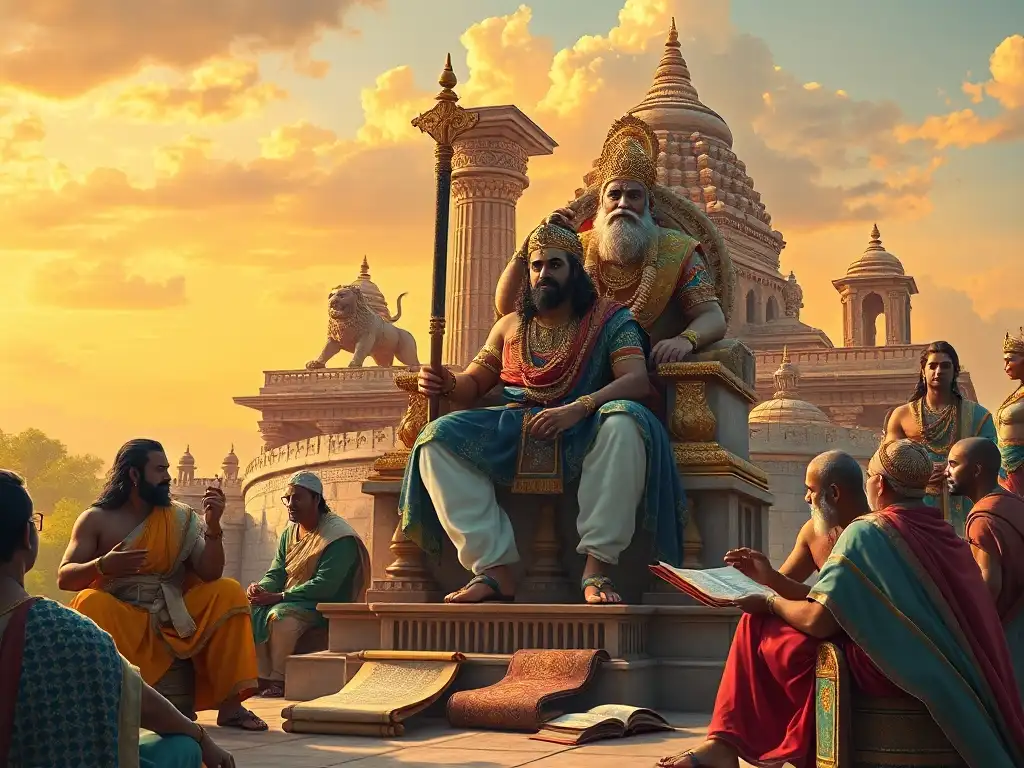
Ashoka the Great, ruling from approximately 268 to 232 BCE, left a profound impact on the governance and ideologies of subsequent Indian monarchs. His embrace of Buddhism and commitment to Dharma (moral law) set a precedent that influenced various dynasties.
- Promotion of Dharma: Ashoka's edicts emphasized moral conduct, non-violence, and respect for all living beings. His direct successors, such as the Mauryan rulers, adopted these principles, further integrating Dharma into state policy.
- Model of Benevolent Governance: Ashoka's administration was characterized by welfare programs and religious tolerance. Later kings, including those from the Gupta Empire, mirrored his approach, establishing policies focused on public welfare and ethical governance.
- Cultural Syncretism: Ashoka's promotion of Buddhism led to the blending of various cultural traditions. Successors often adopted this syncretism, leading to a diverse cultural landscape where regional practices coexisted with Buddhist ideals.
- Military Strategies: While initially known for his military might, Ashoka's shift towards a diplomatic approach influenced later rulers to prioritize diplomacy over warfare, fostering peaceful relations with neighboring states.
Ashoka's Role in Shaping Buddhist Philosophy and Ethics
Ashoka played a crucial role in the proliferation of Buddhist philosophy and ethical frameworks, fundamentally altering the spiritual landscape of India and beyond.
- Support of Buddhist Institutions: Ashoka's patronage of monasteries and stupas allowed Buddhism to flourish. He funded the construction of numerous stupas, with the Sanchi Stupa being one of the most notable examples, which became centers for learning and meditation.
- The Edicts of Ashoka: His edicts carved on rocks and pillars serve as a historical record, articulating his commitment to ahimsa (non-violence), compassion, and ethical governance. These proclamations not only influenced his contemporaries but also spread Buddhist teachings across Asia.
- Buddhist Missions: Ashoka is often credited with sending missionaries to various regions, including Sri Lanka and parts of Southeast Asia. This expansion played a pivotal role in the global dissemination of Buddhist teachings, leading to a diverse interpretation of Buddhist philosophy.
- Integration of Ethical Values: Ashoka’s emphasis on ethics and morality introduced a new dimension to governance, where rulers were seen not just as sovereigns but as moral guides. This paradigm shift influenced the ethical frameworks of later Indian philosophies.
Cultural and Architectural Contributions of Ashoka
Ashoka's reign marked a significant period of cultural and architectural advancements that showcased the grandeur of ancient Indian civilization.
- Stupas and Pillars: The construction of stupas, such as the Sanchi and Amaravati, and the famous Ashoka Pillars exemplified his architectural prowess. These structures not only served religious purposes but also functioned as symbols of his commitment to Buddhism.
- Art and Sculpture: The period saw the evolution of Buddhist art, with intricate carvings depicting scenes from the Jataka tales (stories of the Buddha's previous lives). These artworks provided insight into the ethical and moral teachings of Buddhism, influencing artistic traditions in India.
- Urban Planning: Ashoka's capital city, Pataliputra, was a marvel of urban planning with sophisticated infrastructure, including roads, irrigation systems, and public amenities. His emphasis on civic welfare laid the groundwork for future urban development in India.
- Cultural Exchange: Under Ashoka's rule, trade routes expanded significantly, facilitating cultural exchange with regions such as Central Asia and the Mediterranean. This interaction enriched Indian culture, introducing new ideas, art forms, and technologies.
Ashoka the Great's legacy encompasses a rich tapestry of influence on governance, spiritual philosophy, and cultural achievements that resonate through history, shaping the trajectory of Indian civilization and beyond.
Conclusion: The Enduring Echo of Ashoka the Great
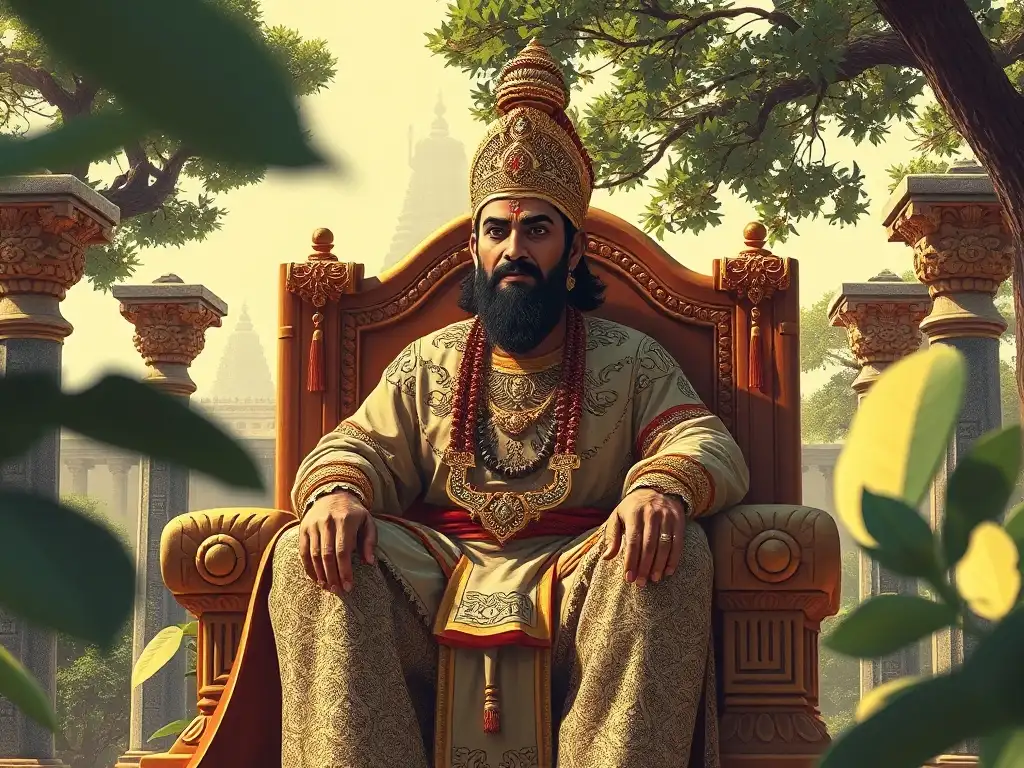
The legacy of Ashoka the Great resonates profoundly throughout history, transcending time and geography. His transformation from a fierce warrior to a benevolent ruler exemplifies the profound impact that personal change can have on governance and society. Ashoka’s commitment to the principles of Dhamma, which emphasize non-violence, tolerance, and compassion, reflects a revolutionary approach to leadership that prioritized the welfare of his subjects over conquest and expansion.
His edicts, inscribed on pillars and rocks across his empire, serve not just as historical artifacts but as timeless reminders of ethical governance and moral responsibility. These inscriptions articulate a vision for society that values peace and unity, urging future generations to reflect on their conduct and the impact of their actions.
Reflections on Ashoka's Philosophy in Modern Times
In today's world, where conflict and division often dominate the discourse, Ashoka's philosophy offers a beacon of hope. His Dhamma provides a framework that encourages dialogue, understanding, and reconciliation among diverse communities.
- Non-violence (Ahimsa): Ashoka's commitment to non-violence is particularly significant in contemporary discussions about conflict resolution. His belief that peaceful means should prevail over aggression can guide modern leaders in addressing disputes without resorting to violence.
- Tolerance and Inclusivity: Ashoka's edicts promoting tolerance towards various religions and beliefs resonate in our multicultural societies today. His message encourages acceptance and respect for diversity, fostering social harmony.
- Moral Leadership: The emperor's shift towards ethical governance serves as a reminder for today's leaders to adopt integrity and accountability in their roles. His life exemplifies the importance of leading with compassion and a focus on the greater good.
The Relevance of Ashoka the Great History in Contemporary Society
Understanding the history of Ashoka the Great holds significant relevance for contemporary society. His achievements and philosophies not only provide insights into ancient Indian civilization but also serve as lessons applicable to modern governance and social structures.
- Political Philosophy: Ashoka's model of governance, rooted in ethical considerations, challenges contemporary leaders to prioritize the well-being of their citizens over political expediency. His emphasis on justice and fairness remains a guiding principle for democratic societies.
- Cultural Heritage: The rich history of Ashoka contributes to India's cultural identity, shaping how the nation views itself and its place in the world. The promotion of cultural heritage fosters pride and unity among the populace.
- Global Influence: As globalization continues to connect societies, Ashoka's ideas of peace and cooperation provide a universal message that transcends national boundaries. His legacy encourages collaborative efforts to address global challenges, such as climate change and human rights.
The history of Ashoka the Great is not merely a relic of the past; it is a living legacy that informs and inspires. By reflecting on his philosophies and their relevance today, we can work towards a more just and harmonious world, echoing the timeless wisdom of one of history's most revered emperors.
Frequently Asked Questions
What were the major achievements of Ashoka the Great?
Ashoka the Great is known for his extensive promotion of Buddhism, the establishment of the Edicts of Ashoka, and his efforts towards social welfare and non-violence.
How did Ashoka's reign impact ancient Indian society?
Ashoka's reign significantly impacted ancient Indian society by fostering a culture of religious tolerance, ethical governance, and the spread of Buddhism beyond India, influencing many regions.
What are the Edicts of Ashoka and their significance?
The Edicts of Ashoka are a collection of inscriptions that communicate his philosophy of governance, emphasizing moral values and public ethics, and are considered some of the earliest examples of written laws in history.
How did Ashoka's conversion to Buddhism shape his policies?
Ashoka's conversion to Buddhism led him to adopt a policy of Dharma, prioritizing peace, compassion, and non-violence, which transformed his approach to empire management and international relations.
Why is Ashoka the Great an important figure in Indian history?
Ashoka the Great is an important figure due to his innovative governance, commitment to social justice, and the profound influence of his Buddhist principles, which resonate in contemporary discussions on ethics and leadership.
Final Reflection: The Enduring Legacy of Ashoka the Great
The history of Ashoka the Great is not merely a tale of an ancient emperor; it is a profound narrative that resonates with our modern world. His commitment to peace, compassion, and moral governance offers a timeless lesson that transcends centuries. As we navigate the complexities of contemporary society, the principles that Ashoka championed continue to inspire leaders and individuals alike, reminding us that true greatness lies in our ability to uplift others.
The impact of Ashoka's reign is felt not only in historical texts but also in our cultural and social landscapes today. His edicts, which advocated for non-violence and tolerance, serve as a guiding light in a world often marred by conflict and division. The greatest victory is that which requires no battle.
This quote encapsulates Ashoka's philosophy and invites us to reflect on the power of dialogue and understanding in resolving our differences.
As we conclude this exploration of Ashoka the Great, I invite you to reflect on how his teachings can be woven into the fabric of your own life. Consider how you can embody the principles of compassion and ethical leadership in your daily actions. Let Ashoka's legacy inspire you to create a ripple effect of kindness and understanding in your community, ensuring that his words continue to echo through time, shaping a brighter future for all.
Unveil Your Inner Emperor!
Thank you for taking the time to explore the inspiring legacy of Ashoka the Great. His commitment to peace and profound insights offer us a valuable roadmap for modern living. Now, it’s time to put this wisdom into action!
Here's how you can resonate with his teachings and make a difference in your life and community:
- Embrace Non-Violence: Start by practicing kindness and understanding in your daily interactions. Consider how you can resolve conflicts peacefully.
- Share the Wisdom: Discuss Ashoka's philosophy with friends or family. Spark a conversation about how these principles can be applied in today’s world.
- Join a Community Project: Get involved in local initiatives that promote peace and harmony. Whether it’s volunteering or participating in discussions, remember that every action counts!
What’s one simple change you can make today to embody the spirit of Ashoka in your life?