
Ashoka’s Vision for Peace: Lessons for a WarTorn World


Welcome to Ancient India History, where we embark on a journey through the rich tapestry of India's past, exploring the remarkable cultures and contributions of its ancient civilizations. Today, we invite you to delve into the profound teachings of Ashoka's principles of peace, a beacon of hope amidst the chaos of our contemporary world. How can the wisdom of this illustrious emperor guide us towards harmony in our own turbulent times?
Join us as we uncover Ashoka’s Vision for Peace: Lessons for a War-Torn World, and discover insights that resonate far beyond the pages of history. Your adventure into the depths of ancient wisdom begins here!

Introduction to Ashoka the Great
Ashoka the Great, one of the most illustrious emperors of ancient India, stands as a profound symbol of peace and moral governance. His reign, which spanned from 268 to 232 BCE, marked a transformative era in the history of the Indian subcontinent, characterized by a transition from conquest through violence to a profound commitment to non-violence and compassion.
Ashoka's principles of peace not only reshaped the political landscape of his time but also continue to resonate in contemporary discussions surrounding conflict resolution and ethical leadership. As we delve into the lessons from Ashoka’s vision, we uncover a framework that holds significant relevance for a world grappling with persistent strife and division.
Overview of Ashoka's Life and Reign
Ashoka, born into the Mauryan dynasty, initially followed in the footsteps of his forebears, expanding his empire through military conquests. However, after witnessing the ravages of the Kalinga War—one of the bloodiest conflicts of his reign—he experienced a profound transformation. This pivotal moment led him to embrace Buddhism and adopt a philosophy centered on Dharma (moral law), which emphasized peace, tolerance, and ethical governance. His reign is noted not only for its territorial expansion but also for the promotion of welfare programs aimed at improving the lives of his subjects.
Significance of Ashoka in Ancient Indian History
Ashoka's impact on ancient Indian history extends beyond his military and administrative accomplishments. He is often regarded as the first ruler to unify the Indian subcontinent under a single administration while promoting a framework of governance that prioritized the welfare of the people. His innovative approach to leadership, particularly his commitment to non-violence and ethical conduct, has earned him a revered place in historical discourse. Ashoka's legacy is further enriched by his efforts to spread Buddhism across Asia, profoundly influencing cultures and societies far beyond India's borders.
Understanding Ashoka's Principles of Peace
Definition of Ashoka's Principles of Peace
At the heart of Ashoka's governance were his principles of peace, which can be defined as a set of ethical guidelines aimed at fostering harmony and coexistence among diverse communities. These principles were not merely theoretical but were actively implemented through policies and practices that promoted social justice, welfare, and non-violence. Ashoka’s vision for peace was rooted in the belief that true strength lies not in military might but in the ability to govern with compassion and respect for all living beings.
The Role of Non-Violence in Ashoka's Philosophy
Non-violence, or Ahimsa, played a central role in Ashoka's philosophy. Following his conversion to Buddhism, he adopted non-violent principles as the cornerstone of his rule. Ashoka understood that violence breeds suffering and sought to mitigate harm through dialogue and understanding. His approach to governance emphasized the importance of empathy and compassion, encouraging his subjects to live harmoniously with one another. This commitment to non-violence not only shaped his policies but also inspired a broader cultural shift towards peaceful coexistence in Indian society.
Ashoka's Edicts: A Testament to Peaceful Governance
Ashoka's Edicts serve as enduring testaments to his principles of peace and governance. Inscribed on stone pillars and rocks throughout his empire, these edicts communicate his messages of compassion, moral conduct, and respect for all life. They advocate for the welfare of all beings, the importance of non-violence, and the promotion of communal harmony. The Edicts reflect Ashoka's commitment to ethical governance and stand as historical documents that continue to inspire movements for peace and justice across the globe.
In an era marked by conflict and division, Ashoka's vision offers valuable lessons on the power of compassion, ethical leadership, and the enduring strength of peace.
Historical Context of Ashoka's Peace Efforts
Ashoka the Great, the third emperor of the Maurya Dynasty, ruled over a vast territory in ancient India from approximately 268 to 232 BCE. His reign marked a significant turning point in Indian history, characterized by an emphasis on peace and ethical governance. The historical context of Ashoka's vision for peace can be understood against the backdrop of his early military conquests and the socio-political landscape of the time. The Mauryan Empire was one of the largest empires in the ancient world, and Ashoka's initial rule was dominated by the desire for territorial expansion and consolidation of power.
However, the bloody conflicts and violent campaigns that marked his early reign, particularly the Kalinga War, led to a profound transformation in his outlook. The war's devastating consequences—loss of life, suffering, and societal upheaval—caused Ashoka to reassess the merits of aggression and conquest. This pivotal moment ignited his commitment to a philosophy rooted in peace, compassion, and moral governance, laying the groundwork for what would become known as Ashoka's principles of peace.
The Kalinga War: Catalyst for Change
The Kalinga War, fought around 261 BCE, serves as a crucial turning point in Ashoka's life and reign. This conflict was notable not just for its scale but also for the profound impact it had on Ashoka's psyche. The war resulted in a staggering loss of life—estimates suggest that over 100,000 soldiers and civilians perished, and many more were displaced. The sight of the aftermath—grief-stricken families and devastated landscapes—left an indelible mark on Ashoka.
Witnessing the human cost of war prompted Ashoka to reflect on the futility of violence and the need for a more humane approach to governance. Following the Kalinga War, he adopted a policy of non-violence and sought to govern through principles of peace and welfare. This transformation was not merely a personal epiphany but also a strategic pivot, as Ashoka recognized that sustainable rule could not be achieved through fear and oppression, but rather through compassion and ethical leadership.
Transformation from Conqueror to Peace Advocate
Ashoka's transition from a fierce conqueror to a devoted peace advocate was both radical and revolutionary. After the Kalinga War, he embraced Buddhism, which profoundly influenced his worldview and governance style. The teachings of the Buddha emphasized compassion, non-violence, and the pursuit of Dharma, aligning perfectly with Ashoka's newfound vision for a just society.
In his edicts, Ashoka articulated his commitment to peace and moral governance, urging his subjects to practice compassion and respect towards all living beings. He famously declared, "All men are my children," underscoring his role as a benevolent ruler focused on the welfare of his citizens. Ashoka's transformation was not just ideological; it manifested in various policies aimed at promoting social harmony, ethical behavior, and a sense of shared humanity among the diverse populations of his empire.
Key Aspects of Ashoka's Vision for Peace
Ashoka's vision for peace encompassed a multifaceted approach that addressed ethical governance, religious harmony, and social welfare. By integrating these elements into his rule, he sought to create a society that prioritized human dignity, moral integrity, and mutual respect.
Promoting Dharma: The Ethical Framework of Ashoka
At the heart of Ashoka's principles of peace was the concept of Dharma, which refers to moral law and ethical conduct. Ashoka believed that rulers should govern not through coercion but by adhering to moral principles that promote the welfare of all beings. He implemented policies that encouraged ethical behavior among his subjects and sought to instill a sense of responsibility towards one another.
Ashoka's edicts, inscribed on pillars and rocks throughout his empire, emphasized the importance of truthfulness, non-violence, and compassion. He advocated for the idea that the ruler's legitimacy stems from their commitment to Dharma, thus redefining the role of leadership in society. This ethical framework not only guided Ashoka's administration but also sought to cultivate a culture of peace and mutual respect among his diverse subjects.
Religious Tolerance: A Pillar of Ashoka's Governance
In a culturally and religiously diverse empire, Ashoka recognized the importance of religious tolerance as a foundation for peace. His endorsement of Buddhism did not come at the expense of other faiths; rather, he actively promoted an environment of coexistence and respect for all religions. Ashoka's edicts advocated for the respectful treatment of followers of different beliefs, emphasizing dialogue and understanding over conflict.
This commitment to religious tolerance was not only a moral stance but also a practical approach to governance. By fostering an inclusive atmosphere, Ashoka aimed to unify his empire's diverse populations and prevent sectarian strife. His vision for peace hinged on the idea that harmony could be achieved through mutual respect and acceptance of different beliefs and practices.
Welfare Programs: Social Justice and Peace
Ashoka's vision for peace was further realized through the implementation of various welfare programs aimed at enhancing the well-being of his subjects. He established a system of hospitals, rest houses, and irrigation projects, reflecting his commitment to social justice and the collective welfare of society. These initiatives aimed to alleviate suffering and improve living conditions for all, particularly the marginalized and impoverished.
The emperor's dedication to public welfare illustrated his belief that peace is not merely the absence of conflict but also the presence of social justice and equity. By addressing issues of poverty, health, and infrastructure, Ashoka sought to create a stable and harmonious society where individuals could thrive collectively. This approach underscored the interconnectedness of peace, ethical governance, and social welfare, cementing Ashoka's legacy as a visionary ruler committed to the principles of peace.
Lessons from Ashoka for a War-Torn World
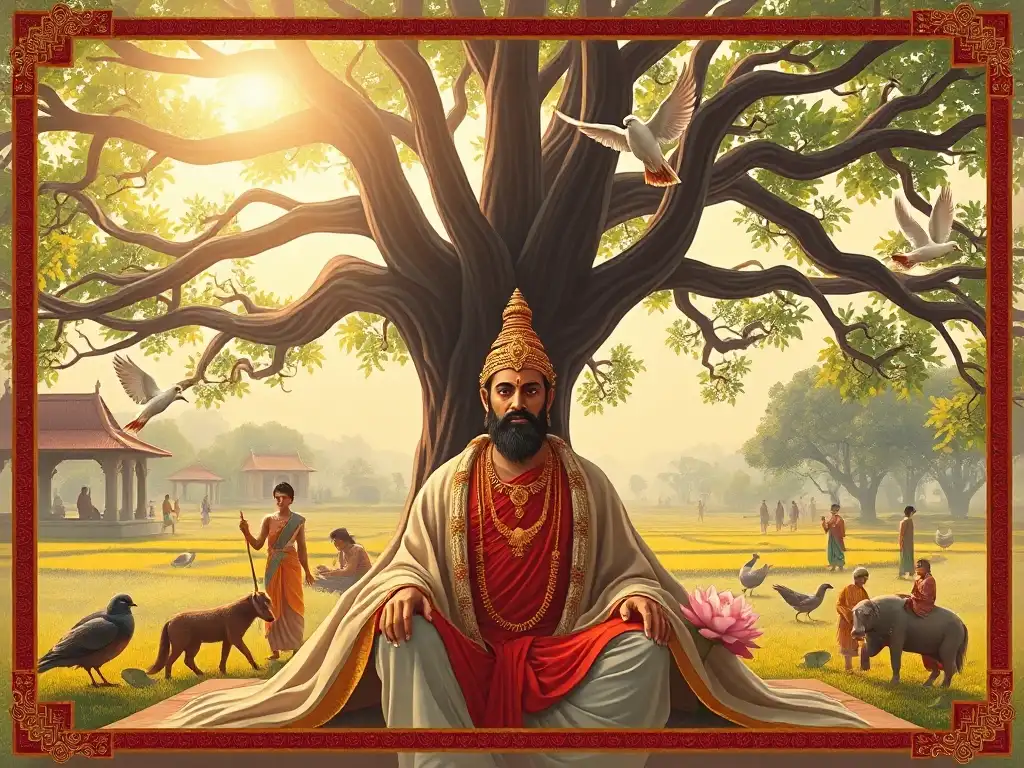
Ashoka the Great, the third Mauryan Emperor, left a profound legacy through his commitment to peace and non-violence after the bloody Kalinga War. His principles of peace, encapsulated in the Edicts of Ashoka, offer valuable lessons for a world still grappling with conflict and strife. These teachings emphasize the importance of compassion, moral governance, and the pursuit of justice without resorting to violence. In a contemporary context, his vision can guide leaders and communities seeking sustainable solutions to the challenges posed by war and violence.
Relevance of Ashoka's Principles in Modern Conflicts
Ashoka's principles resonate strongly in today’s global landscape, marked by ongoing wars, terrorism, and social unrest. His emphasis on Dhamma, or moral law, advocates for ethical conduct and respect for all living beings. In the context of modern conflicts, these principles can serve as frameworks for peacebuilding initiatives. For instance, Ashoka’s belief in non-violence (Ahimsa) encourages reconciliation over revenge, urging conflicting parties to seek understanding rather than perpetuate cycles of violence. The relevance of Ashoka's teachings is evident in peace movements worldwide, which strive to address grievances through dialogue rather than armed conflict.
Implementing Non-Violent Solutions: Strategies for Today
To implement Ashoka's non-violent solutions in contemporary conflicts, several strategies can be adopted:
- Promoting Peace Education: Incorporating Ashoka's principles into educational curricula can cultivate a culture of peace from a young age.
- Community Engagement: Encouraging grassroots movements that echo Ashoka's teachings fosters a sense of collective responsibility towards peace.
- Conflict Mediation: Establishing platforms for dialogue and negotiation can help resolve disputes amicably, drawing inspiration from Ashoka’s emphasis on understanding and compassion.
- Civic Responsibility: Encouraging citizens to engage in peaceful activism and civic duties can create a more inclusive and harmonious society.
These strategies align with Ashoka’s vision of a society where peace prevails through understanding and cooperation.
The Importance of Dialogue and Diplomacy in Conflict Resolution
Dialogue and diplomacy are at the core of Ashoka's approach to conflict resolution. He recognized that open communication fosters understanding and can bridge divides. In the modern context, this translates into the need for diplomatic channels that prioritize dialogue over military action. Effective diplomacy involves:
- Active Listening: Understanding differing perspectives to find common ground.
- Cultural Sensitivity: Recognizing the historical and cultural contexts of conflicts to approach them with empathy.
- Building Trust: Establishing trust through consistent communication and shared goals.
By prioritizing dialogue, leaders can work towards peaceful resolutions that reflect Ashoka's dedication to harmony and coexistence.
Case Studies: Modern Examples Inspired by Ashoka
Examining contemporary peace initiatives reveals how Ashoka's principles have inspired successful conflict resolution strategies worldwide. These case studies provide insights into the practical application of his teachings in today’s world.
Successful Peace Initiatives Reflecting Ashoka's Principles
One notable example is the South African Truth and Reconciliation Commission, which sought to heal the nation post-apartheid through dialogue and restorative justice. This initiative embodies Ashoka’s values by emphasizing forgiveness and understanding over punishment. Similarly, the Mahatma Gandhi National Rural Employment Guarantee Act in India reflects Ashoka's commitment to social welfare, providing employment and ensuring dignity for all citizens.
Moreover, the Colombian Peace Agreement serves as another relevant case, where the government and FARC rebels engaged in extensive dialogue, focusing on reconciliation and addressing historical injustices. Each of these initiatives demonstrates the effectiveness of non-violent methods rooted in Ashoka's principles.
Comparative Analysis: Ashoka and Contemporary Peace Leaders
Comparing Ashoka with contemporary peace leaders reveals similar philosophies underpinning their approaches. Figures like Nelson Mandela and Malala Yousafzai advocate for peace through understanding, forgiveness, and education—principles that echo Ashoka’s teachings.
- Mandela’s Reconciliation Efforts: Much like Ashoka, Mandela emphasized dialogue and forgiveness in South Africa’s post-apartheid era, fostering unity in a deeply divided nation.
- Malala’s Advocacy for Education: Malala’s focus on education as a tool for empowerment reflects Ashoka’s belief in moral responsibility and the transformative power of knowledge.
Both leaders demonstrate that peace is achievable through compassion, understanding, and the commitment to uphold dignity for all—key tenets of Ashoka's vision for a harmonious society.
Conclusion: The Lasting Legacy of Ashoka's Vision for Peace
Ashoka the Great left an indelible mark on the course of Indian history and the broader realm of global peace. His commitment to non-violence, compassion, and moral governance has transcended time, resonating through the ages as a beacon for future leaders and societies.
The edicts he inscribed on pillars and rocks across his empire serve not only as historical artifacts but also as profound reminders of the potential for statecraft rooted in ethical considerations. Ashoka's principles of peace—articulated through his advocacy for dharma (moral law), tolerance, and the welfare of all living beings—continue to inspire contemporary discourse on conflict resolution and international relations.
The synthesis of political authority with ethical responsibility exemplified by Ashoka provides a compelling framework for addressing modern challenges, such as terrorism, civil unrest, and societal division. His vision of a society where compassion and understanding prevail over aggression and hatred remains relevant, urging us to pursue dialogue, reconciliation, and restorative justice in our increasingly polarized world.
Reflection on Ashoka's Impact on Future Generations
The influence of Ashoka's vision for peace is evident in various aspects of modern governance and societal values. His principles have been echoed by numerous leaders and thinkers throughout history, who have drawn inspiration from his commitment to non-violence and ethical leadership. Figures like Mahatma Gandhi and Martin Luther King Jr. have cited Ashoka's teachings as pivotal in shaping their philosophies of peaceful resistance and social justice.
Moreover, Ashoka's approach to governance, which emphasized the welfare of the populace over military conquest, has informed modern democratic ideals. The emphasis on civic responsibility and moral governance can be seen in contemporary political systems that prioritize human rights and social equity. As societies grapple with the consequences of war and conflict, the lessons gleaned from Ashoka's reign remind us of the enduring power of peace as a tool for progress.
The Importance of Embracing Ashoka's Principles of Peace Today
In today's world, marked by numerous conflicts and crises, embracing Ashoka's principles of peace is more crucial than ever. As nations face the repercussions of war, terrorism, and cultural strife, the need for a paradigm shift towards non-violent conflict resolution is apparent. Ashoka's teachings advocate for empathy, dialogue, and understanding—principles that can bridge divides and foster cooperation among diverse groups.
Implementing Ashoka's vision requires a commitment to education, dialogue, and community engagement. By promoting values of tolerance, respect, and compassion, societies can cultivate environments that discourage violence and encourage peaceful coexistence. Initiatives that focus on restorative justice, cultural exchange, and conflict resolution training echo the essence of Ashoka's legacy and can help pave the way for a more peaceful future.
Ultimately, Ashoka's principles of peace challenge us to rethink the narratives of power and success. They remind us that true strength lies not in military might but in the ability to forge connections, build understanding, and nurture a culture of peace that spans borders and generations. By honoring Ashoka's vision, we can aspire to create a world where peace prevails over conflict, thereby transforming the landscape of human relations for the better.
- Introduction to Ashoka the Great
- Understanding Ashoka's Principles of Peace
- Historical Context of Ashoka's Peace Efforts
- Key Aspects of Ashoka's Vision for Peace
- Lessons from Ashoka for a War-Torn World
- Case Studies: Modern Examples Inspired by Ashoka
- Conclusion: The Lasting Legacy of Ashoka's Vision for Peace
Frequently Asked Questions
What are Ashoka's principles of peace?
Ashoka's principles of peace emphasize non-violence, compassion, and tolerance. He advocated for resolving conflicts through dialogue rather than warfare, promoting harmony among diverse communities.
How did Ashoka implement his vision for peace?
Ashoka implemented his vision through edicts inscribed on pillars and rocks, which communicated his commitment to non-violence and encouraged the welfare of all beings, establishing a moral framework for governance.
What impact did Ashoka's reign have on ancient India?
Ashoka's reign significantly influenced ancient India by fostering a culture of peace and spiritual development. His promotion of Buddhism helped spread its teachings across Asia, impacting various cultures and societies.
How can modern society learn from Ashoka’s teachings?
Modern society can learn from Ashoka's emphasis on dialogue, understanding, and compassion to resolve conflicts. His approach serves as a timeless framework for promoting peace in a war-torn world.
Are there any contemporary examples of Ashoka's principles in action?
Yes, contemporary movements advocating for non-violence and human rights often draw inspiration from Ashoka’s principles. Organizations promoting peaceful conflict resolution reflect his vision in modern contexts.
Final Reflection: Ashoka's Principles of Peace for a War-Torn World
In a time when conflict and division seem to dominate our global landscape, Ashoka's principles of peace resonate with unprecedented urgency. His vision, rooted in compassion and non-violence, serves as a beacon of hope for societies grappling with the scars of war. As we navigate the complexities of modern conflicts, the teachings of Ashoka remind us that peace is not merely the absence of war, but a proactive commitment to understanding, tolerance, and reconciliation.
The enduring influence of Ashoka's principles can be seen in various cultural and social movements today. His legacy inspires countless individuals and organizations striving for harmony in a fractured world. The call for peace and non-violence echoes in the voices of activists and leaders who champion social justice and human rights. As Mahatma Gandhi once said, Non-violence is the greatest force at the disposal of mankind.
This sentiment captures the essence of Ashoka's teachings, illustrating how they continue to shape our collective consciousness and inspire action toward a more peaceful existence.
As we reflect on the lessons drawn from Ashoka's life and philosophy, I invite you to consider how you can embody these principles in your own life. What steps can you take to foster peace in your community? Whether it’s through acts of kindness, advocacy for justice, or simply listening to those with differing perspectives, each action contributes to a larger movement toward harmony. Let us carry forward Ashoka's vision, transforming our world one compassionate act at a time, and nurturing a future where peace prevails over conflict.
Embrace Ashoka's Wisdom: Transform Your Perspective on Peace!
Thank you for joining us on this exploration of Ashoka’s remarkable vision for peace, especially in a world that often feels torn apart by conflict. Your engagement with these timeless lessons is vital as we seek harmony, compassion, and understanding in our lives today. Now is the perfect time to act and integrate these empowering lessons into your daily routine!
Here are some meaningful steps you can take:
- Start a Dialogue: Initiate a conversation about peace with friends or family, sharing insights from Ashoka's life and how they can inspire our actions today.
- Practice Compassion Daily: Incorporate an act of kindness into your routine this week. Even small efforts can create significant change in your community.
- Join a Peace-Focused Group: Seek out local or online communities that promote peace and resilience. Engaging with others can amplify your impact and broaden your understanding.
What does peace mean to you, and how can you embody Ashoka’s values in today’s world? We would love to hear your thoughts!