
The Role of Ancient Indian Leaders in the Global Historical Context

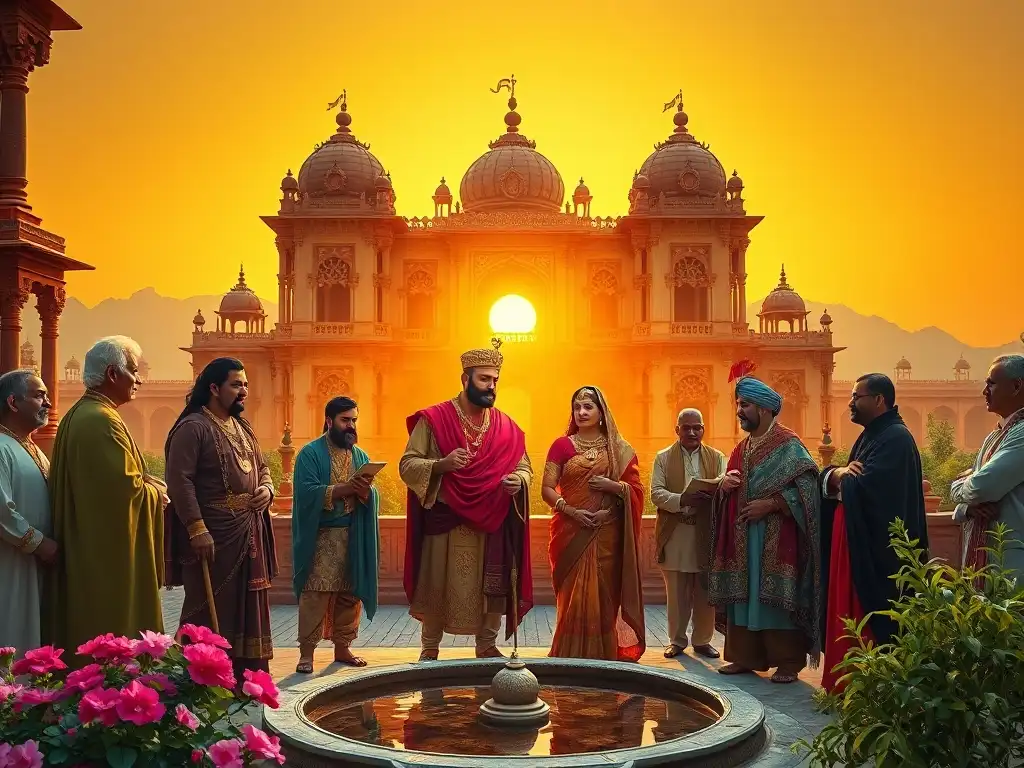
Welcome to Ancient India History, where we embark on a captivating journey through the rich tapestry of India's past. Here, we delve into the remarkable contributions of ancient Indian leaders, whose visionary insights and groundbreaking achievements have shaped not just their own civilization but have also resonated throughout the globe. Have you ever wondered how the philosophies of these iconic figures influenced the world we live in today?
Prepare to uncover the profound impact of ancient Indian leadership as we explore their legacies and the intricate connections they forged across continents. Let your curiosity guide you as you dive deeper into this fascinating narrative!
Introduction to Ancient Indian Leaders' Contributions
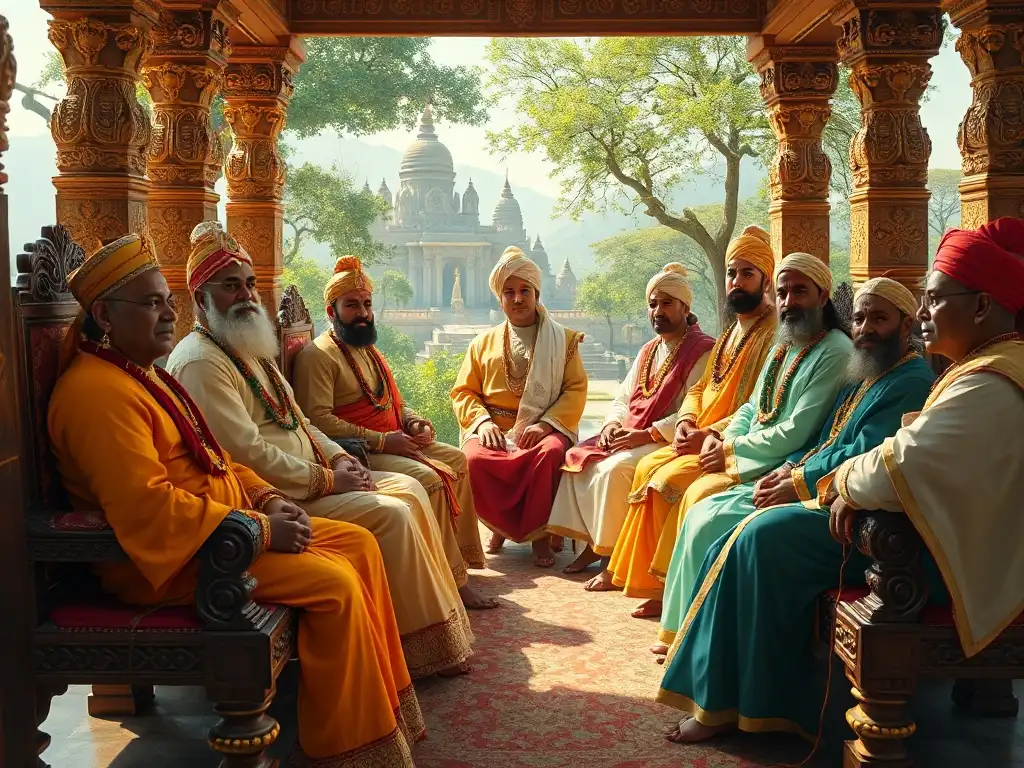
The history of ancient India is not merely a chronicle of events, but a profound narrative shaped by the remarkable contributions of its leaders. From the sophisticated urban planning of the Indus Valley Civilization to the philosophical advancements during the Gupta Empire, ancient Indian leaders played pivotal roles in shaping not only their own society but also influencing the world at large.
This article delves into the contributions of these leaders, exploring their legacies within the broader context of global history. By examining the achievements and philosophies of figures such as Chandragupta Maurya and Ashoka the Great, we gain insight into how ancient Indian leaders have left an indelible mark on both regional and global landscapes.
Overview of Ancient Indian Civilization
Ancient India was characterized by a rich tapestry of cultures, languages, and religions. Major civilizations such as the Indus Valley, known for its advanced urban centers like Harappa and Mohenjo-Daro, laid the groundwork for subsequent political and social structures. The Vedic period introduced significant philosophical and spiritual ideas, while the rise of empires such as the Maurya and Gupta brought about unparalleled advancements in governance, science, and the arts.
Key features of ancient Indian civilization include:
- Urban Planning: The Indus Valley Civilization showcased advanced city layouts with sophisticated drainage systems.
- Cultural Diversity: A multitude of languages, religions, and ethnic groups coexisted, enriching the social fabric.
- Intellectual Achievements: Ancient India was home to early contributions in mathematics, astronomy, and medicine.
Significance of Leadership in Ancient India
Leadership in ancient India was not only about governance but also embodied moral and philosophical values. Leaders were often seen as representatives of dharma (righteousness) and were expected to maintain social order and justice. Their decisions influenced various aspects of life, from trade and warfare to culture and religion.
The impact of leadership can be summarized as follows:
- Political Structure: Establishing efficient governance that fostered economic growth and military strength.
- Cultural Patronage: Supporting arts, literature, and philosophy, leading to significant cultural developments.
- Unification of Regions: Leaders often played crucial roles in uniting diverse groups, thus fostering a sense of national identity.
Major Ancient Indian Leaders and Their Impact
Chandragupta Maurya: The Founder of the Maurya Empire
Chandragupta Maurya is celebrated as the founder of the Maurya Empire, which marked the beginning of a significant era in Indian history. His rise to power, aided by his mentor Chanakya, was characterized by strategic military conquests and astute governance. Chandragupta's establishment of a centralized administration laid the foundation for one of the largest empires in ancient India, promoting trade and cultural exchanges across vast territories.
Key contributions include:
- Centralized Administration: Introduction of a structured bureaucratic system that enhanced efficiency and governance.
- Economic Development: Promotion of trade routes and agricultural advancements, leading to increased prosperity.
- Military Innovations: Development of strong military strategies that expanded the empire's territory.
Ashoka the Great: The Emperor of Peace
Following Chandragupta, his grandson Ashoka the Great ascended to the throne and transformed the Maurya Empire into a beacon of peace and moral governance. After witnessing the devastation of war, Ashoka embraced Buddhism and dedicated his reign to the promotion of non-violence, social welfare, and religious tolerance. His edicts, inscribed on rocks and pillars throughout the empire, spread messages of compassion and ethical conduct.
Ashoka's contributions included:
- Promotion of Buddhism: Facilitating the spread of Buddhism not only within India but also across Asia.
- Public Welfare Initiatives: Implementing projects such as hospitals, roads, and water conservation systems.
- Cultural Exchange: Encouraging interactions with other cultures, thus broadening the horizons of Indian civilization.
Gupta Dynasty Leaders: The Golden Age of India
The Gupta Dynasty heralded a period often referred to as the "Golden Age of India," marked by remarkable achievements in arts, science, and philosophy. Leaders like Chandragupta II and Samudragupta played crucial roles in consolidating power and fostering an environment conducive to intellectual and cultural advancements.
Significant aspects of this era include:
- Cultural Flourishing: Patronage of the arts led to masterpieces in literature, sculpture, and architecture.
- Scientific Advancements: Notable progress in mathematics, astronomy, and medicine, including the concept of zero and advances in surgical techniques.
- Religious Harmony: Promotion of both Hinduism and Buddhism, fostering a spirit of tolerance and coexistence.
The contributions of ancient Indian leaders are not only crucial in understanding Indian history but also provide valuable lessons on governance, cultural integration, and ethical leadership that resonate even in today's global context.
Comparative Analysis of Ancient Indian Leaders' Contributions
The contributions of ancient Indian leaders extend beyond the subcontinent, influencing political, cultural, and philosophical landscapes globally. A comparative analysis reveals distinct characteristics and teachings that resonate in various civilizations. Leaders like Ashoka the Great, Chandragupta Maurya, and the Gupta rulers exemplified governance that intertwined ethical considerations with political strategy, reflecting a depth of thought that frequently contrasts with their contemporaries in other regions.
For instance, Ashoka's promotion of Buddhism and non-violence not only shaped Indian society but also laid foundational ideas for peace and governance worldwide. His edicts, inscribed on pillars and rocks, advocated for moral leadership, tolerance, and welfare, leaving a legacy that influenced leaders across cultures, including those in the West. By examining these leaders within the global historical context, it becomes evident that their contributions were not merely local; they were pivotal in shaping universal ideals of governance and ethical leadership.
Leadership Styles: Autocracy vs. Democracy
The leadership styles of ancient Indian leaders illustrate a complex relationship between autocracy and democratic principles. Autocratic rule was prominent, particularly during the Maurya Empire, where leaders like Chandragupta Maurya wielded significant power. Chandragupta's centralized authority allowed for swift decision-making, crucial for unifying diverse regions under one rule. His successor, Ashoka, while initially autocratic, evolved towards a more benevolent form of leadership, emphasizing ethical governance and public welfare.
In contrast, certain periods and regions in ancient India displayed democratic elements, particularly in the form of village assemblies known as "Sabhas" and "Samitis." These local governing bodies allowed for community participation and decision-making, reflecting an early form of democratic governance. This duality of leadership styles showcases the adaptability of ancient Indian political structures, influencing contemporary governance models worldwide. The balance between autocratic efficiency and democratic engagement is a hallmark of ancient Indian leadership, contributing to the global discourse on governance.
Influence of Ancient Indian Leaders on Global Leaders
Ancient Indian leaders have left an indelible mark on global leadership paradigms, influencing figures across continents and eras. The principles espoused by Ashoka, particularly his advocacy for non-violence and compassion, inspired many global leaders, including Mahatma Gandhi in the 20th century. Gandhi’s philosophy of Satyagraha drew heavily from Ashoka's edicts, demonstrating the timeless relevance of ancient Indian thought in modern civil rights movements.
Moreover, the concepts of governance and statecraft articulated by Kautilya in his seminal work, the Arthashastra, have been studied by political leaders and strategists worldwide. His insights into diplomacy, warfare, and economic policy continue to resonate in contemporary political theory, showcasing the enduring influence of ancient Indian leaders on global governance.
Cultural Contributions of Ancient Indian Leaders
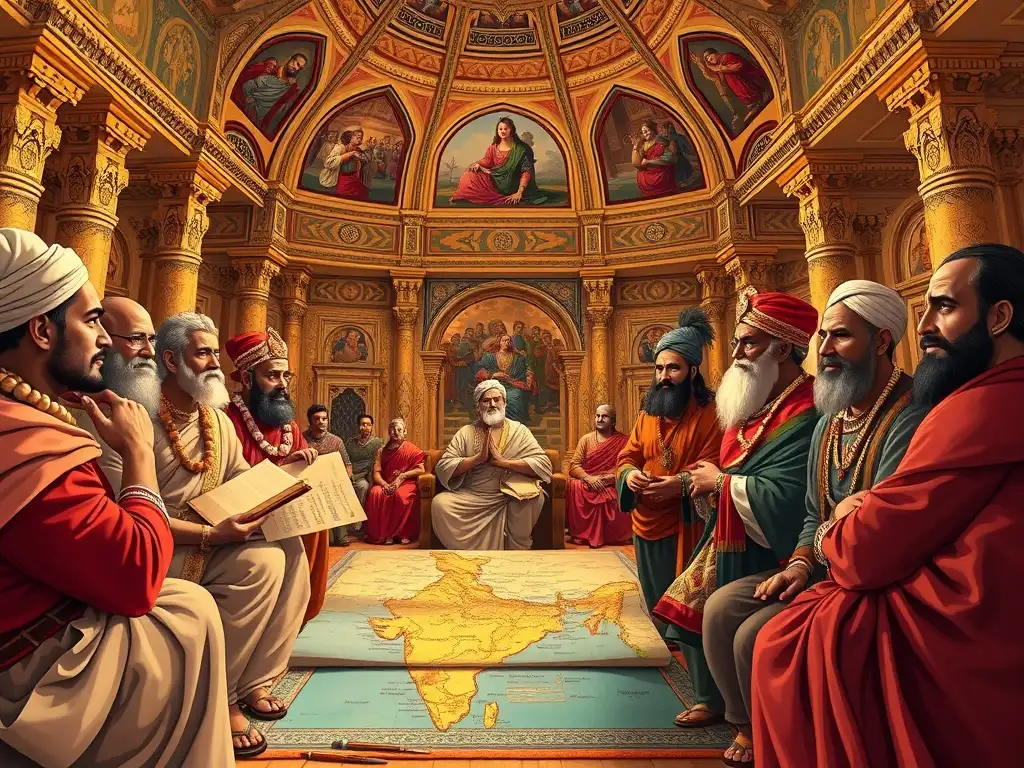
The cultural contributions of ancient Indian leaders were instrumental in shaping the social and philosophical landscape of not only India but also the world. These leaders fostered an environment where arts, literature, and philosophy flourished, creating a rich tapestry of cultural heritage that influences societies even today.
Advancements in Science and Mathematics
Ancient Indian leaders championed significant advancements in science and mathematics, which laid the groundwork for future innovations. Notably, Aryabhata, a prominent mathematician and astronomer of the Gupta period, introduced concepts such as zero and the decimal system, which revolutionized mathematics and were later adopted globally. His work in astronomy provided insights into planetary movements and calculations that were far ahead of his time.
Additionally, ancient Indian texts like the Sulbasutras outlined geometrical principles essential for constructing altars and other structures, merging practical applications with theoretical knowledge. The emphasis on scientific inquiry and mathematical precision by ancient Indian leaders not only enhanced their civilization's capabilities but also contributed immensely to the global scientific community.
Contributions to Philosophy and Literature
The philosophical and literary contributions of ancient Indian leaders are profound and multifaceted. The Vedic texts, Upanishads, and epics like the Mahabharata and Ramayana reflect a rich philosophical discourse that explores concepts of dharma (duty), karma (action), and moksha (liberation). These texts, often patronized by rulers, have had a lasting impact on spiritual thought and ethical frameworks across cultures.
Leaders such as Ashoka and the Gupta emperors supported the arts and literature, resulting in a flourishing of poetic and narrative forms that conveyed moral and philosophical lessons. The synthesis of thought from various Indian philosophies, including Buddhism and Jainism, under the patronage of these leaders encouraged a culture of dialogue and introspection, influencing thinkers around the world.
The cultural legacies of ancient Indian leaders highlight their pivotal role in advancing human thought and creativity, ensuring their contributions remain vital in the global historical narrative.
Legacy of Ancient Indian Leaders in Global History
The legacy of ancient Indian leaders extends far beyond the geographical confines of the Indian subcontinent. From the early Indus Valley civilization to the influential Mauryan and Gupta empires, these leaders shaped not only the political landscape of their time but also contributed significantly to various fields such as philosophy, science, and art. Their governance models, which emphasized justice, welfare, and ethical leadership, have had a profound influence on subsequent generations and other cultures across the globe.
For instance, Emperor Ashoka, known for his commitment to Buddhism and non-violence, transformed the Mauryan Empire into one of the most prosperous and culturally rich periods in Indian history. His edicts, which promoted moral governance and social welfare, resonate with contemporary concepts of humane leadership and have inspired global movements for peace and justice. Similarly, leaders like Chandragupta Maurya and Samudragupta played pivotal roles in unifying vast territories and establishing administrative frameworks that served as a model for future empires worldwide.
Lasting Impacts on Modern Governance
The governance philosophies of ancient Indian leaders have left an indelible mark on modern political systems. The principles of Dharma (righteousness) and Rajdharma (the duty of a king) articulated by these leaders emphasize the importance of ethical governance and the welfare of the populace. These concepts have influenced contemporary democratic ideals, particularly in regions where these ancient texts and practices were studied and integrated into local governance systems.
Moreover, the administrative innovations introduced during the Gupta Empire, such as a structured bureaucracy and efficient tax systems, are echoed in modern governance frameworks. The emphasis on public health, education, and infrastructure in ancient Indian governance can be seen as precursors to many of the welfare policies adopted by modern states, underscoring the relevance of ancient Indian leadership in today’s political discourse.
Recognition in World History Texts
The contributions of ancient Indian leaders are increasingly recognized in global history texts, highlighting their significance in shaping not just Indian civilization but also the broader narrative of world history. Scholars have begun to appreciate the rich tapestry of Indian leadership beyond the traditional Eurocentric perspectives, acknowledging figures like Ashoka, who is often cited in discussions about non-violent resistance and ethical leadership.
Furthermore, ancient Indian texts, such as the Arthashastra by Kautilya, are studied for their insights into statecraft and economics, drawing parallels with other historical texts like Machiavelli's "The Prince." This cross-cultural recognition fosters a deeper understanding of the interconnectedness of global histories and the shared human experience of governance and leadership.
Conclusion: The Enduring Influence of Ancient Indian Leaders
The influence of ancient Indian leaders on the global stage is both profound and enduring. Their contributions to governance, ethics, and culture continue to resonate in contemporary society, offering lessons that are as relevant today as they were centuries ago.
Summary of Key Contributions
Ancient Indian leaders made significant contributions that shaped their societies and left lasting legacies. Their emphasis on ethical governance, social welfare, and cultural enrichment has informed modern political systems and philosophies worldwide. Key figures like Ashoka and Chandragupta Maurya are celebrated not only for their military conquests but also for their visionary leadership and commitment to the common good.
The Importance of Understanding Ancient Indian Leadership in Today's Context
Understanding the leadership styles and contributions of ancient Indian leaders is crucial in today’s context for several reasons. It provides valuable insights into the development of governance and ethical leadership principles that can inform current political discourse. Additionally, recognizing the global impacts of these leaders fosters a broader appreciation for the interconnectedness of human civilizations. As modern societies grapple with challenges such as governance, social justice, and ethical leadership, the lessons from ancient Indian leaders offer timeless wisdom that can guide contemporary thought and action.
- Introduction to Ancient Indian Leaders' Contributions
- Major Ancient Indian Leaders and Their Impact
- Comparative Analysis of Ancient Indian Leaders' Contributions
- Cultural Contributions of Ancient Indian Leaders
- Legacy of Ancient Indian Leaders in Global History
- Conclusion: The Enduring Influence of Ancient Indian Leaders
- What were the major contributions of ancient Indian leaders to global history?
- How did the Indus Valley Civilization shape ancient leadership?
- Who were some notable leaders from the Gupta Empire?
- What role did religion play in the leadership of ancient India?
- How can we see the impact of ancient Indian leaders today?
Frequently Asked Questions
What were the major contributions of ancient Indian leaders to global history?
Ancient Indian leaders made significant contributions in areas such as science, mathematics, and philosophy, influencing various civilizations and enriching global knowledge.
How did the Indus Valley Civilization shape ancient leadership?
The Indus Valley Civilization showcased advanced urban planning and governance, laying the groundwork for effective leadership that would influence future Indian states and their structures.
Who were some notable leaders from the Gupta Empire?
Key figures from the Gupta Empire, like Chandragupta II and Samudragupta, are renowned for their patronage of the arts and advancements in science, which contributed to a rich cultural heritage.
What role did religion play in the leadership of ancient India?
Religion played a pivotal role; leaders often utilized religious authority to legitimize their rule and promote social unity, enhancing their influence over diverse populations.
How can we see the impact of ancient Indian leaders today?
The philosophical ideas, scientific advancements, and cultural practices established by ancient Indian leaders continue to resonate in modern society, demonstrating their lasting legacy in the global historical narrative.
Final Reflection: The Enduring Legacy of Ancient Indian Leaders
The contributions of ancient Indian leaders resonate profoundly in today's global historical context, showcasing their remarkable influence on governance, philosophy, and culture. As we navigate an increasingly interconnected world, the lessons from these leaders remind us of the power of visionary leadership and the importance of ethical governance in shaping societies. Their legacies are not merely relics of the past; they are guiding principles that continue to inspire contemporary leaders and thinkers.
The impact of ancient Indian leaders extends far beyond their time, influencing not only the Indian subcontinent but also leaving an indelible mark on global civilization. The philosophies and governance models they established have paved the way for modern democratic practices and social justice movements. As Mahatma Gandhi once said, "> The best way to find yourself is to lose yourself in the service of others." This sentiment echoes the ethos of ancient leaders who prioritized the welfare of their people, reminding us that true leadership is rooted in selflessness and service.
As we reflect on the contributions of ancient Indian leaders, let us embrace their wisdom and apply it to our own lives. Consider how you can embody the principles of ethical leadership and service in your community. Whether through acts of kindness, advocacy for justice, or simply leading by example, each of us has the potential to contribute to a better world. Take a moment to reflect on your own leadership journey and the ways you can honor the legacy of those who came before us by making a positive impact in the present and future.
Unveil the Legacy of Ancient Indian Leaders Today!
Thank you for diving into the rich tapestry of ancient Indian history with us! You've uncovered how visionary leaders shaped their era and left an indelible mark on world history. Now, it's time to take that knowledge a step further and engage with this legacy.
Here’s how you can connect with the historical impact of these leaders:
- Explore further: Read biographies of influential ancient Indian figures and discover how their principles can inspire modern leadership.
- Join the discussion: Share your insights on our website's forum about the relevance of these leaders in today's context.
- Spread the word: Invite your friends to join this journey of understanding ancient history by sharing this article on social media.
What do you believe is the most crucial lesson we can learn from ancient leaders to tackle today's global challenges?