
The Historical Records of Ancient Indian Universities: What They Reveal

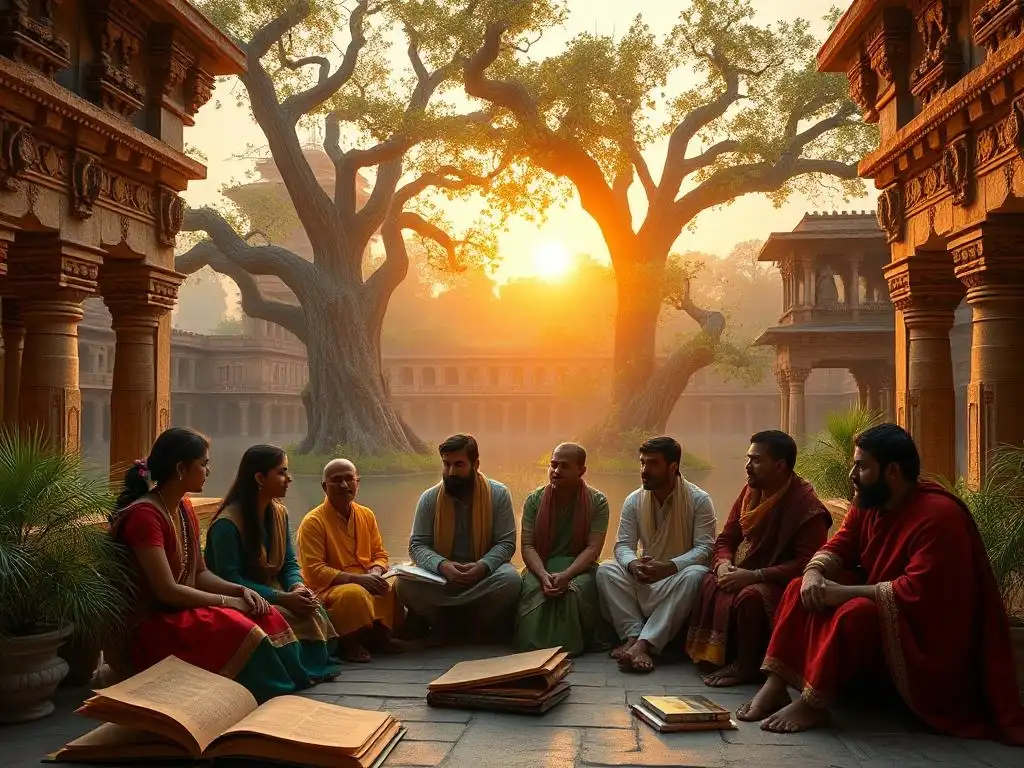
Welcome to Ancient India History, where we embark on a fascinating journey through the intriguing tapestry of ancient Indian civilizations. Our exploration reveals not just the grandeur of empires, but also the profound contributions to education that shaped the world. Dive into our featured article, "The Historical Records of Ancient Indian Universities: What They Reveal," as we uncover the rich legacy of ancient Indian universities history.
What secrets do these institutions hold about the knowledge and wisdom of a bygone era? Join us as we unlock the past and illuminate the path to understanding one of the most dynamic periods in human history!
Introduction to Ancient Indian Universities History
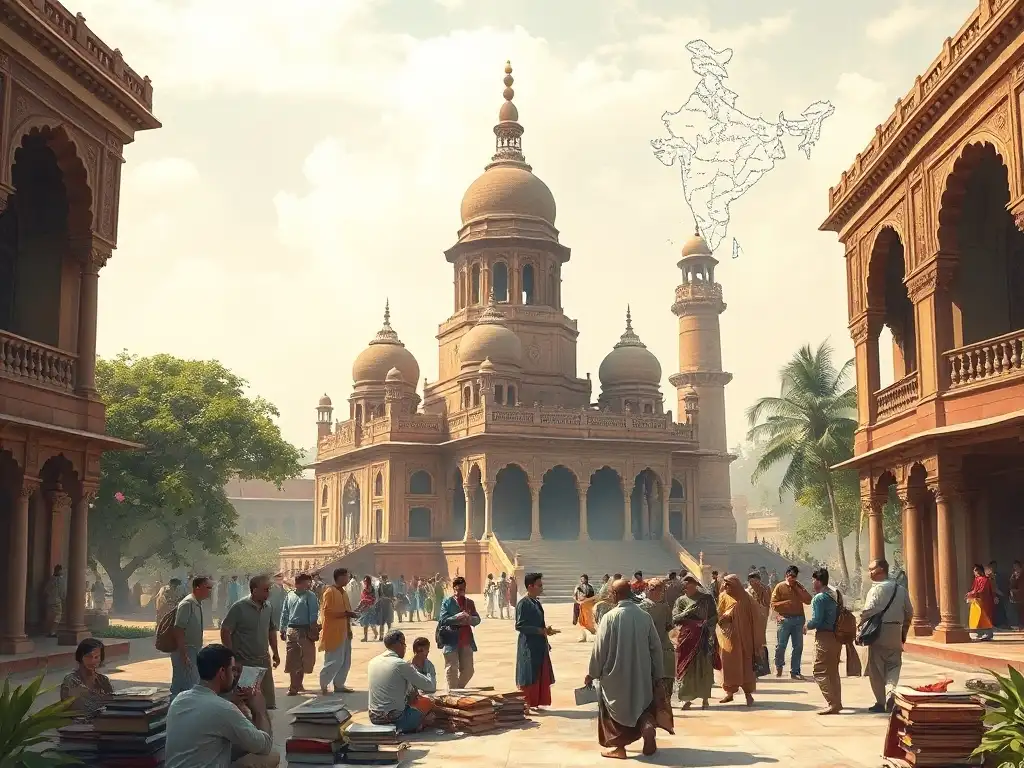
The history of ancient Indian universities is a pivotal chapter in the broader narrative of education and intellectual pursuit in one of the world's oldest civilizations. Renowned for their contributions to various fields—ranging from mathematics and astronomy to philosophy and medicine—these institutions were not merely centers of learning; they were vibrant hubs of cultural exchange and knowledge dissemination.
The historical records surrounding ancient Indian universities, such as Nalanda and Takshashila, provide invaluable insights into the educational systems that flourished in ancient India. This article delves into the rich tapestry of ancient Indian universities history, exploring their origins, significance, and the impact they had on shaping education not only in India but across the world.
Overview of Ancient Indian Education Systems
Education in ancient India was deeply intertwined with the cultural and spiritual fabric of society. It was characterized by a unique blend of traditional learning and practical knowledge, facilitated through various mediums, including oral transmission and written texts. The educational systems were largely influenced by the prevailing religious and philosophical ideologies of the time, with a focus on achieving a holistic understanding of life.
- Key Features of Ancient Indian Education:
- Gurukul System: Students lived with their teachers (gurus) in ashrams, engaging in personalized learning.
- Subjects of Study: Included a wide range of disciplines such as philosophy, mathematics, astronomy, medicine, and arts.
- Inclusivity: Some universities were open to students from diverse backgrounds, promoting a culture of inclusivity.
The ancient universities were instrumental in training scholars who would go on to contribute significantly to various fields, leaving a lasting legacy that continues to influence modern education.
Significance of Historical Records in Understanding Education
The historical records of ancient Indian universities serve as crucial artifacts that shed light on the educational practices, curricula, and societal values of their times. These records, which include inscriptions, texts, and accounts from travelers, reveal:
- Curriculum Details: What subjects were taught and how they were structured.
- Pedagogical Methods: The teaching techniques employed by gurus and the learning processes of students.
- Cultural Exchange: The interactions between Indian scholars and foreign students, which enriched the academic environment.
Understanding these records allows historians and educators alike to appreciate the depth of ancient Indian educational systems and their contributions to global knowledge.
The Origins of Education in Ancient India
The roots of education in ancient India can be traced back to early civilizations and the evolution of societal structures. This section explores the foundational aspects that shaped the educational landscape of the time.
Early Educational Practices in the Indus Valley Civilization
The Indus Valley Civilization (c. 3300–1300 BCE) is one of the earliest urban cultures in the world, and it laid the groundwork for future educational practices. Archaeological findings suggest that the people of this civilization valued knowledge and learning, as evidenced by:
- Urban Planning and Architecture: Indicating advanced knowledge in mathematics and engineering.
- Trade and Commerce: Suggesting practical education related to commerce and craftsmanship.
While direct evidence of formal educational institutions from this era is sparse, the emphasis on practical skills and knowledge suggests that education was an integral part of daily life.
Influence of Vedic Traditions on Learning
The Vedic period (c. 1500–500 BCE) marked a significant transformation in the educational landscape of India. The Vedas, sacred texts of Hinduism, emphasized knowledge, spirituality, and rituals, leading to the establishment of formal educational systems. Key aspects include:
- Oral Tradition: Emphasis on memorization and recitation of Vedic hymns.
- Emergence of Gurukuls: Establishment of centers for learning where students learned under the guidance of gurus.
- Philosophical Inquiry: The exploration of fundamental questions about existence, ethics, and knowledge, laying the groundwork for future philosophical discourse.
These traditions not only influenced the educational systems of ancient universities but also shaped the intellectual trajectory of Indian civilization for centuries to come.
Prominent Ancient Indian Universities
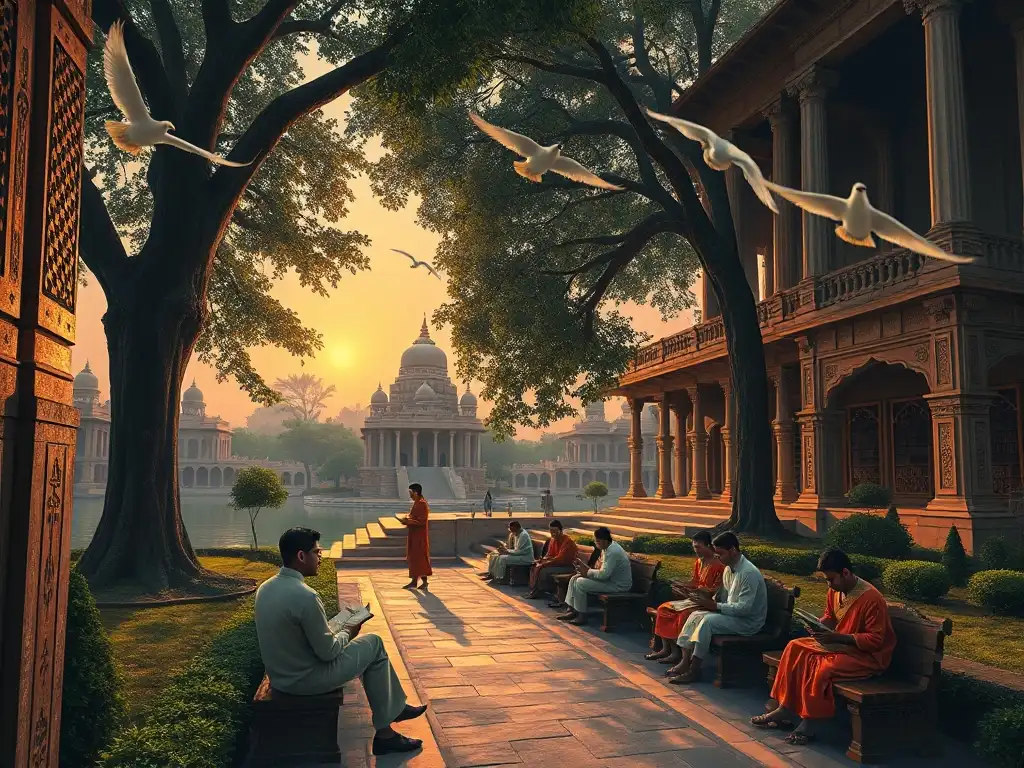
Ancient India was home to several renowned universities that played a pivotal role in the dissemination of knowledge, culture, and philosophy. Among these institutions, Nalanda and Takshashila (Taxila) stand out as notable examples, each contributing uniquely to the educational landscape of their time.
Nalanda University: A Beacon of Knowledge
Founded in the 5th century CE, Nalanda University emerged as one of the first residential universities in the world. Situated in present-day Bihar, it attracted students and scholars from various parts of Asia, including China, Korea, Japan, Tibet, Mongolia, and Southeast Asia. Nalanda was renowned for its diverse curriculum, which encompassed subjects like philosophy, medicine, mathematics, astronomy, and languages.
The university was not merely an educational institution; it served as a vibrant hub for intellectual discourse and debate. Its faculty comprised eminent scholars, including the famous Buddhist philosopher Nagarjuna and the polymath Aryabhata. The intricate system of learning at Nalanda included lectures, discussions, and debates, emphasizing critical thinking and practical application of knowledge.
Nalanda's significant contributions to education and scholarship were tragically cut short in the 12th century when it was attacked and destroyed by invaders. However, its legacy endures, symbolizing the rich educational heritage of ancient India.
Takshashila (Taxila): The First University
Takshashila, often referred to as Taxila, is considered one of the earliest universities in the world, with origins dating back to the 6th century BCE. Located in modern-day Pakistan, it became a melting pot of various cultures and ideas, attracting students from across the Indian subcontinent and beyond.
The university offered a wide array of subjects, including the Vedas, grammar, philosophy, medicine, and warfare. Takshashila was distinguished by its unique approach to education, where students were encouraged to engage in discussions and debates, fostering an environment of critical inquiry.
Among its notable alumni was Chanakya, a renowned philosopher and strategist, who later became the chief advisor to Chandragupta Maurya. The institution’s emphasis on practical knowledge and holistic education laid the groundwork for future educational systems in ancient India and influenced generations of learners.
The Structure and Functioning of Ancient Indian Universities
Ancient Indian universities were structured around a collaborative and holistic approach to education, fostering an environment where knowledge was revered and actively pursued. These institutions not only focused on academic learning but also integrated moral and ethical teachings into their curricula.
Curriculum and Pedagogical Approaches
The curriculum of ancient Indian universities was diverse and comprehensive, reflecting the multifaceted nature of knowledge. Subjects were often interrelated, promoting a broad understanding of various disciplines. Key areas of study included:
- Philosophy: Exploring metaphysical questions and ethical frameworks.
- Mathematics: Including arithmetic, geometry, and astronomy, with figures like Aryabhata making significant contributions.
- Medicine: Ayurvedic principles were taught alongside practical medical training.
- Languages: Sanskrit was the primary language of instruction, but other regional languages were also prevalent.
Pedagogical approaches emphasized experiential learning, with students encouraged to engage in discussions, debates, and practical applications of their studies. This method not only nurtured intellectual growth but also fostered critical thinking skills essential for personal and societal development.
Role of Teachers and Gurus in Ancient Education
In ancient Indian universities, teachers, often referred to as Gurus, held a position of great respect and authority. The relationship between a Guru and a student was deeply rooted in mutual respect, trust, and a shared commitment to the pursuit of knowledge. Gurus were not just instructors; they were mentors who guided students through their academic and personal journeys.
The role of the Guru extended beyond mere instruction. They were responsible for shaping the moral and ethical framework of their students, instilling values such as humility, discipline, and a sense of duty. This holistic approach to education ensured that students were not only well-versed in their subjects but also became responsible and ethical members of society.
Student Life and Residential Learning
Student life at ancient Indian universities was characterized by a communal and immersive learning experience. Students typically resided within the campus, fostering a sense of community and collaboration. This residential model allowed for continuous interaction among peers and faculty, enhancing the learning environment.
Daily routines included attending lectures, participating in discussions, and engaging in various extracurricular activities, such as sports and arts. The emphasis on residential learning enabled students to develop strong interpersonal skills and lifelong friendships, making their educational experience both enriching and enjoyable.
The structure and functioning of ancient Indian universities created a unique educational ecosystem that promoted intellectual curiosity, ethical conduct, and personal growth, leaving a lasting legacy on the educational systems that followed.
Contributions of Ancient Indian Universities to Global Knowledge
Ancient Indian universities, such as Nalanda and Takshashila, played a pivotal role in the dissemination and development of knowledge across various fields. These institutions were not merely centers of learning; they were hubs of intellectual exchange that contributed significantly to global knowledge. Scholars from diverse regions flocked to these universities, where they engaged in rigorous study and debate, thus fostering an environment rich in academic collaboration. The curriculum was broad, encompassing subjects like philosophy, mathematics, astronomy, medicine, and linguistics, which enabled a holistic approach to education.
These universities were instrumental in preserving and enhancing ancient texts and knowledge. They produced an array of manuscripts that were later translated into various languages, influencing scholars in far-off lands. The contributions of ancient Indian universities laid the groundwork for many fields of study that continue to shape modern academic discourse, demonstrating their enduring legacy in the global context.
Innovations in Mathematics and Astronomy
Ancient Indian universities made groundbreaking contributions to mathematics and astronomy that have had a lasting impact on these fields. Notable scholars such as Aryabhata and Brahmagupta, who were based in these institutions, introduced concepts that were revolutionary for their time. Aryabhata's work, "Aryabhatiya," contained methods for solving quadratic equations and provided insights into the place value system that is fundamental to modern mathematics.
In astronomy, ancient Indian scholars developed sophisticated models to explain celestial phenomena. They accurately calculated the length of the solar year, the distance to the moon, and the positions of planets. The introduction of the decimal system and concepts like zero, which originated in India, significantly influenced mathematical thought worldwide. These innovations were disseminated through translations and interactions with scholars from the Islamic Golden Age, further embedding Indian contributions into the global scientific narrative.
Advancements in Medicine and Philosophy
The medical sciences flourished in ancient Indian universities, where scholars like Charaka and Sushruta contributed extensively to the fields of medicine and surgery. Charaka's "Charaka Samhita" is one of the foundational texts of Ayurveda, detailing diagnostic techniques, treatment methods, and the ethical responsibilities of physicians. Sushruta's work on surgical techniques, including procedures like cataract surgery, exemplified the advanced understanding of human anatomy and surgical practices.
Philosophically, ancient Indian universities were home to diverse schools of thought, including Vedanta, Buddhism, and Jainism. These philosophical traditions explored concepts of ethics, metaphysics, and epistemology, influencing not only Indian thought but also contributing to global philosophical discourse. The debates and discussions that took place in these universities fostered critical thinking and inquiry, which laid the groundwork for later philosophical developments in both Eastern and Western traditions.
Influence on Other Civilizations and Educational Systems
The influence of ancient Indian universities extended beyond their geographical boundaries, impacting educational systems and cultures around the world. As scholars traveled to and from these institutions, they carried with them knowledge that enriched other civilizations. The spread of Indian mathematical concepts and astronomical knowledge to the Islamic world is one of the most notable examples of this influence. Texts from Indian scholars were translated into Arabic and subsequently into Latin, which played a crucial role in the European Renaissance.
Additionally, the model of education established by these ancient universities inspired the development of other educational institutions throughout Asia and beyond. The emphasis on discussion, debate, and interdisciplinary study became a hallmark of educational practices in various cultures. The legacy of ancient Indian universities is evident in contemporary education systems that prioritize critical thinking and the pursuit of knowledge across diverse fields.
Challenges Faced by Ancient Indian Universities
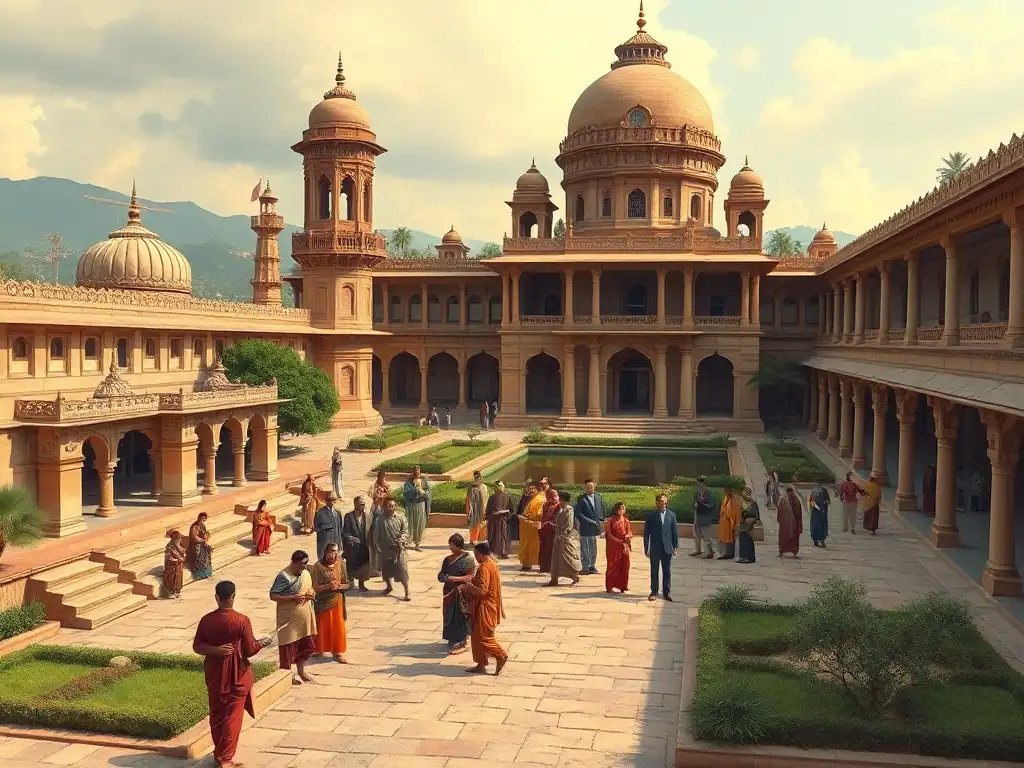
Despite their significant contributions, ancient Indian universities faced numerous challenges that ultimately affected their sustainability and influence.
Political and Social Factors Affecting Education
Political instability and social changes greatly impacted the functioning of ancient Indian universities. Frequent invasions and shifts in power dynamics, particularly during the decline of empires, led to the destabilization of these institutions. The patronage that supported universities often waned during times of political turmoil, resulting in reduced funding and resources for scholars and students.
Social factors, including caste-based restrictions, also played a role in shaping the educational landscape. While universities were open to a range of students, systemic inequalities sometimes limited access to education for certain groups. These challenges hindered the potential for widespread intellectual growth and contributed to the gradual decline of these prestigious institutions.
Decline of Prominent Universities: Causes and Consequences
The decline of prominent ancient Indian universities can be attributed to a combination of internal and external factors. The invasions by foreign powers, such as the Huns and later the Turks, led to significant destruction and displacement. Many universities were sacked, and their libraries, filled with invaluable manuscripts, were lost forever.
Additionally, the changing socio-political landscape shifted the focus from traditional centers of learning to more localized forms of education. As a result, the centralized structures of universities began to dissolve, leading to a fragmentation of knowledge and loss of scholarly traditions. The consequences of this decline were profound; the rich intellectual heritage that had flourished in ancient India faced a period of stagnation, and many of the advancements made by Indian scholars were obscured or forgotten until their rediscovery in later centuries.
The Legacy of Ancient Indian Universities Today
The legacy of ancient Indian universities, particularly institutions like Nalanda and Taxila, continues to resonate through modern education systems. These universities were not merely centers of learning; they were vibrant intellectual hubs that fostered a spirit of inquiry, debate, and exchange of ideas across various disciplines, including philosophy, mathematics, medicine, and the arts. The architectural grandeur, curriculum diversity, and multicultural environment of these ancient universities laid the foundation for a holistic educational approach that is still celebrated today.
The ancient Indian universities emphasized a comprehensive education that transcended rote learning. Instead, they promoted critical thinking and encouraged students to engage actively with their subjects. This emphasis on a well-rounded education is reflected in contemporary educational reform efforts that seek to integrate interdisciplinary studies, collaborative learning, and experiential education into curricula worldwide. The enduring impact of these principles highlights the timeless relevance of ancient Indian universities in shaping educational paradigms.
Modern Educational Institutions Inspired by Ancient Models
In recent years, several modern educational institutions have drawn inspiration from the rich traditions of ancient Indian universities. For example, universities like Nalanda University, founded in 2010 in Bihar, aim to revive the spirit of its ancient predecessor by focusing on interdisciplinary studies and research that mirrors the historical curriculum. These institutions seek to create an environment where students can engage in innovative thinking, combining traditional wisdom with contemporary knowledge.
Moreover, various universities across India and abroad have integrated elements of the ancient education system into their frameworks. This includes fostering a sense of community learning, promoting mentorship, and encouraging students to take part in research that addresses real-world challenges. By embracing these ancient models, modern educational institutions strive to cultivate a more dynamic and inclusive academic atmosphere, resonating with the principles that characterized ancient Indian higher education.
Relevance of Ancient Educational Principles in Contemporary Education
The principles of education established by ancient Indian universities hold significant relevance in today’s educational landscape. Central to these principles is the concept of ‘Guru-Shishya’ (teacher-student relationship), which emphasizes mentorship, personalized learning, and the transmission of knowledge through dialogue and interaction. This approach is increasingly recognized as beneficial in contemporary education, where fostering strong relationships between educators and students can enhance learning outcomes.
Additionally, the ancient emphasis on holistic education—which nurtures intellectual, emotional, and spiritual growth—aligns with current movements advocating for social and emotional learning (SEL) in schools. Programs that promote mindfulness, ethical reasoning, and emotional intelligence in students echo the ancient ideals that regarded education as a means of personal and societal transformation.
Conclusion: The Impact of Ancient Indian Universities on Today's Education
The historical records of ancient Indian universities reveal a profound understanding of the purpose and method of education that remains influential today. These institutions not only contributed to the academic landscape of their time but also laid the groundwork for educational practices that are still relevant. By examining the strengths and practices of ancient educational systems, contemporary educators can glean valuable insights that can be adapted to modern contexts.
Summary of Key Insights from Historical Records
Key insights from the historical records of ancient Indian universities include:
- Interdisciplinary Learning: Ancient universities encouraged the study of diverse subjects, fostering a well-rounded education.
- Focus on Critical Thinking: The educational approach emphasized inquiry and debate over rote memorization.
- Mentorship and Community: The Guru-Shishya tradition underscored the importance of personalized learning experiences.
- Cultural Exchange: These universities served as melting pots of various cultures and ideas, promoting a global perspective in education.
These insights provide a framework for developing modern educational philosophies that honor the depth and richness of ancient knowledge.
Future Research Directions in Ancient Indian Educational History
Future research directions in the history of ancient Indian educational systems could include:
- Comparative Studies: Analyzing the pedagogical methods of ancient Indian universities alongside those of other ancient civilizations to identify unique contributions.
- Archaeological Investigations: Further excavations at sites like Nalanda and Taxila to uncover more artifacts and records that could shed light on daily life and educational practices.
- Digital Humanities: Utilizing technology to digitize and analyze manuscripts and texts from ancient Indian universities, making them accessible for scholarly research.
- Impact Studies: Investigating how the teachings and practices from ancient Indian universities influenced subsequent educational systems in Asia and beyond.
By pursuing these research avenues, scholars can enrich our understanding of ancient Indian universities, ensuring that their legacy continues to inform and inspire future generations.
- Introduction to Ancient Indian Universities History
- Overview of Ancient Indian Education Systems
- Significance of Historical Records in Understanding Education
- The Origins of Education in Ancient India
- Prominent Ancient Indian Universities
- The Structure and Functioning of Ancient Indian Universities
- Contributions of Ancient Indian Universities to Global Knowledge
- Challenges Faced by Ancient Indian Universities
- The Legacy of Ancient Indian Universities Today
- Conclusion: The Impact of Ancient Indian Universities on Today's Education
- What were the major ancient Indian universities?
- How did ancient Indian universities contribute to education?
- What subjects were taught at ancient Indian universities?
- How did the administration of ancient Indian universities function?
- What is the significance of ancient Indian universities in today's context?
Frequently Asked Questions
What were the major ancient Indian universities?
Ancient Indian universities like Nalanda and Takshashila were renowned centers of learning and attracted scholars from across the globe.
How did ancient Indian universities contribute to education?
These universities played a crucial role in the development of various fields such as mathematics, astronomy, and philosophy, establishing a strong educational framework.
What subjects were taught at ancient Indian universities?
Students studied a wide range of subjects including medicinal sciences, arts, and languages, reflecting the diverse knowledge of ancient Indian civilizations.
How did the administration of ancient Indian universities function?
Ancient universities had structured governance systems, with councils overseeing curriculum and faculty, ensuring quality education.
What is the significance of ancient Indian universities in today's context?
The legacy of ancient Indian universities emphasizes the importance of holistic education and interdisciplinary studies, which are relevant in modern educational practices.
Final Reflection: Unveiling the Legacy of Ancient Indian Universities
The exploration of ancient Indian universities and their historical records reveals a profound connection to our present-day educational landscape. These institutions were not merely centers of learning; they were vibrant hubs of knowledge that fostered critical thinking, innovation, and cultural exchange. Today, as we navigate an increasingly complex world, the wisdom and methodologies of these ancient universities remind us of the enduring value of holistic education and the importance of nurturing inquisitive minds.
The influence of these ancient institutions continues to resonate within our cultural and social frameworks. Their legacy is a testament to the power of knowledge and the pursuit of truth. The teachings and philosophies that emerged from places like Nalanda and Takshashila have shaped not only the academic discourse in India but have also inspired global educational paradigms.
As Mahatma Gandhi once said, "> Live as if you were to die tomorrow. Learn as if you were to live forever." This quote encapsulates the spirit of lifelong learning that these ancient universities championed, urging us to embrace education as a lifelong journey.
As we reflect on the lessons from the history of ancient Indian universities, I invite you to consider how these insights can be applied in your own life. Embrace the pursuit of knowledge with curiosity and passion, just as the scholars of the past did. Let us honor the legacy of these institutions by fostering a culture of learning, inquiry, and open-mindedness in our communities. Together, we can contribute to a future where education remains a powerful tool for personal and societal transformation.
Unveil the Secrets of Ancient Indian Knowledge!
Thank you for diving deep into the fascinating world of ancient Indian universities! You've uncovered powerful insights into how these institutions shaped education and culture in the past. Now it’s time to take that knowledge further and enhance your understanding of history.
Here are some engaging steps you can take next:
- Explore more by visiting local libraries or online databases to discover ancient texts and records that illuminate university life.
- Join a history club or online forum to discuss your findings about ancient education — your contributions can inspire others!
- Consider starting a blog to share your reflections and insights from this exploration, allowing the knowledge to resonate and engage a wider audience.
What aspects of ancient educational practices do you find most surprising, and how might they influence modern education today?