
The Lasting Influence of Ashoka’s Edicts in Modern India


Welcome to Ancient India History, where we embark on an enlightening journey through the rich tapestry of India's past. Here, you will uncover the profound cultural and historical contributions of ancient Indian civilizations, from the remarkable Indus Valley to the illustrious Gupta Empire. In our featured article, “The Lasting Influence of Ashoka’s Edicts in Modern India,” we delve into how the compassionate principles of Emperor Ashoka continue to resonate in contemporary society. Prepare to explore the echoes of history that shape our modern world, and let curiosity guide you as you navigate through the fascinating stories that await!
Introduction to Ashoka the Great
Ashoka the Great, one of the most revered emperors of ancient India, is celebrated not only for his military prowess but also for his remarkable transformation into a proponent of peace and compassion. His reign, which lasted from approximately 268 to 232 BCE, marked a pivotal era in Indian history characterized by the promotion of Buddhist ideals and ethical governance.
The edicts issued by Ashoka during his rule reflect a profound commitment to justice, non-violence, and social welfare, which continues to resonate in contemporary Indian society. This article delves into the lasting influence of Ashoka's edicts, exploring their relevance in modern India and the way they have shaped ethical and moral frameworks in governance and society.
Overview of Ashoka's Life and Reign
Ashoka was born into the Mauryan dynasty and ascended the throne after a series of significant military campaigns, notably the conquest of Kalinga. The brutal aftermath of the Kalinga War led him to embrace Buddhism, transforming his approach to governance.
He sought to rule through Dharma (moral law) rather than fear, advocating for the welfare of his subjects and promoting the principles of non-violence, compassion, and tolerance. His administration was marked by the establishment of a vast network of roads and hospitals, as well as the propagation of Buddhist teachings across his empire, extending as far as Central Asia and Southeast Asia.
Significance of Ashoka's Edicts
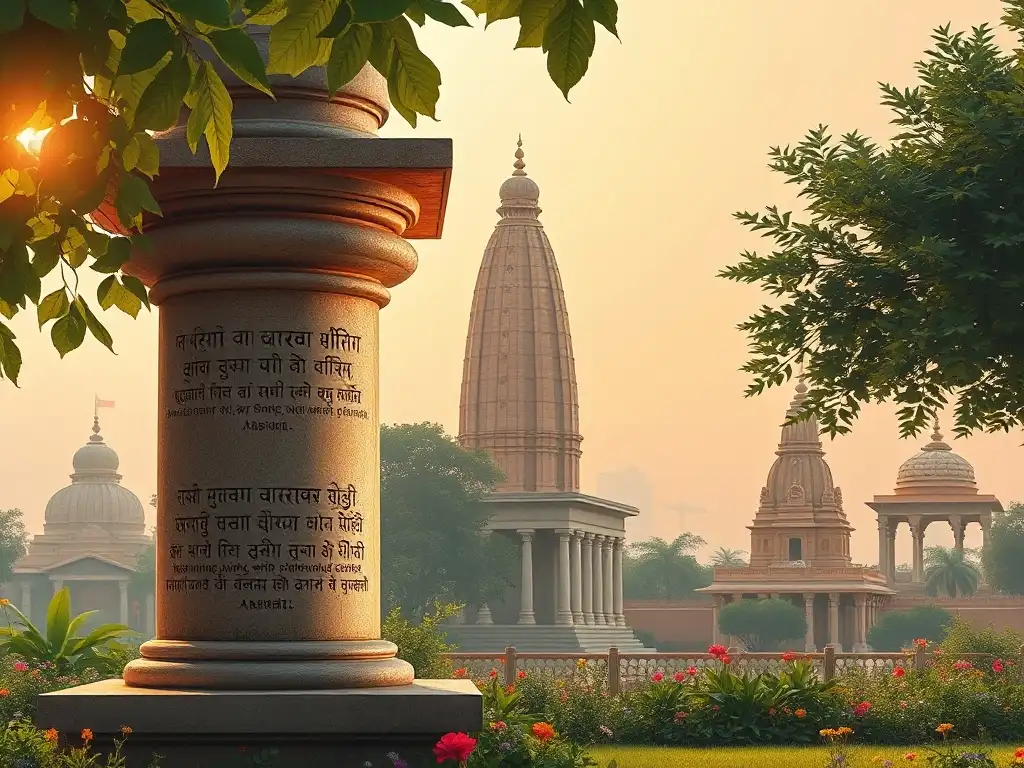
The edicts of Ashoka are inscribed on pillars and rocks throughout his former empire, serving as enduring messages of his philosophies and governance. They reflect a unique blend of moral and practical governance, emphasizing the importance of ethical conduct, community welfare, and respect for all living beings. The significance of these edicts extends beyond their historical context; they provide a framework for ethical leadership and governance that is relevant to modern political and social issues. Today, many of Ashoka's ideals resonate with contemporary movements advocating for justice, environmental sustainability, and human rights.
Understanding Ashoka's Edicts
Definition and Purpose of Ashoka's Edicts
Ashoka's edicts consist of a series of proclamations that were carved into stone, intended to disseminate his policies and values across his vast empire. These inscriptions were not merely legal decrees; they were deeply philosophical statements intended to guide the moral compass of his subjects and promote a harmonious society. The edicts were strategically placed along trade routes and public spaces, ensuring that they were accessible to the population, thereby reinforcing their importance in everyday life.
Key Themes Addressed in the Edicts
The themes addressed in Ashoka’s edicts are vast and multifaceted, encompassing:
- Non-violence (Ahimsa): A core principle advocating for the respect and preservation of all forms of life.
- Compassion (Karuna): Encouraging kindness towards others, including animals and the less fortunate.
- Religious Tolerance: Promoting respect for different faiths and beliefs, fostering a spirit of coexistence.
- Social Welfare: Advocating for the well-being and dignity of all citizens, emphasizing the importance of moral conduct in public and private life.
- Environmental Stewardship: Encouraging the protection of nature and wildlife, underscoring the interconnectedness of all life.
These themes not only represent Ashoka's vision for a just society but also serve as guiding principles that echo in modern discourses on ethics, governance, and social responsibility. Through this exploration, we can appreciate how Ashoka's edicts continue to influence contemporary thought and practice in India and beyond.
Ashoka’s Edicts and Their Historical Context
Ashoka the Great, the third ruler of the Mauryan Empire, reigned from approximately 268 to 232 BCE. His edicts, inscribed on rocks and pillars throughout his vast empire, are pivotal documents that reflect both his governance philosophy and the socio-political climate of ancient India. After witnessing the devastation caused by the Kalinga War, Ashoka underwent a profound transformation, embracing Buddhism and advocating for a more ethical and compassionate rule. This shift is encapsulated in his edicts, which emphasize principles such as non-violence, tolerance, and respect for all living beings.
The edicts are significant not just for their content but also for their historical context. They were inscribed in various languages, including Prakrit and Greek, demonstrating Ashoka's intent to reach a diverse audience across his empire. The edicts serve as a reflection of his commitment to Dhamma (moral law) and highlight the importance of social welfare, promoting values that sought to unify the culturally and linguistically diverse populations under his rule.
The Mauryan Empire and Its Governance
The Mauryan Empire, established by Chandragupta Maurya in the 4th century BCE, became one of the largest empires in ancient India, reaching its zenith under Ashoka. The empire was marked by a highly organized administrative structure, characterized by a centralized government that facilitated effective control over vast territories. Ashoka's governance was innovative for its time, incorporating a network of provincial governors and local officials who implemented policies aimed at promoting public welfare.
Ashoka's commitment to Dhamma was reflected in his governance style, which emphasized ethical leadership and the welfare of all subjects. The edicts served as a tool for communication, allowing him to convey his policies and expectations to his subjects. By promoting values such as justice, compassion, and non-violence, Ashoka sought to create a harmonious society where the well-being of citizens was prioritized.
The Role of Edicts in Ancient Indian Society
Ashoka’s edicts played a crucial role in shaping ancient Indian society by providing a framework for ethical conduct and social responsibility. They addressed various aspects of life, including moral behavior, animal welfare, and the importance of community service. The edicts were not merely commands but invitations for the populace to reflect on their actions and their impact on society.
The presence of the edicts across different regions facilitated a sense of unity among the diverse populations of the Mauryan Empire. They served as a common ethical reference, promoting shared values and principles. The inscriptions also encouraged dialogue about morality and governance, fostering a culture of introspection and civic responsibility among the subjects.
Modern Influence of Ashoka's Edicts
The influence of Ashoka's edicts extends beyond ancient history, resonating in contemporary India in various forms. Their core principles continue to inspire modern governance, social policies, and cultural practices. The enduring legacy of Ashoka is evident in the way his values are integrated into India's democratic framework and societal norms.
Ashoka's Edicts in Contemporary Indian Governance
In modern India, the principles articulated in Ashoka's edicts have found a place in the governance framework. The emphasis on non-violence and social welfare aligns with the foundational values of the Indian Constitution. Policies aimed at promoting peace, communal harmony, and social justice resonate with Ashoka's vision of a compassionate society.
Moreover, the government of India has adopted Ashoka’s edicts as symbols of ethical governance, often referencing them in public speeches and official documents. Initiatives focused on environmental conservation and animal rights echo the sentiments expressed in the edicts, demonstrating their relevance in addressing contemporary social issues.
Influence on Indian Culture and Society
Ashoka's edicts have had a profound impact on Indian culture and society, shaping moral and ethical norms that persist to this day. The ideals of tolerance, compassion, and respect for all forms of life, articulated in the edicts, are deeply ingrained in Indian philosophical thought and cultural practices.
Festivals, art, and literature often reflect the values promoted by Ashoka. For instance, the celebration of non-violence during festivals like Mahatma Gandhi Jayanti aligns with Ashoka's teachings. Furthermore, contemporary movements advocating for animal rights and environmental protection draw inspiration from Ashoka's commitment to the welfare of all living beings.
The lasting influence of Ashoka's edicts is evident across various facets of modern Indian society, showcasing their relevance in both governance and cultural practices. The edicts continue to inspire generations, reinforcing the importance of ethical leadership and social responsibility.
Case Studies of Ashoka's Edicts in Action

The principles enshrined in Ashoka's edicts have found resonance in various modern initiatives and policies across India. One notable example is the promotion of non-violence and peace. The edicts emphasize ahimsa (non-violence) as a cornerstone of governance, which has influenced several modern peace movements and conflict resolution strategies in contemporary Indian society. Various NGOs and government programs have adopted these ideals to foster community harmony and mediate disputes, reflecting Ashoka's vision.
Additionally, Ashoka's edicts advocate for public welfare, which is mirrored in modern social policies aimed at improving education, health, and sanitation. For instance, the National Health Mission, launched in 2005, emphasizes accessible healthcare for all, paralleling Ashoka's commitment to the well-being of his subjects as seen in his edicts. This mission, along with other welfare schemes, showcases a commitment to social equity, echoing the ancient ruler’s ethos.
Another significant case study is the implementation of environmental conservation efforts inspired by Ashoka's respect for nature. The edicts highlight the importance of protecting wildlife and natural resources, which has been echoed in modern environmental legislations such as the Wildlife Protection Act of 1972 and various initiatives aimed at afforestation and sustainable development. These policies illustrate Ashoka's lasting impact on how modern governance approaches environmental issues.
Examples of Modern Policies Reflecting Ashoka’s Philosophy
Modern India has seen various policies that reflect the core philosophies of Ashoka's edicts, particularly in promoting social justice, human rights, and sustainable development.
- Right to Information Act (RTI), 2005: This act embodies Ashoka’s commitment to transparency and accountability in governance. By empowering citizens to seek information from public authorities, the RTI aligns with the edicts’ emphasis on moral governance and the welfare of the populace.
- Swachh Bharat Abhiyan (Clean India Mission): Launched in 2014, this initiative aims to promote cleanliness, sanitation, and hygiene across the country. Ashoka's focus on public health and sanitation resonates with this campaign, reflecting the ancient ruler's vision for a clean and healthy society.
- National Policy on Education: This policy aims to provide equitable and quality education to all, mirroring Ashoka’s belief in the importance of education for societal well-being. The edict stressing the need for moral education underscores the modern emphasis on holistic learning.
These examples illustrate how Ashoka's principles continue to inform and inspire contemporary policy-making, creating a bridge between ancient wisdom and modern governance.
Critiques and Limitations of Ashoka's Edicts in Modern Times
While Ashoka's edicts offer valuable insights, their application in modern governance is not without critiques and limitations. One major critique is that the broad and often philosophical nature of the edicts can lead to varying interpretations, making it challenging to implement them uniformly across diverse socio-political contexts in India. This ambiguity can result in inconsistencies in policy application, where the essence of Ashoka’s teachings may be diluted or misinterpreted.
Moreover, the edicts were formulated in a different historical and cultural context, which raises questions about their applicability in today’s globalized world. Modern challenges such as economic disparity, technological advancements, and environmental crises require nuanced approaches that may not strictly adhere to ancient principles. Critics argue that relying solely on Ashoka's edicts might hinder innovative solutions that address contemporary issues effectively.
Challenges in Implementing Ashoka’s Principles Today
Implementing Ashoka's principles in today's society faces several challenges. One significant issue is the political landscape, where competing interests and power dynamics can overshadow the altruistic ideals promoted by Ashoka. Politicians and leaders may prioritize short-term gains over the long-term welfare of citizens, leading to a disconnect between policy intentions and actual outcomes.
Another challenge lies in the socio-economic diversity of India. The vast differences in cultural, economic, and social backgrounds across regions complicate the application of universal principles derived from Ashoka's edicts. For instance, while promoting non-violence is a noble goal, in areas affected by conflict or communal tensions, the practical implementation of such ideals can be particularly daunting.
Additionally, the bureaucratic machinery often struggles to translate philosophical concepts into actionable policies. The absence of clear frameworks for integrating Ashoka's teachings into governance can impede progress, leaving many well-intentioned initiatives ineffective.
The Relevance of Historical Context in Modern Application

Understanding the historical context of Ashoka's edicts is crucial for their modern application. The Mauryan Empire was characterized by a specific set of socio-political conditions that shaped Ashoka's policies. His edicts were a response to the challenges of his time, including the aftermath of the Kalinga War, which prompted a shift towards non-violence and compassion.
In modern India, the socio-political landscape is vastly different, marked by rapid urbanization, globalization, and digital transformation. Therefore, while the core values of Ashoka's edicts—such as compassion, justice, and welfare—remain relevant, their application must be contextualized within contemporary issues. Policymakers and scholars must critically analyze how these ancient principles can be adapted to address current challenges, ensuring that they resonate with today’s realities.
While Ashoka's edicts provide a framework for ethical governance and social welfare, their success in modern India hinges on recognizing historical contexts and adapting these principles to fit the complexities of contemporary society. This approach ensures that the legacy of Ashoka continues to influence the moral compass of modern governance.
Conclusion
The influence of Ashoka's edicts stretches far beyond the confines of ancient India, resonating deeply within contemporary society. His commitment to moral governance, non-violence, and social welfare laid a foundation that continues to inspire modern values and ideals. The edicts serve not only as historical artifacts but also as guiding principles that encourage ethical leadership, peace, and communal harmony in the fabric of modern Indian society.
Recap of Ashoka’s Edicts and Their Enduring Legacy
Ashoka the Great, known for his transformation from a conqueror to a proponent of peace, inscribed his edicts across his empire, advocating for values such as compassion, tolerance, and social responsibility. These edicts emphasized:
- Non-violence (Ahimsa): Promoting peace and respect for all living beings.
- Dharma: Encouraging moral conduct and righteousness in both personal and public life.
- Social Welfare: Addressing the needs of the underprivileged and fostering community development.
The legacy of Ashoka's edicts can be seen in various facets of modern Indian governance and societal norms, reinforcing the importance of ethical considerations in leadership and policy-making. His teachings resonate in the principles of modern democracy and human rights, emphasizing the profound impact of his moral philosophy on contemporary India.
Final Thoughts on the Relevance of Ashoka's Edicts in Today's India
In today's rapidly changing world, Ashoka's edicts offer timeless wisdom that remains relevant. The principles of compassion, harmony, and ethical governance are crucial in addressing modern challenges such as communal strife and environmental degradation. By revisiting Ashoka's vision, contemporary leaders and citizens alike can find inspiration in fostering a more just and peaceful society. The edicts remind us that the pursuit of a harmonious existence is not only a historical aspiration but a present-day necessity.
Call to Action
Encouragement to Explore Further on Ashoka the Great and His Edicts
As we reflect on the enduring influence of Ashoka's edicts, we encourage readers to delve deeper into the life and philosophy of Ashoka the Great. Explore his edicts, their historical context, and their implications for modern governance and social ethics. Engage with literature, documentaries, and discussions that illuminate Ashoka's legacy, and consider how these teachings can be applied in our daily lives to foster a culture of peace and mutual respect. Let us carry forward the ethos of Ashoka and contribute to a society that values compassion and justice for all.
- Introduction to Ashoka the Great
- Understanding Ashoka's Edicts
- Ashoka’s Edicts and Their Historical Context
- Modern Influence of Ashoka's Edicts
- Case Studies of Ashoka's Edicts in Action
- Examples of Modern Policies Reflecting Ashoka’s Philosophy
- Critiques and Limitations of Ashoka's Edicts in Modern Times
- Challenges in Implementing Ashoka’s Principles Today
- The Relevance of Historical Context in Modern Application
- Conclusion
- Call to Action
Frequently Asked Questions
What are Ashoka's edicts?
Ashoka's edicts are a series of inscriptions on rocks and pillars, proclaiming his moral and ethical principles as a ruler. They reflect his commitment to Buddhism and non-violence.
How do Ashoka's edicts influence modern governance?
Ashoka's edicts promote values like tolerance, justice, and social welfare, which have influenced modern democratic principles and legal frameworks in India and beyond.
In what ways are Ashoka's edicts relevant today?
The edicts emphasize peaceful coexistence and human rights, principles that continue to resonate in today's global discussions on ethics and governance.
What is the significance of Ashoka's edicts in Indian culture?
The edicts are seen as a foundation for India's cultural identity, reflecting its rich historical heritage and the enduring influence of Buddhist philosophy on contemporary life.
How can Ashoka's edicts inspire future generations?
By advocating for compassion, tolerance, and responsibility, Ashoka's edicts serve as a timeless guide for future leaders and citizens to foster a more just and harmonious society.
Final Reflection: The Enduring Legacy of Ashoka’s Edicts in Modern India
The relevance of Ashoka’s edicts in contemporary society cannot be overstated; they serve as a guiding light for ethical governance and social harmony. In a world often marred by conflict and division, the principles laid out by Ashoka over two millennia ago resonate with an urgency that compels us to reflect on our collective values. His emphasis on compassion, tolerance, and non-violence is not just historical doctrine but a call to action for modern leaders and citizens alike.
Culture and society are inextricably linked to the teachings of Ashoka, which continue to shape our moral compass. The edicts encourage us to foster dialogue and understanding in an increasingly polarized world. As Mahatma Gandhi once said, “An eye for an eye only ends up making the whole world blind.” This sentiment echoes Ashoka's philosophy, reminding us that true strength lies in our ability to embrace peace and empathy rather than perpetuate cycles of retribution.
As you reflect on the lessons of Ashoka’s edicts, consider how you can embody these principles in your own life. What steps can you take to promote compassion and understanding in your community? The legacy of Ashoka invites each of us to be agents of change, fostering a society that values dialogue over discord. Embrace this opportunity to contribute to a more harmonious world, inspired by the timeless wisdom of Ashoka.
Embrace the Wisdom of Ashoka: Take Action Today!
Thank you for exploring the profound impact of Ashoka’s Edicts on modern India! We hope you recognize the timeless lessons these ancient principles offer. Now, it’s time to translate that inspiration into meaningful action.
Here are a few ways you can connect more deeply with this remarkable history:
- Engage with your community: Organize or participate in a discussion group or workshop focused on Ashoka's principles and their relevance today.
- Share the message: Write an article or a social media post discussing the significance of Ashoka’s Edicts, encouraging friends to delve into our rich history together.
- Explore further: Visit a local museum or library to discover more about Ashoka and his enduring legacy, or consider volunteering with organizations that promote peace and non-violence.
What personal action will you take to embody the ideals of Ashoka in your life or community?