
The Significance of Ashoka’s Lion Capital in Indian Heritage

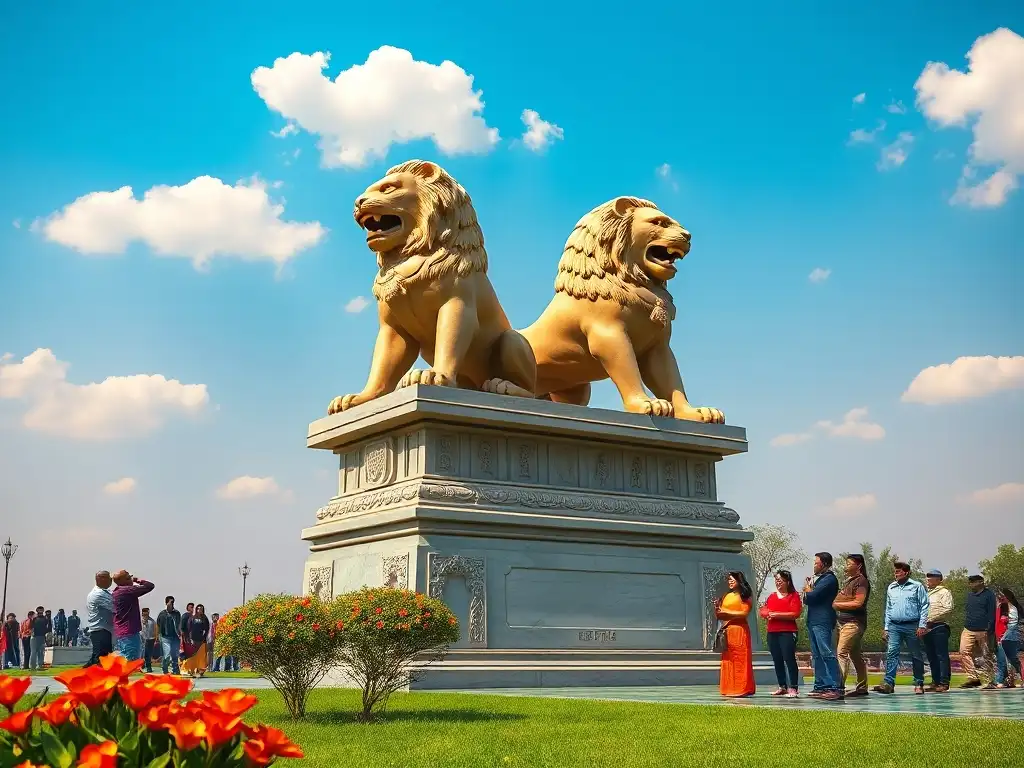
Welcome to Ancient India History, where we embark on a fascinating journey through the rich tapestry of ancient Indian civilizations. Today, we delve into the significance of Ashoka’s Lion Capital, a symbol that embodies the essence of India’s cultural heritage and the profound impact of Emperor Ashoka on history. As we explore the legacy of this iconic emblem, you'll uncover the stories and philosophies that shaped an empire and continue to resonate in modern times. Join us as we unveil the layers of meaning behind this remarkable artifact and its enduring influence on Indian identity.

Introduction to Ashoka’s Lion Capital
The Lion Capital of Ashoka stands as a profound emblem of India's rich cultural heritage and historical significance. Erected during the reign of Emperor Ashoka, who ruled in the 3rd century BCE, this magnificent structure not only showcases the artistic brilliance of ancient Indian civilization but also embodies the philosophical ideals of Buddhism and dharmic governance.
As a national symbol, the Lion Capital is integral to India’s identity, representing values such as justice, power, and truth. This article delves into the multifaceted significance of the Ashoka Lion Capital, exploring its design, symbolism, and enduring legacy within the context of Indian history.
Overview of Ashoka the Great
Emperor Ashoka, often referred to as Ashoka the Great, was the third ruler of the Maurya Dynasty and is renowned for his transformative role in Indian history. His reign, marked by extensive territorial expansion, was also notable for his embrace of Buddhism following the traumatic Kalinga War. Ashoka’s commitment to non-violence and moral governance led him to propagate the principles of Dharma, emphasizing compassion and ethical conduct. Through inscriptions and edicts, he communicated his vision for a just society, making him a pivotal figure in shaping the ethos of ancient India.
Historical Context of the Lion Capital
The Lion Capital was originally commissioned as a part of Ashoka's efforts to promote Buddhism and its values across his empire. It was designed to crown a Ashoka Pillar, which served as a monument to his edicts. The capital was discovered at Sarnath, the site where Buddha delivered his first sermon, reinforcing its significance as a symbol of spiritual and moral guidance. The Lion Capital reflects a period in Indian history where art, architecture, and spiritual philosophy intertwined, showcasing the sophistication of Mauryan craftsmanship and the philosophical depth of its rulers.
The Design and Symbolism of the Lion Capital
Architectural Features of the Lion Capital
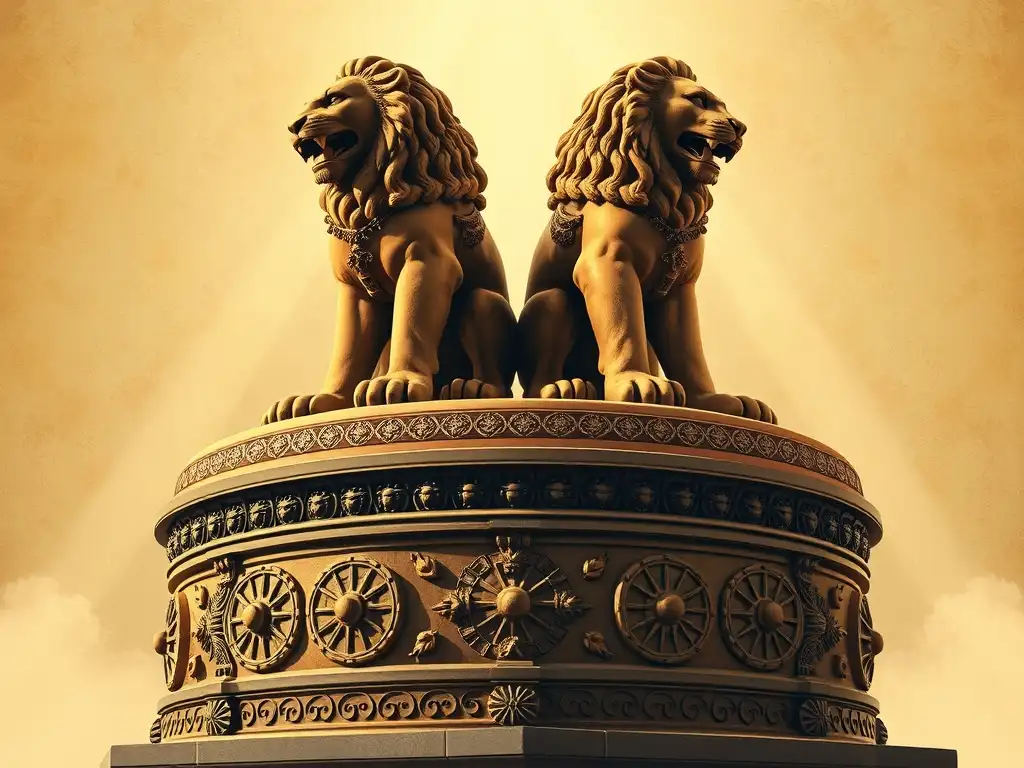
The Lion Capital features four majestic lions seated back to back on a circular abacus adorned with intricate carvings of elephants, horses, and a wheel, known as the Dharma Chakra. Each lion is meticulously sculpted, capturing a sense of strength and dignity. The craftsmanship exemplifies the advanced techniques of ancient Indian artisans, highlighting the harmonious blend of form and function. The circular abacus also serves as a platform for the lions, symbolizing the unity of the empire under Ashoka’s rule.
Symbolic Meanings of the Four Lions
The four lions in the Lion Capital are not merely representations of power; they carry profound symbolic meanings. Each lion represents the four cardinal directions— North, South, East, and West—signifying Ashoka’s intention to spread the teachings of Buddhism throughout the world. The Dharma Chakra at the center further symbolizes the cycle of life, death, and rebirth, embodying the principles of Dharma that Ashoka fervently championed. Together, these elements create a powerful icon of resilience, unity, and ethical governance, making the Lion Capital a lasting legacy of Ashoka’s vision for a harmonious society.
The Lion Capital of Ashoka stands as a monumental testament to ancient Indian civilization, reflecting both the artistic accomplishments and the ethical ideals of its time. Its significance continues to resonate in contemporary India, symbolizing not only national pride but also the enduring values of compassion and justice that Ashoka so deeply espoused.
Historical Importance of the Lion Capital
The Lion Capital, originally erected by Emperor Ashoka around the 3rd century BCE, stands as a monumental symbol of India's rich historical and cultural legacy. This exquisite sculpture, featuring four Asiatic lions standing back to back, is not only a representation of Ashoka's power and authority but also serves as a significant artifact that reflects the values and ideals of the Mauryan Empire. Found in the ruins of Sarnath, where Buddha delivered his first sermon, the Lion Capital embodies the harmonious blend of political sovereignty and spiritual enlightenment that characterized Ashoka's reign.
The historical importance of the Lion Capital is also evident in its function as a unifying symbol for diverse cultures in ancient India. The lions are intricately carved and convey a sense of strength, dignity, and vigilance, which were ideals that Ashoka sought to promote throughout his empire. This emblematic piece of art exemplifies the artistic excellence achieved during the Mauryan period and reflects the socio-political climate of the time, marked by Ashoka's commitment to welfare, governance, and the spread of Buddhism.
The Lion Capital as a National Emblem
In modern India, the Lion Capital has transcended its ancient roots to become the national emblem of the Republic of India, adopted officially in 1950. The symbol serves as a reminder of the nation’s rich historical heritage and its values of justice, liberty, equality, and fraternity. The central figure of the Lion Capital, with its four lions, represents the strength and resilience of the Indian people, while the circular abacus below, adorned with sculptures of animals and a dharma chakra, emphasizes the importance of justice and dharma in Indian society.
The Lion Capital's prominence in Indian governance can be seen in its use on official documents, currency, and government buildings. This enduring legacy illustrates the profound connection between Ashoka’s vision of an ethical state and the foundational principles of contemporary Indian democracy. By adopting the Lion Capital as the national emblem, India not only honors its ancient history but also reinforces the ideals of peace and ethical governance that Ashoka espoused.
Influence on Indian Art and Architecture
The Lion Capital has had a significant influence on Indian art and architecture, acting as a source of inspiration for various artistic expressions throughout the centuries. The intricate carvings and stylistic elements of the Lion Capital set a benchmark for sculptural art in India, influencing subsequent generations of artisans. The portrayal of lions, with their regal posture and detailed anatomy, became a recurring motif in temples, palaces, and sculptures across the Indian subcontinent.
Moreover, the Lion Capital's symbolic representation of power and sovereignty has been echoed in numerous royal insignias and architectural designs. For instance, the use of lion motifs in the architecture of later dynasties, such as the Chola and Gupta empires, can be traced back to Ashoka’s original creation. This enduring legacy highlights the Lion Capital as not only a historical artifact but also a foundational element that shaped the cultural and artistic landscape of India.
Ashoka Lion Capital Significance in Buddhism
The Lion Capital holds particular significance within the context of Buddhism, as it is closely connected to Emperor Ashoka's role in the spread of Buddhist teachings. The capital symbolizes the core tenets of Buddhism, including the principles of compassion, morality, and the pursuit of spiritual enlightenment. Ashoka, after his conversion to Buddhism, actively promoted these ideals, which are embodied in the Lion Capital.
Connection to Ashoka’s Edicts and Buddhist Philosophy
The Lion Capital is intrinsically linked to Ashoka’s edicts, which were inscribed on pillars and rock surfaces throughout his empire. These edicts reflect his commitment to Buddhist philosophy, emphasizing moral conduct, social welfare, and adherence to dharma. The Lion Capital serves as a visual representation of these edicts, acting as a reminder of Ashoka's dedication to promoting peace and ethical living in society.
The connection to Buddhist philosophy is further illustrated by the dharma chakra, or wheel of law, that is featured in the emblem. This wheel symbolizes the teachings of the Buddha and the cycle of birth and rebirth. The incorporation of such elements signifies Ashoka’s desire to integrate spiritual principles into the governance of his empire, making the Lion Capital a pivotal symbol of the intersection between statecraft and spirituality.
Role in Promoting Peace and Non-Violence
Ashoka's Lion Capital also plays a crucial role in promoting the principles of peace and non-violence, which were central to his rule after the Kalinga War. The aftermath of the war led Ashoka to embrace Buddhism and advocate for non-violent means of conflict resolution. The Lion Capital, with its majestic lions standing resolutely, symbolizes strength rooted in non-violence and the importance of compassionate governance.
In this context, the Lion Capital serves as an enduring emblem of Ashoka's legacy of peace, echoing the teachings of the Buddha regarding the cessation of violence and the pursuit of harmony. Today, the capital is not only a reminder of a glorious past but also a guiding principle for contemporary society, reinforcing the values of non-violence and compassion in a world often marred by conflict.
Preservation and Legacy of the Lion Capital
The Lion Capital of Ashoka, a remarkable sculpture dating back to the 3rd century BCE, serves as a profound symbol of Indian heritage and history. Its preservation over the centuries reflects not only the artistic achievements of ancient India but also the enduring values that it represents. The capital, originally part of a pillar erected by Emperor Ashoka at Sarnath, was discovered in 1905 and has since been meticulously preserved.
Efforts to maintain the integrity of the Lion Capital include its careful restoration and protection from environmental factors. Today, it is housed at the Sarnath Museum, where it remains a focal point for both scholarly research and public interest. The capital's intricate design, featuring four lions standing back-to-back, exemplifies the artistry of Mauryan sculpture and its philosophical underpinnings, which emphasize strength and courage.
The legacy of the Lion Capital extends beyond its physical preservation. It has become a national emblem of India, symbolizing the principles of justice, peace, and equality as advocated by Ashoka. Its usage in various official capacities, including on currency and government documents, underscores its significance in representing the values of a modern democratic nation.
Archaeological Discoveries Related to the Lion Capital
The discovery of the Lion Capital was pivotal in enhancing our understanding of the Mauryan period and its artistic traditions. Archaeological excavations at Sarnath unearthed the capital along with other significant artifacts, including inscriptions that provide insights into Ashoka's governance and his commitment to spreading Buddhism. These findings have contributed to a more nuanced understanding of the socio-political climate during Ashoka's reign.
Additionally, the Lion Capital has prompted further archaeological explorations across India, leading to the discovery of other pillars inscribed with edicts that highlight Ashoka’s policies on non-violence, tolerance, and social welfare. These inscriptions, found in various locations such as Lumbini and Kalinga, reveal the vastness of Ashoka's influence and the widespread acceptance of his ideals across the Indian subcontinent.
The Lion Capital's connection to Buddhism has also sparked interest in the preservation of other Buddhist sites, leading to ongoing excavations and explorations that continue to enrich the historical narrative of ancient India.
Modern Interpretations and Uses in Indian Culture
In contemporary India, the Lion Capital has transcended its historical significance to become a symbol of national pride and identity. It is prominently featured in the Indian national emblem, which was officially adopted in 1950. The emblem not only represents the sovereignty of India but also echoes the ideals of Ashoka, emphasizing the importance of dharma (righteousness) in governance.
Culturally, the Lion Capital has inspired various forms of art, literature, and design. Artists and designers often draw upon its imagery to convey themes of strength, resilience, and unity. Moreover, the Lion Capital serves as an emblematic reminder of the rich philosophical heritage of India, influencing modern discussions around ethical governance and social justice.
Educational institutions frequently reference the Lion Capital in curricula focused on Indian history and culture, reinforcing its role as a vital teaching tool that connects the past with contemporary values. Public monuments and installations inspired by the Lion Capital can be found in many cities, serving as a daily reminder of Ashoka’s legacy and the rich tapestry of Indian history.
Conclusion: Lasting Impact of the Lion Capital
The Lion Capital of Ashoka stands as a testament to the artistic, cultural, and philosophical achievements of ancient India. Its preservation and the myriad interpretations it has inspired reflect a deep-seated respect for the values it represents. As a national emblem, it embodies the aspirations of modern India while celebrating its ancient roots.
Summary of Key Points on Ashoka Lion Capital Significance
- Cultural Symbol: The Lion Capital is a crucial representation of Indian heritage and values, particularly those espoused by Emperor Ashoka.
- Historical Context: Its archaeological discoveries have provided invaluable insights into the Mauryan period and the spread of Buddhism.
- Modern Relevance: The Lion Capital continues to influence contemporary Indian identity, appearing in the national emblem and inspiring various artistic expressions.
Reflection on the Lion Capital's Place in Indian Heritage
Reflecting on the Lion Capital's significance reveals a rich narrative woven into the fabric of Indian history. It serves not only as a symbol of ancient craftsmanship and political philosophy but also as a bridge connecting the past with the present. The values of peace, tolerance, and ethical governance represented by the Lion Capital are as relevant today as they were during Ashoka's reign. This enduring legacy ensures that the Lion Capital will continue to inspire future generations, fostering a deeper appreciation for India’s rich heritage and its contributions to global civilization.
- Introduction to Ashoka’s Lion Capital
- The Design and Symbolism of the Lion Capital
- Historical Importance of the Lion Capital
- Ashoka Lion Capital Significance in Buddhism
- Preservation and Legacy of the Lion Capital
- Conclusion: Lasting Impact of the Lion Capital
Frequently Asked Questions
What is the Ashoka Lion Capital?
The Ashoka Lion Capital is a sculpture featuring four lions standing back to back on a pedestal. It symbolizes power, courage, and confidence and is a prominent emblem of Indian heritage.
Why is the Ashoka Lion Capital significant in Indian history?
The significance lies in its representation of Ashoka the Great, who promoted Buddhism and non-violence. It reflects the values of unity and moral governance in ancient India.
The Lion Capital was adopted as the national emblem of India in 1950, symbolizing the sovereignty and integrity of the nation, making it a key element in the national identity.
Where can one find replicas of the Ashoka Lion Capital?
Replicas are found in various places, including the Indian Parliament, government buildings, and many cultural institutions, serving as a reminder of the historical significance of Ashoka's reign.
What influence did the Ashoka Lion Capital have on art and culture?
The Lion Capital has greatly influenced Indian art, inspiring various forms of sculpture and design. Its aesthetic and symbolic elements are celebrated in both traditional and modern interpretations.
Final Reflection: The Enduring Significance of Ashoka’s Lion Capital
The Ashoka Lion Capital stands as a profound symbol of India's rich heritage and cultural identity, reminding us of the values of peace, unity, and dharma that resonate deeply in today's world. In an era marked by division and conflict, the Lion Capital serves as a beacon of hope, urging us to embrace the principles of tolerance and compassion that Ashoka championed over two millennia ago. Its relevance is not merely historical; it is a call to action for contemporary society to reflect on the virtues that can guide us toward a more harmonious existence.
Culturally, the Lion Capital has transcended its origins to become an emblem of national pride and unity, influencing art, architecture, and even political discourse in modern India. The image of the four lions standing back to back symbolizes strength in diversity, a sentiment echoed in the words of Mahatma Gandhi: Our ability to reach unity in diversity will be the beauty and the test of our civilization.
This ongoing influence highlights the importance of Ashoka's legacy, reminding us that the values embodied in the Lion Capital are as crucial today as they were in ancient times.
As we reflect on the significance of Ashoka’s Lion Capital, let us take a moment to consider how we can embody its teachings in our daily lives. I invite you to explore the principles of compassion and unity in your interactions with others, fostering a culture of understanding and respect. By doing so, we not only honor Ashoka's legacy but also contribute to a more peaceful and inclusive society. Together, let us carry forward the message of the Lion Capital, ensuring that its significance continues to inspire generations to come.
Embrace Your Heritage: Dive Deeper into Ashoka’s Legacy!
Thank you for taking the time to explore the importance of Ashoka’s Lion Capital in Indian heritage. By understanding this iconic symbol, you have gained valuable insights into India's rich history and the philosophies that shaped it. Now, it’s time to take the next step in your journey!
Here are a few actions you can take right now to deepen your engagement with Indian heritage:
- Uncover more: Visit a local museum or historical site that showcases Indian symbols and artifacts, allowing you to appreciate the Lion Capital within a broader context.
- Share your knowledge: Discuss what you've learned about Ashoka with friends or family, thereby helping to spread awareness and appreciation for this significant piece of history.
- Join the conversation: Participate in online forums or social media groups dedicated to Indian history and cultural heritage, connecting you with like-minded enthusiasts.
What aspect of Ashoka’s reign do you find most inspiring, and how do you believe it influences our world today?