
Internal Trade Networks
Internal Trade Networks
49 articles in this topic
Read more about this topic
Explore the vibrant internal trade networks of ancient India 🛍️, where merchants, artisans, farmers, and caravan leaders connected villages, cities, and regional kingdoms. Discover how roads, river routes, marketplaces, guilds, and exchange systems moved textiles, spices, metals, grain, and luxury goods across the subcontinent, strengthening trade, culture, and economic growth from the Indus Valley to the Gupta Empire.
More in Internal Trade Networks
Internal Trade Networks
How Ancient Indian Trade Routes Shaped Economic Prosperity

Internal Trade Networks
The Influence of Geography on Internal Trade Routes in Ancient India

Internal Trade Networks
Discovering the Spice Trade: India's Internal Markets and Their Global Impact
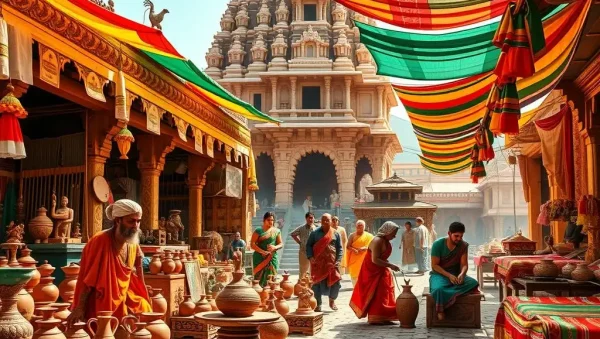
Internal Trade Networks
The Role of Craftsmanship in Ancient India's Trade Networks
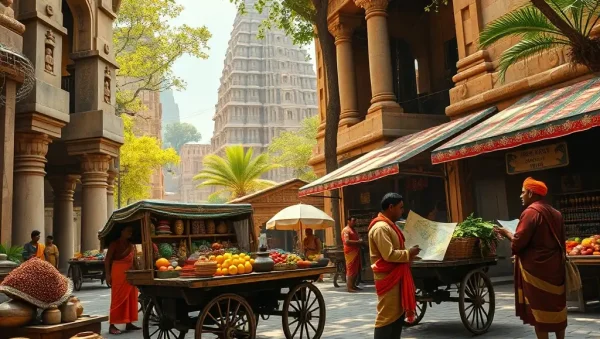
Internal Trade Networks
The Role of Internal Trade in the Decline of Ancient Indian Empires

Internal Trade Networks
The Trade of Knowledge: Ancient Indian Scholars and Their Contributions
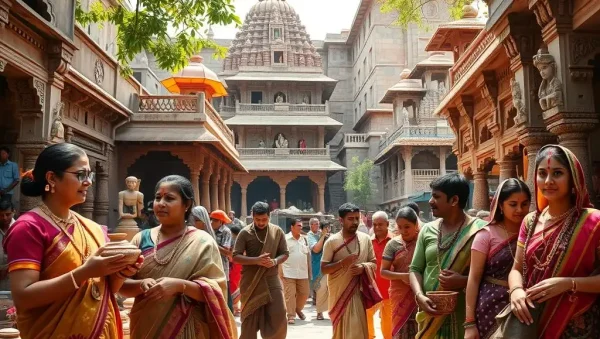
Internal Trade Networks
The Impact of Internal Trade on Ancient Indian Art and Architecture
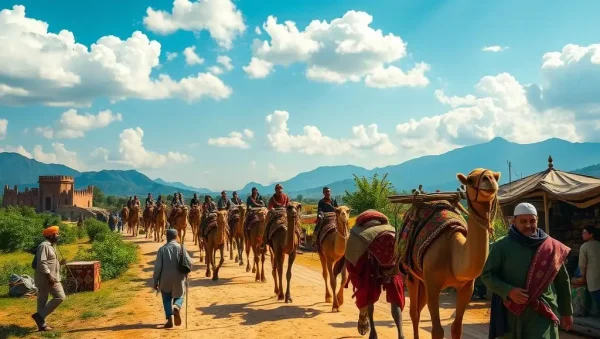
Internal Trade Networks
How Ancient Indian Trade Routes Fostered Technological Advancements
🛍️ Internal Trade Networks in Ancient India
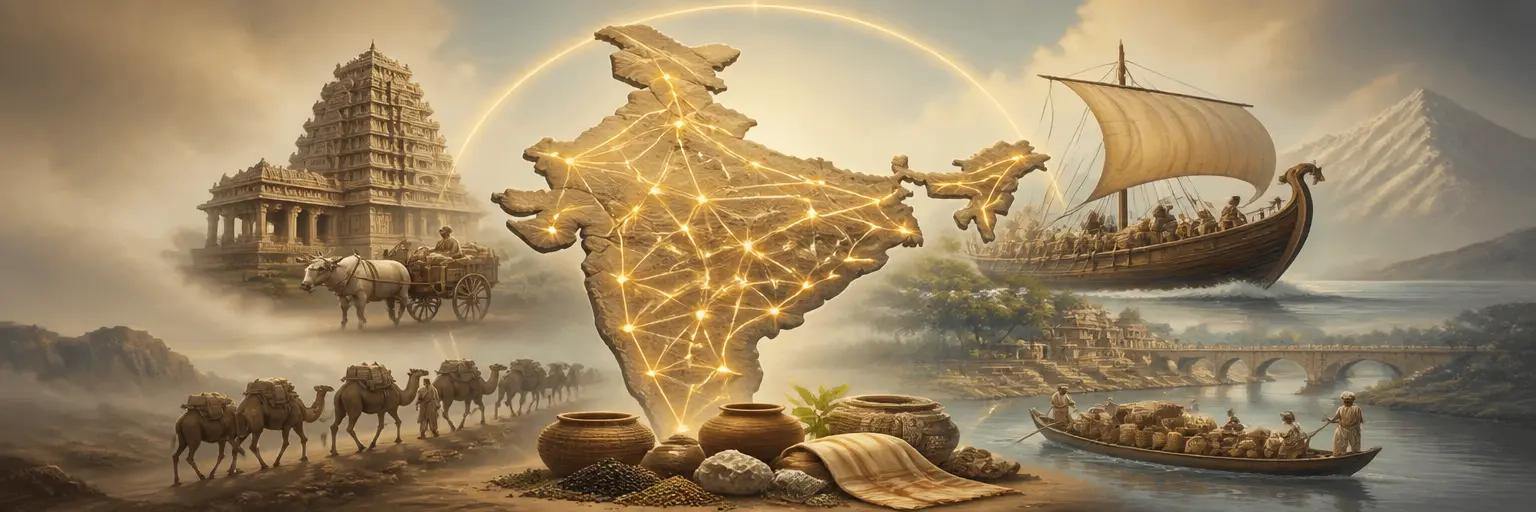
Internal Trade Networks played a vital role in the economic development of ancient India, connecting villages, towns, cities, ports, craft centers, agricultural regions, and royal capitals. This subcategory explores how goods, people, ideas, and technologies moved across the Indian subcontinent from the Indus Valley Civilization through the Vedic age, the Mauryan Empire, the Satavahana period, and the Gupta Empire. Discover the roads, rivers, marketplaces, caravan routes, guilds, merchants, taxes, and systems of exchange that shaped ancient Indian trade and economy.
🚚 Roads, Caravans, and Overland Commerce
Ancient Indian overland trade depended on an extensive network of paths linking agricultural settlements with urban markets and distant regions. Articles in this section examine important routes across the Gangetic Plain, the Deccan, northwestern India, and the Himalayan foothills, along with the movement of grain, textiles, salt, metals, pottery, spices, precious stones, and luxury goods.
Readers can learn how merchants and caravan leaders organized journeys, crossed forests and mountain passes, and protected valuable cargo. Topics may also explain the role of inns, toll stations, local rulers, military security, and seasonal travel in supporting long-distance inland trade in ancient India.
🌊 River Routes and Regional Markets
Rivers were among the most efficient transport systems in ancient India. The Ganges, Yamuna, Narmada, Godavari, Krishna, and other waterways connected farming communities, craft centers, religious settlements, and major cities. This section explores how boats and river ports helped move agricultural produce and commercial goods throughout different regions.
Discover how river-based commerce contributed to the growth of market towns and urban centers. The content highlights regional trade networks, local exchange systems, seasonal fairs, and the relationship between river transport, irrigation, agriculture, and the expansion of ancient Indian economies.
🏺 Marketplaces, Towns, and Urban Trade
Ancient Indian marketplaces served as important centers for buying, selling, storing, and distributing goods. This subcategory examines the development of urban markets, craft districts, bazaars, fortified towns, and administrative centers from the Indus Valley Civilization to the Gupta period.
Readers can expect detailed discussions of how merchants interacted with farmers, artisans, transporters, officials, and consumers. Learn how market demand encouraged specialized production in areas such as metalworking, weaving, pottery, bead-making, ivory carving, and jewelry, strengthening the connection between urbanization and internal trade.
⚖️ Merchant Guilds and Craft Organizations
Merchant and artisan guilds, often associated with organized professional communities, helped regulate production and commerce in ancient India. Articles in this section explore how guilds maintained standards, trained workers, managed collective resources, supported trade, and represented the interests of merchants and craftspeople.
The role of guilds in financing religious institutions, constructing public facilities, and participating in local administration is also examined. These organizations reveal the importance of collective economic activity, skilled labor, commercial trust, and professional networks in the history of ancient Indian trade.
💰 Coins, Barter, and Systems of Exchange
Internal trade in ancient India used several forms of exchange, including barter, weighed metals, standardized goods, and coinage. This section explores punch-marked coins, regional currencies, metal standards, and the economic practices that supported transactions between producers, merchants, officials, and consumers.
Readers will learn how the spread of coinage influenced taxation, wages, market exchange, and long-distance commerce. The content also considers the continued importance of barter and non-monetary exchange in rural communities, where agricultural products, livestock, tools, textiles, and labor could function as valuable economic resources.
🌾 Agricultural Surpluses and Internal Distribution
Agriculture formed the foundation of ancient India’s internal economy. Surplus rice, wheat, barley, pulses, sugar, cotton, oilseeds, and other products supported growing towns, armies, religious institutions, and specialist craft communities. This section explains how agricultural production created the supplies necessary for sustained trade.
Explore the relationship between land revenue, irrigation, storage facilities, granaries, and distribution systems. Articles also show how changing political conditions and improvements in farming influenced food supply chains, regional markets, population growth, and economic integration across ancient India.
👑 State Regulation, Taxes, and Trade Policies
Rulers and administrators played a significant role in managing internal trade networks. From the Mauryan Empire to later regional kingdoms, governments monitored roads, markets, weights and measures, taxation, production, and the movement of valuable commodities. This section considers the economic ideas found in historical records and texts such as the Arthashastra.
Readers can discover how customs duties, market supervision, state monopolies, trade licenses, and protections for merchants affected commercial life. These topics provide insight into the relationship between political power and economic organization in ancient Indian history.
🧵 Craft Production and the Movement of Goods
Specialized crafts were central to internal trade networks. Ancient India was known for cotton and silk textiles, iron and steel, bronze objects, ceramics, beads, ornaments, carved stone, wooden products, and decorative arts. This section traces how raw materials reached workshops and how finished products traveled to consumers.
Learn how regional specialization encouraged commercial connections between mining zones, forests, agricultural lands, coastal areas, and inland cities. The movement of craftspeople and technical knowledge also contributed to the development of ancient Indian industries, trade centers, and cultural exchange.
🗺️ Trade Networks from the Indus Valley to the Gupta Empire
This subcategory places internal trade within the broader timeline of ancient Indian civilization. Explore evidence from Harappan cities, Vedic settlements, the Mahajanapadas, the Mauryan Empire, the Satavahana kingdom, and the Gupta Empire to understand how commerce changed across different political and cultural periods.
Archaeological discoveries, inscriptions, literary sources, coins, settlement patterns, and surviving artifacts help reconstruct these networks. Together, they reveal how internal trade connected diverse communities and contributed to the prosperity, cultural diversity, and historical development of ancient India.
❓ Frequently Asked Questions About Internal Trade Networks
What were internal trade networks in ancient India?
Internal trade networks were systems of roads, rivers, marketplaces, towns, guilds, and exchange routes that connected different regions within the Indian subcontinent. They enabled the movement of agricultural products, crafts, minerals, textiles, animals, and other goods without relying exclusively on overseas commerce.
Which goods were commonly traded within ancient India?
Commonly traded goods included grain, salt, cotton, silk, spices, metals, timber, pottery, beads, jewelry, livestock, sugar, oils, and precious stones. The exact products varied according to regional resources, agricultural production, craft specialization, and consumer demand.
How did rivers support ancient Indian trade?
Rivers provided relatively efficient routes for transporting heavy goods over long distances. They connected agricultural areas with towns and cities, supported river ports, and encouraged the growth of settlements along fertile plains and important waterways.
What role did merchant guilds play in ancient Indian commerce?
Merchant and artisan guilds organized professional communities, regulated production, maintained quality standards, supported apprenticeships, and helped protect commercial interests. Some guilds also funded religious buildings and public works, demonstrating their wider social and economic influence.
How did ancient Indian rulers regulate internal trade?
Rulers regulated trade through taxes, tolls, market supervision, official weights and measures, trade licenses, and legal protections. In some periods, governments also controlled particular commodities or monitored strategic industries, linking state administration with economic activity.