
The Relationship Between Ashoka and His Advisors: Power Dynamics

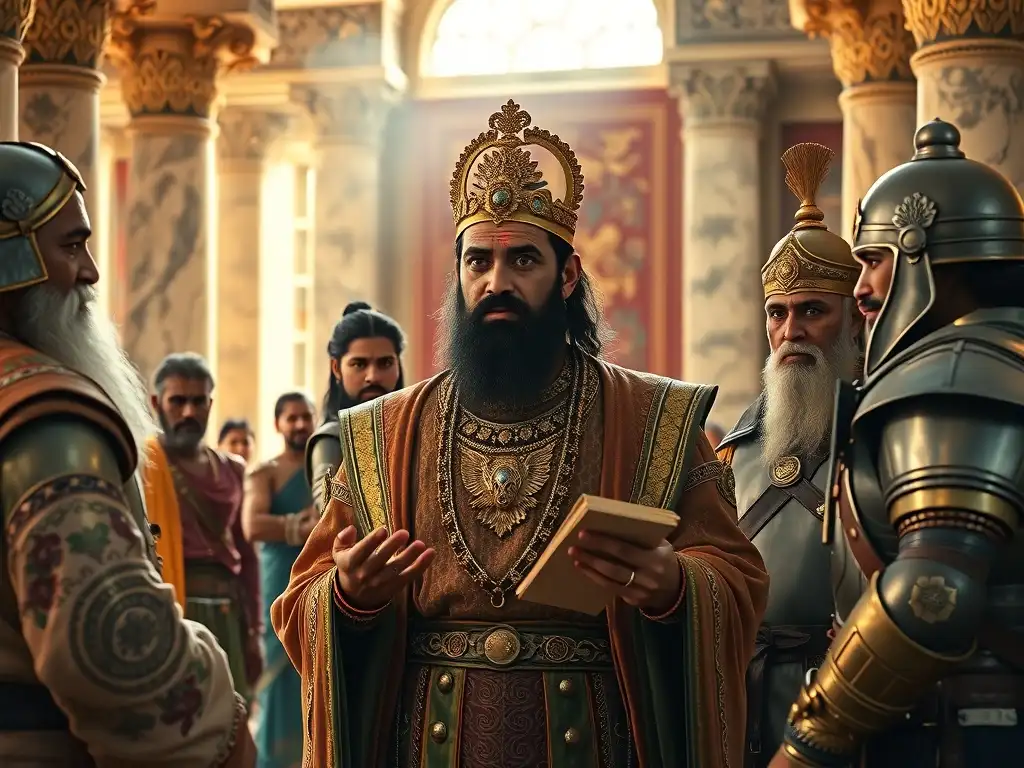
Welcome to Ancient India History, where we embark on a fascinating journey through the rich tapestry of ancient civilizations that shaped the subcontinent. Today, we delve into the intriguing power dynamics between Ashoka and his advisors, a relationship that not only influenced governance but also left an indelible mark on the cultural landscape of India. What secrets did these advisors hold, and how did their counsel shape one of history’s most revered emperors?
Join us as we unravel the complexities of their interactions and explore the pivotal role they played in Ashoka's reign. Your adventure into the depths of ancient wisdom begins now!

Introduction to Ashoka the Great
Ashoka the Great, one of the most illustrious rulers of ancient India, is renowned for his transformative impact on the Indian subcontinent during the 3rd century BCE. His reign marked a significant shift from a conquest-oriented approach to one centered around governance, social welfare, and the promotion of Buddhism. The power dynamics within his court, particularly the relationship he maintained with his advisors, played a crucial role in shaping his policies and the overall direction of his empire.
Understanding these dynamics is essential for comprehending how Ashoka effectively navigated the complexities of leadership in a vast and culturally diverse empire. This exploration will delve into the essential roles that advisors played in Ashoka's administration, shaping his decisions and legacy.
Overview of Ashoka's Reign
Ashoka ascended to the throne following a brutal and expansive military campaign, particularly the conquest of Kalinga, which profoundly affected his worldview. The aftermath of this war catalyzed his conversion to Buddhism and his commitment to non-violence (Ahimsa) and moral governance. Under his rule, the Mauryan Empire expanded significantly, covering much of the Indian subcontinent. Ashoka's reign is often characterized by the establishment of stupas, edicts inscribed on rocks and pillars, and the promotion of religious tolerance, which were directly influenced by the insights and counsel of his advisors.
Importance of Advisors in Ancient India
In ancient Indian politics, the role of advisors was paramount. They were not merely attendants to the king but were pivotal in shaping state policy and governance. Advisors often encompassed a range of experts, including military generals, philosophers, and scholars, each of whom brought unique perspectives to the royal court. Their influence could sway decisions significantly, impacting everything from foreign diplomacy to domestic administration. The dynamic between a ruler and his advisors reflected the broader socio-political fabric of the time, highlighting the interplay of power, knowledge, and strategy in governance.
The Role of Advisors in Ashoka's Court
Ashoka surrounded himself with a diverse group of advisors who were instrumental in implementing his vision for the empire. Their roles extended beyond mere consultation; they acted as a bridge between the ruler and the subjects, facilitating the translation of Ashoka's ideals into actionable policies.
Key Advisors Surrounding Ashoka
Among Ashoka's notable advisors were:
- Kautilya (Chanakya): Although primarily known for his earlier role in establishing the Mauryan Empire, his strategic insights continued to influence Ashoka's governance.
- Brahmins and Buddhist Monks: These spiritual leaders played a critical role in advising Ashoka on ethical governance and the propagation of Buddhism.
- Military Commanders: Their expertise in military strategy and administration was vital in maintaining peace and order across the vast empire.
Responsibilities and Influence of Advisors
The responsibilities of Ashoka's advisors were multifaceted, encompassing various aspects of governance:
- Policy Formulation: Advisors often participated in discussions that shaped laws, edicts, and reforms.
- Crisis Management: They provided counsel during crises, helping Ashoka to navigate challenges such as rebellions or natural disasters.
- Cultural Promotion: Many advisors were instrumental in promoting cultural and religious practices, ensuring the diffusion of Buddhism and the establishment of moral governance.
The interplay of these roles created a dynamic environment where Ashoka could effectively lead, reflecting a sophisticated understanding of governance that balanced power with wisdom. The relationship between Ashoka and his advisors exemplifies the intricate power dynamics that defined one of history's most significant empires.
Power Dynamics Between Ashoka and His Advisors
The relationship between Ashoka the Great and his advisors was characterized by a nuanced interplay of authority, influence, and strategic decision-making. Ashoka, as the third Mauryan emperor, wielded significant power, yet he recognized the importance of counsel in governance. His advisors played crucial roles in shaping policies, executing his vision, and maintaining stability in the empire. This dynamic was not merely hierarchical; it encompassed mutual respect and reliance, where Ashoka often sought the insights of his advisors while retaining ultimate authority over decisions.
The advisors were instrumental in navigating the complexities of governance during a period marked by vast territorial expansion and diverse cultures. Their insights into administrative efficiency, military strategy, and public welfare were vital for Ashoka's success. The emperor's commitment to the principles of Dharma, particularly after his conversion to Buddhism, further influenced the nature of these dynamics, as he sought advisors who aligned with his vision of ethical governance and social justice.
The Nature of Power in Ashoka's Administration
In Ashoka's administration, power was distributed among various levels, with the emperor at the apex. Yet, unlike many autocratic rulers, Ashoka valued the contributions of his advisors, creating a collaborative environment. This structure allowed for a blend of centralized authority and decentralized input, where advisors could influence policy decisions while Ashoka maintained the final say.
The emperor's approach to governance was further reflected in his commitment to Dharma, which mandated adherence to ethical conduct and compassion. This ethical framework shaped the advisory roles, as many of Ashoka's key advisors were not only skilled strategists but also moral guides. Their ability to navigate the complexities of statecraft while aligning with Ashoka's philosophical beliefs was crucial in maintaining the stability and coherence of the Mauryan Empire.
How Advisors Shaped Ashoka's Policies
Advisors played a pivotal role in shaping the policies of Ashoka's reign, particularly in the areas of military strategy, diplomacy, and welfare initiatives. The influence of advisors can be seen in the edicts issued by Ashoka, which reflect a blend of strategic governance and moral imperatives. For instance, advisors helped formulate policies that emphasized non-violence and the welfare of subjects, following Ashoka's conversion to Buddhism after the Kalinga War.
Furthermore, advisors were essential in interpreting the needs of diverse populations within the empire. They provided Ashoka with insights into local customs, governance challenges, and the socio-political landscape, enabling the emperor to craft policies that were both effective and culturally sensitive. This adaptability was crucial in fostering loyalty among subjects and ensuring the smooth administration of one of ancient India's largest empires.
Case Studies of Significant Advisors
To understand the power dynamics between Ashoka and his advisors, it is essential to examine specific case studies of influential figures within his court. These advisors not only shaped policy but also influenced Ashoka's leadership style and approach to governance.
Chanakya: The Strategist Behind Ashoka
One of the most renowned figures associated with Ashoka's rise to power is Chanakya, also known as Kautilya. Although Chanakya is primarily known for his role in the establishment of the Mauryan Empire and his mentorship of Chandragupta Maurya, his strategic insights continued to resonate during Ashoka's reign. Chanakya's teachings, encapsulated in the Arthashastra, emphasized the importance of statecraft, economic management, and military strategy, laying the groundwork for Ashoka's governance.
Chanakya's influence extended to advising Ashoka on consolidating power and navigating the complexities of rule. His emphasis on realpolitik and pragmatic governance ensured that Ashoka could maintain control over a vast and diverse empire, balancing military strength with diplomatic finesse. The strategic principles outlined by Chanakya remained relevant as Ashoka sought to implement policies that reflected his commitment to Dharma while ensuring the stability of his rule.
Other Influential Figures in Ashoka's Court
In addition to Chanakya, Ashoka's court was populated by various advisors who contributed to the administration's effectiveness. Notable figures included Brahmin scholars, military generals, and local leaders who provided Ashoka with diverse perspectives on governance. Each advisor brought unique expertise, from legal matters to military logistics, allowing for a well-rounded approach to decision-making.
Moreover, the advisors facilitated communication between Ashoka and the populace, acting as intermediaries who conveyed the emperor's edicts and policies. Their roles were critical, especially in regions with distinct cultural practices and governance challenges. By leveraging the knowledge and experience of these advisors, Ashoka could implement policies that resonated with his subjects, fostering an enduring legacy of ethical governance and social welfare.
The relationship between Ashoka and his advisors exemplifies a dynamic interplay of power and influence, underscoring the importance of collaborative governance in ancient India. Their contributions not only shaped Ashoka's policies but also defined the trajectory of the Mauryan Empire during one of its most significant periods.
The Impact of Advisor Relationships on Governance

The relationships between Ashoka and his advisors significantly shaped the governance of the Mauryan Empire. These advisors, often knowledgeable in various fields such as administration, military strategy, and philosophy, played crucial roles in the decision-making processes. The dynamics of these relationships were characterized by a blend of loyalty, conflict, and collaboration, which influenced the effectiveness of Ashoka's rule.
One of the most notable impacts was the establishment of a bureaucratic system that relied heavily on the expertise of these advisors. Their counsel helped Ashoka navigate complex political landscapes, manage the vast empire, and address the diverse needs of its subjects. The advisors provided him with insights into local governance, enabling Ashoka to implement policies that fostered stability and growth across the empire.
Moreover, the personal rapport between Ashoka and his advisors often dictated the level of trust and reliance Ashoka placed in them. Strong, mutually respectful relationships facilitated more open communication and encouraged innovative governance solutions. Conversely, strained relationships could lead to miscommunication and policy failures, highlighting the essential role of these interpersonal dynamics in the effective governance of the Mauryan Empire.
Decision-Making Processes in Ashoka's Rule
Ashoka's decision-making processes were heavily influenced by the counsel of his advisors. The emperor often convened councils where his advisors would present their views on various matters, ranging from military campaigns to public welfare initiatives. These councils served as platforms for debate and discussion, allowing Ashoka to weigh different perspectives before arriving at a decision.
The integration of advisors into the decision-making process also reflected Ashoka's recognition of the complexities involved in ruling a diverse empire. He understood that effective governance required input from individuals with varied expertise and experiences. Consequently, Ashoka was known for his willingness to listen and adapt his strategies based on the feedback he received from his advisors.
However, the decision-making process was not without its challenges. Conflicts could arise when advisors had differing opinions, and Ashoka had to navigate these disagreements carefully to maintain harmony within his advisory circle. Ultimately, the inclusive nature of his decision-making process contributed to the stability and prosperity of the Mauryan Empire during his reign.
Conflicts and Resolutions within the Advisor Circle
Conflicts among Ashoka's advisors were not uncommon, given the high stakes involved in governance and the diverse backgrounds of the advisors themselves. Disagreements often stemmed from differing philosophies regarding statecraft, military strategy, and social policies. Such conflicts could jeopardize the unity of the advisory council and impede effective governance.
Ashoka's approach to conflict resolution was marked by diplomacy and pragmatism. He often sought to mediate disputes by encouraging open dialogue among advisors, which helped to clarify misunderstandings and foster a collaborative atmosphere. In some cases, Ashoka would appoint a neutral third advisor to help facilitate discussions and ensure that all voices were heard.
Through these efforts, Ashoka not only maintained cohesion within his advisory circle but also demonstrated effective leadership. By addressing conflicts proactively, he was able to turn potential divisions into opportunities for growth and innovation, ultimately enhancing the governance of the Mauryan Empire.
Ashoka's Transition: From Conqueror to Benevolent Ruler
Ashoka's transition from a conqueror to a benevolent ruler marked a significant turning point in his reign and was profoundly influenced by his advisors. After his brutal conquest of Kalinga, Ashoka experienced a profound transformation, leading him to adopt the principles of Dhamma, which emphasized non-violence, tolerance, and compassion. This change in perspective was largely guided by the philosophical insights and ethical teachings of his advisors.
The advisors played a pivotal role in shaping Ashoka's understanding of governance as a moral duty rather than merely a pursuit of power. They encouraged him to reflect on the consequences of his conquests and the suffering inflicted on his subjects. This introspective journey led Ashoka to prioritize the welfare of his people, marking a departure from militaristic expansion to a focus on internal development and harmony.
As a result, Ashoka implemented policies that promoted social welfare, education, and environmental conservation, which were significantly influenced by the counsel of his advisors. Their guidance helped him not only to reform his administration but also to establish a legacy that emphasized ethical governance.
The Influence of Advisors on Ashoka's Transformation
The influence of Ashoka's advisors on his transformation into a benevolent ruler cannot be overstated. Many of his closest advisors were staunch advocates of Dhamma, and they encouraged Ashoka to embrace these principles in his governance. Their teachings resonated with Ashoka, leading him to recognize the importance of compassion and ethical conduct in leadership.
Advisors such as Upagupta, a Buddhist monk, were instrumental in introducing Ashoka to the tenets of Buddhism, which emphasized peace and humanitarianism. This spiritual guidance was crucial in helping Ashoka reconcile his past as a military leader with his aspirations for a just and compassionate rule. The advisors' ability to communicate these values effectively played a significant role in Ashoka's adoption of Dhamma as a guiding philosophy for his empire.
Furthermore, as Ashoka began to promote Dhamma throughout his realm, his advisors helped him articulate and implement policies that aligned with these values. They assisted in the establishment of hospitals, the promotion of education, and the encouragement of religious tolerance, all of which contributed to a more harmonious society under Ashoka's rule.
The Role of Advisors in Promoting Dhamma
The advisors of Ashoka were vital in the promotion of Dhamma throughout the Mauryan Empire. Recognizing the need to disseminate the principles of Dhamma, Ashoka relied on his advisors to help craft and implement policies that would instill these values in the fabric of society. They organized campaigns to educate the populace about non-violence, compassion, and ethical living, which were central to the Dhamma philosophy.
To facilitate this, advisors often acted as intermediaries between Ashoka and the people, helping to interpret and communicate the emperor's vision. They organized public proclamations, disseminated inscriptions, and facilitated discussions to ensure that the teachings of Dhamma reached all corners of the empire. This grassroots approach was crucial for fostering an environment where the principles of Dhamma could take root.
Additionally, advisors played a key role in establishing institutions that embodied Dhamma values. They helped create centers for learning and dialogue, where citizens could engage with the ideas of Dhamma and reflect on their implications for daily life. Through these efforts, Ashoka's advisors not only supported the emperor's transformation but also helped cultivate a culture of peace and ethical conduct that would define his legacy.
Conclusion: Legacy of Ashoka and His Advisors
The relationship between Ashoka and his advisors played a crucial role in shaping his reign and the direction of the Mauryan Empire. Ashoka's embrace of Buddhism and his commitment to Dhamma were likely influenced by his advisors, who guided him towards more humane and ethical governance. This partnership not only transformed his rule but also left a lasting legacy on the Indian subcontinent.
The emphasis on moral leadership, compassion, and social welfare initiated during his reign inspired future rulers and set a precedent for governance rooted in ethical principles. The diplomatic and administrative strategies employed by Ashoka and his advisors also contributed to the stability and prosperity of the empire, which would resonate through subsequent historical periods.
Long-term Effects of Advisor Influence on Indian History
The influence of Ashoka's advisors extended far beyond his lifetime, shaping the trajectory of Indian history. The moral and ethical dimensions introduced during Ashoka's reign fostered a culture that valued non-violence, compassion, and social responsibility. Subsequent empires, including the Gupta Empire, drew inspiration from Ashoka's policies and practices, integrating elements of Dhamma into their own governance.
Furthermore, the promotion of Buddhism as a state religion facilitated cultural exchanges and laid the groundwork for the religion's spread across Asia. This diffusion of ideas and practices enriched the cultural and spiritual landscape of the region, demonstrating how the power dynamics between a ruler and his advisors can forge paths that influence generations.
Final Thoughts on Ashoka's Advisors and Power Dynamics
In examining the power dynamics between Ashoka and his advisors, it becomes clear that their relationship was complex and multifaceted. Advisors not only provided counsel but also acted as facilitators of Ashoka's vision for a just and compassionate empire.
The interplay between Ashoka's authoritative position and the advisory roles reveals the importance of collaborative governance, where influential figures can shape the policies and ethical foundations of leadership. This dynamic is a testament to the broader significance of advisors in history, highlighting that the efficacy of a ruler often hinges on the wisdom and insights of those who stand beside them.
References
Key Texts and Historical Sources
- The Edicts of Ashoka: A collection of inscriptions on pillars and rocks, which provide direct insight into Ashoka’s policies and his emphasis on Dhamma.
- Ashoka: The Search for the Historical Buddha: by Charles Allen: This book delves into the life of Ashoka, his conversion to Buddhism, and the influence of his advisors.
- Indian History: A Very Short Introduction: by Thapar Romila: A concise overview of Indian history, including the Mauryan Empire and Ashoka's reign.
Suggested Further Reading on Ashoka and His Advisors
- The Mauryan Empire by Romila Thapar: This work explores the political, social, and cultural dimensions of the Mauryan Empire, with a focus on Ashoka's governance style.
- The Buddhist Tradition in India by John Strong: This text examines the historical context of Buddhism in India and its connection to political leadership, particularly during Ashoka’s time.
- Ashoka and the Decline of the Mauryas by Romila Thapar: A detailed analysis of Ashoka's reign, the role of his advisors, and the subsequent decline of the Mauryan Empire.
This comprehensive examination of Ashoka’s relationship with his advisors illustrates the profound impact of their collaboration on the historical and cultural evolution of ancient India.
- Introduction to Ashoka the Great
- The Role of Advisors in Ashoka's Court
- Power Dynamics Between Ashoka and His Advisors
- Case Studies of Significant Advisors
- The Impact of Advisor Relationships on Governance
- Ashoka's Transition: From Conqueror to Benevolent Ruler
- Conclusion: Legacy of Ashoka and His Advisors
- References
- What was the significance of Ashoka's advisors in his reign?
- How did Ashoka's advisors impact the power dynamics of the Mauryan Empire?
- Were there any notable advisors that influenced Ashoka?
- How did Ashoka's relationship with his advisors evolve over time?
- What lessons can modern leaders learn from Ashoka's approach to advisors?
Frequently Asked Questions
What was the significance of Ashoka's advisors in his reign?
Ashoka's advisors played a crucial role in shaping his policies and governance, influencing his decisions, and helping to implement Buddhist principles across his empire.
How did Ashoka's advisors impact the power dynamics of the Mauryan Empire?
The power dynamics shifted significantly as Ashoka relied on his advisors for counsel, leading to a balance between central authority and local governance while promoting tolerance and non-violence.
Were there any notable advisors that influenced Ashoka?
Yes, advisors like Tishya and Devanampriya were instrumental in promoting Ashoka's vision for a unified empire and spreading Buddhism as a state religion.
How did Ashoka's relationship with his advisors evolve over time?
Ashoka's relationship with his advisors became more collaborative as he embraced their counsel, especially after his conversion to Buddhism, which impacted the moral and ethical direction of the empire.
What lessons can modern leaders learn from Ashoka's approach to advisors?
Modern leaders can learn the importance of consultation and collaboration with advisors, as well as the need to balance power dynamics to ensure effective governance and social harmony.
Final Reflection: Understanding the Power Dynamics of Ashoka and His Advisors
The intricate relationship between Ashoka and his advisors reveals a profound truth about leadership and governance that resonates deeply in today's world. In an era where the dynamics of power continue to shape societies, understanding how Ashoka navigated his relationships with his advisors offers invaluable lessons on collaboration, influence, and the delicate balance of authority. The historical narrative of Ashoka not only serves as a testament to effective leadership but also highlights the timeless struggle between power and responsibility.
The influence of Ashoka's advisors on his reign underscores the importance of counsel in leadership roles, reminding us that no leader operates in isolation. The interplay of ideas and perspectives among Ashoka and his advisors shaped the policies that would define an empire. As we reflect on this dynamic, we can appreciate the words of historian Romila Thapar: The effectiveness of a ruler is often determined by the quality of his advisors.
This observation rings true across cultures and epochs, emphasizing that the strength of leadership is often rooted in the wisdom and insights of those who surround it.
As we contemplate the lessons from Ashoka's reign, let us consider how we can apply these insights in our own lives. Reflect on the advisors and influences in your life—who do you turn to for guidance, and how do their perspectives shape your decisions? Embrace the idea that collaboration and open dialogue can enhance your leadership, whether in personal or professional settings. By fostering a culture of respect and inclusivity, we can create environments where diverse voices contribute to the greater good, just as Ashoka did with his advisors.
Uncover the Power Dynamics of Ashoka and His Advisors!
Thank you for taking the time to explore the fascinating relationship between Ashoka and his advisors. You’ve gained invaluable insights into how power dynamics shaped one of ancient India's most influential reigns. Now it’s time to dive deeper into this captivating era!
Here are a few actions you can take to enrich your understanding and engage with others who share your interest:
- Join a history forum or group to share your thoughts on Ashoka’s strategies and their relevance to contemporary governance.
- Explore related articles on Ancient Indian history to uncover more about the influences that shaped Ashoka's decisions.
- Create a visual timeline of Ashoka's reign, highlighting his significant interactions with his advisors and key events.
What aspect of Ashoka's leadership do you find most intriguing, and how do you think it compares to today's leadership styles?