
The Role of Spiritual Leaders in Shaping Political Thought in Ancient India

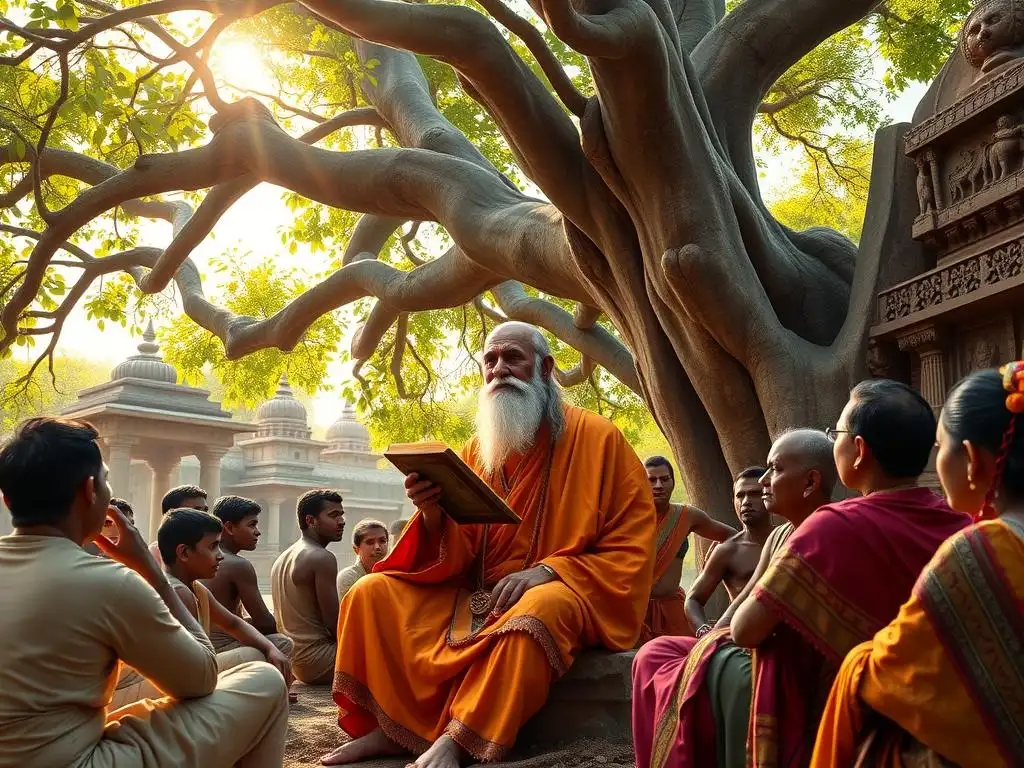
Welcome to Ancient India History, where we embark on an extraordinary journey through the rich tapestry of ancient Indian civilizations. In this exploration, we delve into the pivotal role of spiritual leaders in ancient India, uncovering how their profound insights and teachings shaped political thought and influenced societal structures. As you navigate through our content, prepare to be captivated by the intertwining of spirituality and governance that defined eras from the Indus Valley to the Gupta Empire.
Join us as we unravel the legacies of these key historical figures, and discover how their wisdom continues to resonate today. Ready to dive deeper? Let’s explore the fascinating connections that await!
Introduction to Spiritual Leaders in Ancient India
Throughout the rich tapestry of ancient Indian history, spiritual leaders played a pivotal role in not only guiding the moral compass of society but also shaping the political landscape. These figures, often revered for their wisdom and insight, influenced the thoughts and actions of rulers, shaping policies and governance through their teachings and philosophies.
From the ascetic traditions of the Indus Valley to the profound doctrines of the Gupta Empire, spiritual leaders emerged as crucial intermediaries between the divine and the earthly, impacting both governance and societal values. Understanding their contributions provides a deeper insight into how spiritual and political realms intertwined, ultimately molding the civilization's trajectory.
Definition of Spiritual Leaders in Ancient India
In the context of ancient India, spiritual leaders encompassed a diverse array of figures, including sages, gurus, prophets, and philosophers. These individuals were characterized by their profound understanding of spiritual texts, moral ethics, and the philosophical underpinnings of various religions such as Hinduism, Buddhism, and Jainism. They served as spiritual guides, offering teachings that transcended mere religious doctrine and ventured into the realms of ethics, governance, and social order. Notable examples include:
- Buddha: Founder of Buddhism, whose teachings on compassion and ethical living influenced rulers like Ashoka.
- Mahavira: The 24th Tirthankara of Jainism, emphasizing non-violence and truth.
- Vyasa: A legendary sage credited with composing the Mahabharata, intertwining ethics with governance.
Importance of Spiritual Leaders in Ancient Indian Society
Spiritual leaders were not merely religious figures; they were integral to the societal framework of ancient India. Their influence permeated various aspects of life, such as:
- Moral Guidance: They provided ethical frameworks that guided rulers and citizens alike, fostering a sense of justice and righteousness.
- Political Counsel: Many spiritual leaders acted as advisors to kings, shaping political decisions with their insights on dharma (duty) and governance.
- Social Cohesion: Through teachings that promoted harmony and communal values, they played a crucial role in maintaining social order amidst diverse cultures and beliefs.
- Cultural Preservation: Spiritual leaders helped preserve ancient texts and traditions, transmitting knowledge across generations, which laid the foundation for subsequent political and cultural developments.
Historical Context of Political Thought in Ancient India
The political thought of ancient India was deeply intertwined with its spiritual philosophies. To understand the role of spiritual leaders, it is essential to explore the historical context of political systems and the influence of religion on governance.
Overview of Political Systems in Ancient India
Ancient India witnessed the evolution of various political systems, ranging from tribal confederacies to expansive empires. Key political structures included:
- Mahajanapadas: Republics and kingdoms during the 6th century BCE that emphasized local governance and democratic principles.
- Mauryan Empire: Established by Chandragupta Maurya, this empire was notable for its centralized administration and the promotion of Buddhist principles under Emperor Ashoka.
- Gupta Empire: Often referred to as the Golden Age of India, where cultural and intellectual advancements flourished alongside effective governance.
These political entities were often influenced by the spiritual doctrines prevalent in their times, which shaped their governance strategies and policies.
Influence of Religion on Governance in Ancient India
Religion and governance in ancient India were inextricably linked, with spiritual leaders often acting as the mediators of this relationship. Some key influences included:
- Divine Right of Kings: Many rulers believed in the divine sanction of their authority, often seeking blessings from spiritual leaders to legitimize their reign.
- Dharma as Governance: The concept of dharma was central to political thought, with leaders expected to uphold moral and ethical standards as dictated by spiritual teachings.
- Policy Formation: Spiritual leaders influenced key policies, such as welfare initiatives and social justice, ensuring that governance reflected ethical principles and the will of the people.
The role of spiritual leaders in ancient India was not only significant in shaping political thought but also essential in maintaining the socio-cultural fabric of the civilization. Their teachings and influence resonate through history, highlighting the profound connection between spirituality and governance in ancient Indian society.
Key Spiritual Leaders and Their Political Influence
Throughout ancient India, spiritual leaders played pivotal roles in shaping political thought and governance. Their teachings and philosophies often transcended mere religious practices, influencing the moral and ethical frameworks within which rulers operated. The intertwining of spirituality and politics was evident in the actions and ideologies of several key figures, each contributing uniquely to the socio-political landscape of their time.
Gautama Buddha: A Catalyst for Change
Gautama Buddha, the founder of Buddhism, emerged in the 6th century BCE as a transformative figure in ancient India. His teachings centered on the Four Noble Truths and the Eightfold Path, emphasizing the importance of ethical conduct, meditation, and wisdom. Buddha's approach to social issues, such as caste discrimination and the suffering of the lower classes, challenged the prevailing norms of his time.
Buddhism advocated for an egalitarian society, which resonated with many, including political leaders who sought to gain favor with the populace. The Mauryan Emperor Ashoka, a prominent patron of Buddhism, exemplified this influence. After his conversion, Ashoka implemented policies based on Buddhist principles, promoting non-violence, tolerance, and the welfare of his subjects. His edicts, inscribed on pillars across his empire, highlighted the integration of spiritual values into governance, showcasing how Buddha's teachings served as a catalyst for political reform.
Mahavira and the Rise of Jain Political Ethics
Mahavira, the 24th Tirthankara of Jainism, is another significant spiritual leader whose philosophy deeply influenced political ethics in ancient India. Living around the same time as Buddha, Mahavira emphasized the concepts of non-violence (ahimsa), truth, and asceticism. His teachings encouraged followers to live a life of strict ethical conduct, which extended to rulers and governance.
The principles of Jainism became ingrained in various political systems, particularly in regions where Jain communities thrived. Jain merchants and rulers adhered to these ethical standards, influencing economic policies and governance through their commitment to non-violence and truthfulness. The emphasis on ahimsa not only shaped individual conduct but also informed the broader political discourse, promoting a culture of peace and ethical governance throughout ancient Indian states.
Adi Shankaracharya: Philosophical Foundations of Leadership
Adi Shankaracharya, an influential philosopher and theologian of the 8th century CE, played a crucial role in the revival of Hindu philosophy through his interpretation of Advaita Vedanta. His teachings emphasized the unity of the individual soul (Atman) with the ultimate reality (Brahman), advocating for a life of renunciation and knowledge.
Shankaracharya's philosophical frameworks provided rulers with a deeper understanding of their spiritual responsibilities. His establishment of monastic orders (mathas) helped disseminate his ideas across the subcontinent, influencing both religious and political leaders. By promoting the idea that true leadership involves spiritual wisdom and moral integrity, Shankaracharya laid philosophical foundations that shaped the governance styles of subsequent rulers, encouraging them to align their policies with spiritual and ethical principles.
The Interaction Between Spirituality and Politics
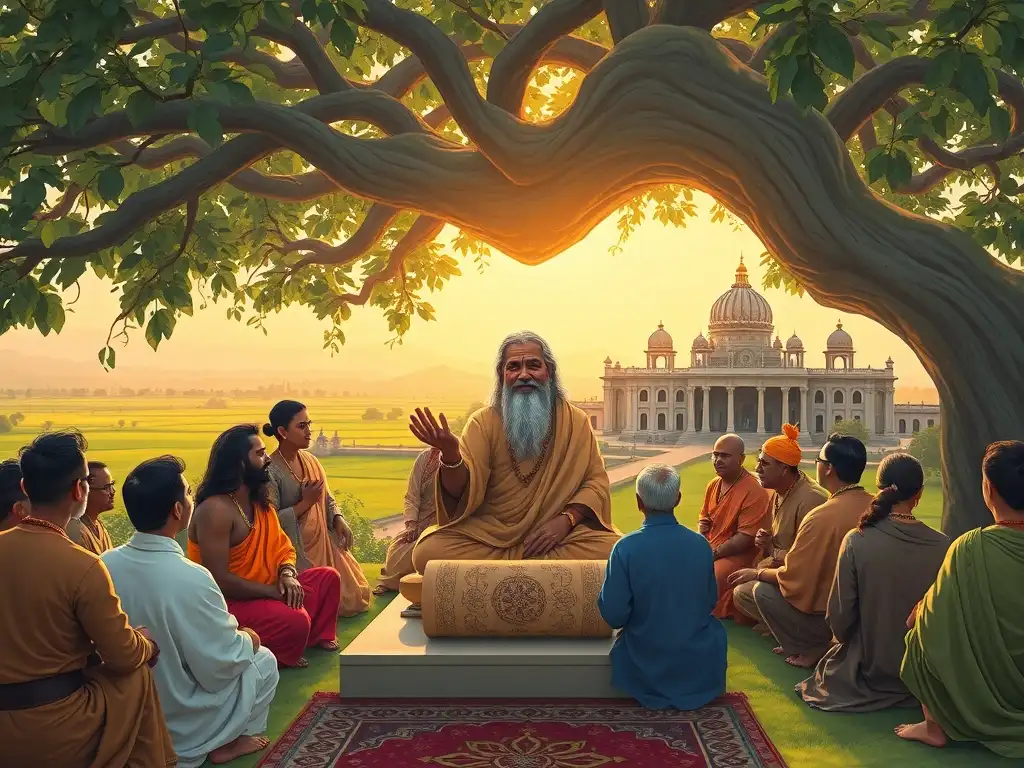
The relationship between spirituality and politics in ancient India was characterized by a complex interplay of beliefs, practices, and governance. The influence of spiritual leaders extended beyond mere advisory roles; they actively participated in the political discourse, shaping the moral compass of leaders and their policies.
The Concept of Dharma in Political Thought
Dharma, a key concept in ancient Indian philosophy, refers to the moral law that governs individual conduct and societal order. Spiritual leaders like Krishna, in the Bhagavad Gita, articulated the importance of dharma as a guiding principle for rulers. The idea of righteous duty shaped political thought, emphasizing that a king's role was not just to govern but to uphold dharma for the welfare of the state.
This notion influenced various dynasties, including the Mauryas and Guptas, who framed their rule as a divine duty to establish and maintain dharmic order. The integration of dharma into political philosophy fostered a governance model where ethical considerations were paramount, ensuring that rulers were accountable to both their subjects and the moral order.
Spiritual Leaders as Advisors to Kings
The presence of spiritual leaders as advisors to kings was a common practice in ancient India. These leaders often provided counsel on vital matters, blending spiritual insights with political strategy. Their guidance helped rulers navigate complex social and moral dilemmas, ensuring that their decisions resonated with the values of the populace.
For instance, the close relationship between Ashoka and Buddhist monks exemplified how spiritual leaders could influence statecraft. By advising kings on ethical governance and the promotion of welfare, spiritual leaders ensured that the political landscape remained aligned with spiritual ideals, reinforcing the importance of moral leadership.
The Role of Rituals and Ethics in Governance
Rituals and ethical practices played a significant role in the governance of ancient Indian states. Spiritual leaders often initiated rituals that marked important political events, reinforcing the divine legitimacy of rulers. These rituals served not only as spiritual observances but also as public affirmations of the ruler’s commitment to ethical governance.
Moreover, the ethical teachings of spiritual leaders permeated the administrative framework of kingdoms. The emphasis on virtues such as truthfulness, fairness, and compassion became foundational to the governance structures established by ancient Indian rulers. These ethical frameworks, inspired by spiritual teachings, fostered a culture of accountability and responsibility, shaping the political ethos of the time.
The intricate relationship between spiritual leaders and political thought in ancient India highlights how spiritual guidance significantly influenced governance, ethics, and societal values. The wisdom of figures like Gautama Buddha, Mahavira, and Adi Shankaracharya continues to resonate, reflecting the lasting legacy of spirituality in shaping the political landscape of ancient India.
Case Studies of Spiritual Leaders Influencing Political Thought
Throughout ancient Indian history, spiritual leaders played pivotal roles in shaping political thought and governance. Their teachings and philosophies not only influenced the masses but also resonated with rulers who sought moral legitimacy and ethical frameworks for their reigns. Here, we explore specific case studies that highlight the impact of these spiritual figures on political leadership.
The Influence of Buddha on Ashoka's Reign
One of the most significant examples of a spiritual leader influencing political thought is Siddhartha Gautama, known as Buddha, and his impact on Emperor Ashoka's reign. After the bloodshed of the Kalinga War, Ashoka experienced a profound transformation, turning to Buddhism for guidance.
Buddhism's core tenets, such as non-violence (ahimsa), compassion, and righteousness (dharma), significantly shaped Ashoka's policies. He adopted a governance style that emphasized moral authority over brute force, as seen in his edicts inscribed across the Indian subcontinent. These edicts promoted ethical living, social welfare, and the importance of following a righteous path. Ashoka's dedication to Buddhist principles not only influenced his domestic policies, such as the establishment of hospitals and the promotion of trade but also positioned him as a visionary leader who sought to unify diverse cultures under a framework of compassion and justice.
Jainism's Impact on the Policies of Indian Rulers
Jainism, with its strong emphasis on non-violence and truth, also significantly influenced several Indian rulers. The teachings of Mahavira, the 24th Tirthankara, instilled a deep respect for all living beings, which resonated with various kings who sought to embody these ideals in their governance.
Notably, rulers like Chandragupta Maurya, who converted to Jainism later in life, adopted policies that reflected Jain principles. His reign saw a reduction in violence and an increased focus on agricultural prosperity and environmental sustainability. Jainism's emphasis on ethical living prompted rulers to establish laws that promoted social justice and harmony. This spiritual influence contributed to a political environment where ethical considerations became intertwined with governance, shaping the moral landscape of ancient India.
Shankaracharya’s Contribution to Statecraft
Adi Shankaracharya, a prominent philosopher and theologian of the 8th century, also played a crucial role in shaping political thought through his advocacy for Advaita Vedanta. His teachings emphasized the oneness of the self (Atman) and the ultimate reality (Brahman), which resonated with the socio-political context of his time.
Shankaracharya engaged with rulers and scholars, promoting philosophical discourse that encouraged a more unified approach to governance. His establishment of monastic institutions across India created a network of spiritual authority that transcended regional boundaries. This network not only facilitated the spread of his philosophical teachings but also allowed spiritual leaders to advise and influence political leaders. By advocating for a governance model grounded in spiritual wisdom, Shankaracharya contributed to a political landscape that valued philosophical insight alongside traditional authority.
The Legacy of Spiritual Leaders in Shaping Modern Political Thought
The influence of ancient spiritual leaders extends beyond their time, leaving a lasting legacy on contemporary political thought and ideologies. These leaders established frameworks that continue to inform political discourse today.
Continuities in Spiritual Leadership and Politics
The relationship between spiritual leadership and politics in ancient India has seen continuities that persist in modern times. Contemporary leaders often draw upon the moral and ethical teachings of figures like Buddha and Mahavira to legitimize their actions and policies. The principles of non-violence and social harmony remain influential, especially in movements advocating for peace and justice.
Moreover, spiritual leaders today often engage with political systems to address social issues, drawing parallels with their ancient counterparts. This continuity illustrates how ancient spiritual philosophies continue to inform the political landscape, providing a moral compass for leaders and citizens alike.
The Lasting Impact of Ancient Indian Spiritual Leaders on Contemporary Political Ideologies
The teachings of ancient spiritual leaders have significantly shaped modern political ideologies, particularly in India and across the globe. Concepts of secularism, tolerance, and ethical governance, derived from Buddhist, Jain, and Vedantic philosophies, have permeated contemporary political thought.
For instance, Mahatma Gandhi's interpretation of non-violence was heavily influenced by the principles of both Buddhism and Jainism, which he applied to the Indian independence movement. The emphasis on ethical leadership and moral responsibility in politics finds its roots in the teachings of ancient spiritual leaders, demonstrating their enduring relevance.
The spiritual leaders of ancient India not only influenced their immediate political environments but also left an indelible mark on the evolution of political thought, continuing to inspire and guide contemporary leaders and movements.
Conclusion
The influence of spiritual leaders in ancient India cannot be overstated. These figures played a pivotal role in shaping the political landscape of their time, intertwining spiritual guidance with governance and social order. The teachings and philosophies espoused by these leaders transcended mere religious doctrine; they provided a framework for ethical governance and moral responsibility that resonated deeply with the populace.
Summary of the Role of Spiritual Leaders in Ancient India
In ancient India, spiritual leaders were not just religious figures; they were integral to the political and social fabric of society. From the Vedic sages to the Buddhist monks, these leaders often acted as advisors to kings and rulers, imparting wisdom that influenced crucial decisions. For example, the teachings of Mahavira and Buddha emphasized non-violence, compassion, and ethical living, which were foundational to the political ideologies of various kingdoms.
Furthermore, spiritual leaders played a crucial role in unifying diverse populations under shared ethical and moral principles. They facilitated dialogues that bridged gaps between different communities and fostered harmony during times of strife. Their sermons and teachings often addressed the responsibilities of rulers towards their subjects, advocating for just and benevolent governance. This blend of spirituality and politics laid the groundwork for many socio-political models in ancient Indian states, making spiritual leaders a cornerstone of political thought.
Reflection on the Importance of Spiritual Leadership in Political Discourse Today
The legacy of spiritual leadership in ancient India continues to resonate in contemporary political discourse. In an era marked by political polarization and ethical dilemmas, the principles established by these ancient leaders offer valuable lessons. Modern leaders can draw on the emphasis on moral integrity, compassion, and social responsibility that spiritual leaders championed.
Additionally, the interplay between spirituality and politics remains relevant today, as societies grapple with issues of governance, justice, and ethical leadership. Spiritual leaders can still serve as mediators, fostering dialogue and understanding in diverse communities. By embracing the teachings of past spiritual leaders, contemporary political figures can aim to cultivate an inclusive and empathetic governance model that honors the rich tapestry of cultural and spiritual heritage found in ancient India.
In essence, the role of spiritual leaders in shaping political thought is not merely a relic of the past but a continuous thread that can guide current and future generations toward a more harmonious society.
- Introduction to Spiritual Leaders in Ancient India
- Historical Context of Political Thought in Ancient India
- Key Spiritual Leaders and Their Political Influence
- The Interaction Between Spirituality and Politics
- Case Studies of Spiritual Leaders Influencing Political Thought
- The Legacy of Spiritual Leaders in Shaping Modern Political Thought
- Conclusion
- Summary of the Role of Spiritual Leaders in Ancient India
- Reflection on the Importance of Spiritual Leadership in Political Discourse Today
- What was the significance of spiritual leaders in ancient India?
- How did spiritual leaders contribute to political thought in ancient India?
- Can you name a few notable spiritual leaders from ancient India?
- What role did texts like the Bhagavad Gita play in ancient political thought?
- How did the Gupta Empire reflect the influence of spiritual leaders on politics?
Frequently Asked Questions
What was the significance of spiritual leaders in ancient India?
Spiritual leaders played a crucial role in shaping the political landscape by influencing rulers and advocating for moral governance, often guiding policies through philosophical teachings.
How did spiritual leaders contribute to political thought in ancient India?
They contributed by integrating spiritual principles into governance, promoting ideals such as justice, dharma, and ethical leadership, which helped establish a framework for political authority.
Can you name a few notable spiritual leaders from ancient India?
Notable figures include Gautama Buddha, who emphasized compassion and non-violence, and Mahavira, who advocated for ahimsa (non-harm) and ethical living, both impacting political ideologies.
What role did texts like the Bhagavad Gita play in ancient political thought?
The Bhagavad Gita served as a philosophical guide, blending spiritual wisdom with practical governance, teaching leaders about duty, righteousness, and the responsibilities of power.
How did the Gupta Empire reflect the influence of spiritual leaders on politics?
During the Gupta Empire, many rulers sought the counsel of spiritual leaders to legitimize their reign, leading to a flourishing of art, culture, and a governance model that emphasized moral and ethical values.
Final Reflection: The Enduring Influence of Spiritual Leaders in Ancient India
The role of spiritual leaders in ancient India was not merely confined to the realms of religion; it profoundly shaped political thought and governance. Today, as we navigate complex political landscapes, the wisdom and guidance of spiritual leaders remain relevant, reminding us of the intricate relationship between spirituality and politics. The teachings and philosophies that emerged from ancient India continue to resonate, urging us to consider the moral implications of our political choices.
The influence of spiritual leaders in ancient India has left an indelible mark on our cultural and social fabric. Their teachings fostered a sense of ethical governance and social responsibility that transcends time. As we witness the resurgence of spiritual discourse in contemporary politics, it becomes clear that the principles laid down by these leaders are still applicable. The greatest gift of the spirit is the ability to inspire and uplift the human soul.
This quote encapsulates the transformative power that spiritual leaders wielded and continue to wield in shaping societal values.
As you reflect on the lessons of the past, consider how the insights from spiritual leaders can guide your own life and choices. Embrace the call to integrate spiritual wisdom into your understanding of political and social issues. By doing so, you not only honor the legacy of those who came before us but also contribute to a more compassionate and just society. Let the teachings of ancient India inspire you to seek a deeper connection between your values and the world around you, fostering a future where spirituality and politics harmoniously coexist.
Embrace the Wisdom of Ancient Leaders Today!
Thank you for your time and interest in exploring the pivotal role that spiritual leaders played in shaping political thought in ancient India. Your journey through this rich tapestry of history has unveiled insights that can inspire modern leadership and personal growth. Now, it’s time to apply that knowledge and take meaningful action.
Here are some steps you can take to deepen your understanding and connection to this powerful legacy:
- Engage in Reflective Reading: Dive deeper into the writings of historical spiritual leaders. Consider starting with texts such as the **Bhagavad Gita** or the teachings of **Ashoka** to gain fresh perspectives on leadership in today’s world.
- Join a Discussion Group: Connect with others who share an interest in ancient philosophies. Engaging in discussions can enhance your understanding and spark new ideas on how these teachings relate to modern politics and spirituality.
- Share Your Insights: Spread the knowledge! Write a blog post or share your thoughts on social media about how ancient spiritual teachings can influence contemporary leadership philosophies.
As you reflect on these possibilities, consider this: How can the wisdom of ancient spiritual leaders inspire you to shape your own leadership style or enhance your community engagement today? We would love to hear your thoughts!