
Chandragupta Maurya: The Founder of the Mauryan Empire and His Strategic Brilliance

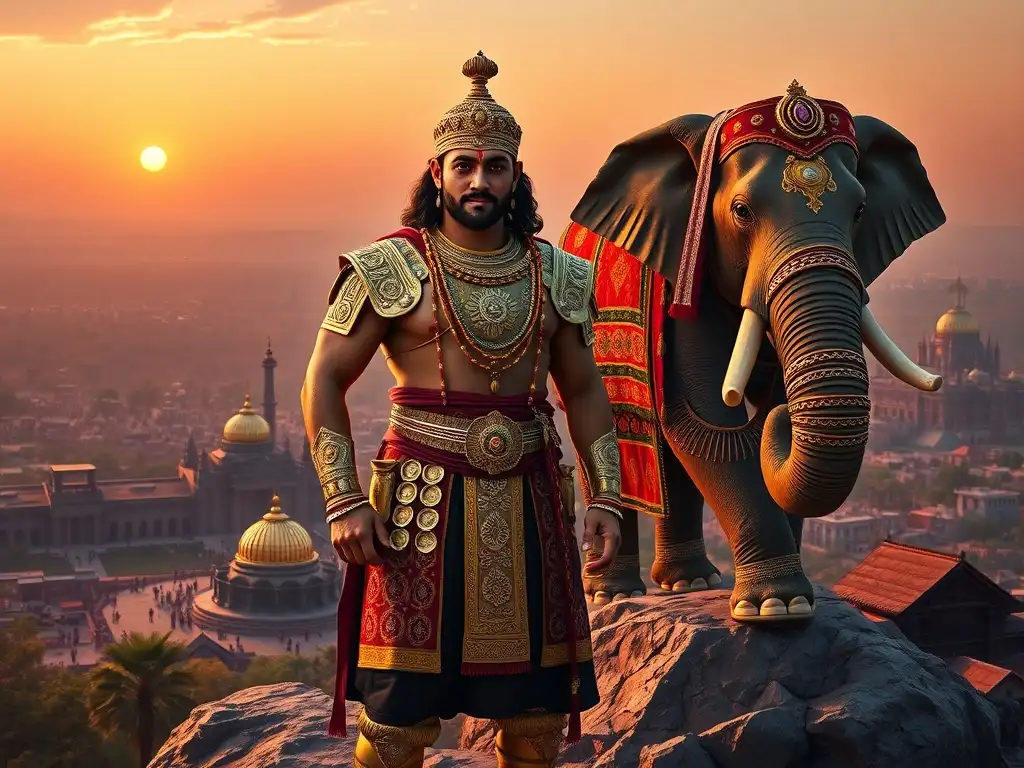
Welcome to Ancient India History, where we delve deep into the fascinating tapestry of India's past! Prepare to embark on a journey that unveils the rich and diverse history of ancient civilizations, from the iconic Indus Valley to the illustrious Gupta Empire. In this exploration, we shine a spotlight on Chandragupta Maurya, a pivotal figure whose strategic leadership laid the foundation for the Mauryan Empire.
What were the brilliant tactics that propelled him to greatness? Join us as we uncover the secrets of his strategic brilliance, and ignite your curiosity about this remarkable era. Dive in to discover how Chandragupta's legacy continues to shape the identity of India today!
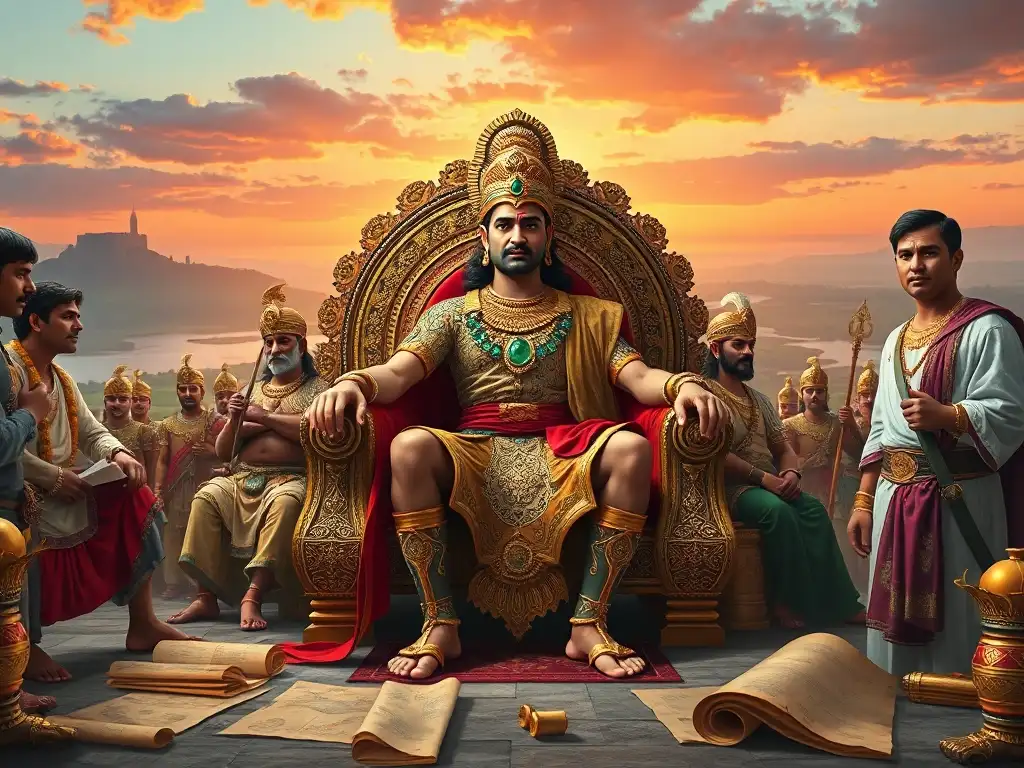
Chandragupta Maurya, a name synonymous with the rise of one of the largest empires in ancient India, represents a pivotal figure in Indian history. His strategic leadership not only laid the foundation for the Mauryan Empire but also transformed the socio-political landscape of ancient India. Emerging from humble beginnings, Chandragupta leveraged his keen intellect and military prowess to unite disparate kingdoms into a cohesive empire, marking a significant transition in Indian civilization. This article delves into the life, influences, and remarkable achievements of Chandragupta Maurya, highlighting his strategic brilliance that has left an indelible mark on history.
Introduction to Chandragupta Maurya
Chandragupta Maurya ascended to power in the 4th century BCE, establishing the Mauryan Empire, which became one of the most significant empires in Indian history. His leadership style was characterized by tactical acumen, adept diplomacy, and an unwavering vision for a united India. The empire he founded not only expanded through military conquests but also flourished through effective administration and trade. Chandragupta’s strategies and methodologies have been studied extensively, making him a quintessential example of strategic leadership that resonates even today.
Overview of the Mauryan Empire
The Mauryan Empire, under Chandragupta’s reign, spanned a vast territory that included parts of modern-day India, Pakistan, and Afghanistan. It is often noted for several key features:
- Territorial Expansion: The empire extended from the eastern part of the Indian subcontinent to the northwestern regions, marking a significant territorial achievement.
- Administrative Innovations: Chandragupta implemented a structured administrative framework, enabling efficient governance across vast distances.
- Cultural Synthesis: The Mauryan Empire was a melting pot of cultures, facilitating trade and cultural exchanges that enriched its society.
- Economic Prosperity: The empire thrived on agriculture, trade, and commerce, which were vital for its sustenance and growth.
Importance of Chandragupta in Ancient Indian History
Chandragupta Maurya's importance extends beyond his military conquests. His role as a unifier and a visionary leader has made him a pivotal figure in the annals of ancient Indian history. Some of his contributions include:
- Unification of Kingdoms: His ability to unite various kingdoms under one banner set the stage for a more cohesive Indian identity.
- Foundation of Governance: The administrative practices initiated during his reign influenced subsequent rulers and laid the groundwork for future governance in India.
- Cultural Influence: Chandragupta fostered an environment that encouraged art, literature, and philosophy, contributing to the rich tapestry of Indian culture.
Early Life and Influences
Chandragupta's early life remains shrouded in some mystery, yet it is crucial for understanding his character and leadership.
Background and Birthplace of Chandragupta Maurya
Born into a modest family in the region of present-day Bihar, Chandragupta's early experiences shaped his ambitions. His background provided him with insights into the struggles of the common people, which would later influence his policies as a ruler. His birthplace is often attributed to the Maurya clan, which played a significant role in his later ascent to power.
Key Influences on Chandragupta’s Strategic Leadership
Several key influences shaped Chandragupta's strategic leadership:
- Mentorship by Chanakya: The renowned philosopher and strategist Chanakya (also known as Kautilya) played a pivotal role in guiding Chandragupta's early ambitions. His teachings on statecraft and warfare were instrumental in formulating Chandragupta's strategies.
- Experiences in Warfare: Early encounters with local rulers and their armies provided Chandragupta with firsthand knowledge of military tactics and the importance of alliances.
- Cultural and Societal Dynamics: Growing up in a diverse cultural environment allowed Chandragupta to understand the complexities of Indian society, enabling him to forge alliances and build consensus among various groups.
Through these influences, Chandragupta Maurya emerged not only as a formidable military leader but also as a strategic thinker whose legacy continues to inspire leaders around the world today.
Rise to Power
Chandragupta Maurya's rise to power is a fascinating narrative that unfolds against the backdrop of a fragmented India in the 4th century BCE. Emerging from the relatively obscure Maurya clan, he capitalized on the political chaos following the decline of the Nanda dynasty. His ascent was not merely a product of opportunism; it was underpinned by astute strategic leadership that enabled him to unify a divided subcontinent.
The Establishment of the Mauryan Empire
The establishment of the Mauryan Empire marks a significant turning point in Indian history. Chandragupta, with the sage Chanakya (also known as Kautilya) as his mentor, laid the foundational stones of the empire. In 321 BCE, after a series of tactical maneuvers, Chandragupta successfully overthrew the Nanda rulers, thereby taking control of Pataliputra, the capital of the Nanda dynasty. This victory was not just about seizing power; it was about creating a centralized administration that could govern vast territories.
Under Chandragupta's reign, the Mauryan Empire expanded rapidly, incorporating regions such as Magadha, parts of present-day Uttar Pradesh, and even extending to Punjab and the northwest frontier. His establishment of a vast empire was characterized by a blend of military might and diplomatic acumen, setting the stage for one of the largest empires in ancient India.
Key Events Leading to Chandragupta’s Ascendancy
Several pivotal events shaped Chandragupta's journey to power. One of the most significant was his encounter with Chanakya, who became his chief advisor and strategist. After being humiliated by the Nanda king, Chanakya vowed to overthrow the dynasty, and he identified Chandragupta as the ideal candidate to fulfill this ambition. Their collaboration was instrumental in forming a formidable army and devising strategies that would ultimately lead to the Nanda downfall.
Chandragupta's military campaigns began with the consolidation of local support and alliances. He skillfully garnered the loyalty of various regional leaders, leveraging both military strength and promises of autonomy. Additionally, his early confrontations with the Nandas showcased his tactical brilliance, as he employed guerrilla warfare tactics that allowed him to defeat larger armies. These maneuvers, combined with Chanakya's political acumen, facilitated his swift rise to power.
Strategic Leadership of Chandragupta Maurya
Chandragupta Maurya's strategic leadership was characterized by a dual focus on military and political strategies. His ability to adapt to changing circumstances and capitalize on opportunities laid the groundwork for a robust empire that thrived under his rule.
Military Strategies Employed by Chandragupta
Chandragupta's military strategies were innovative and effective, showcasing his prowess as a leader. He utilized a combination of traditional warfare techniques and unconventional tactics to outmaneuver his foes. His armies were well-trained and equipped, allowing for swift and decisive engagements against the Nandas and later against foreign invaders like Alexander the Great's successor.
One notable strategy was the use of intelligence and espionage. Chandragupta understood the importance of information and employed spies to gather insights about enemy movements and weaknesses. This intelligence allowed him to plan ambushes and surprise attacks, turning the tide of battles in his favor. Furthermore, he adapted his tactics based on terrain and enemy strengths, demonstrating a remarkable ability to strategize under pressure.
Political Strategies in Building the Empire
In addition to his military acumen, Chandragupta's political strategies were crucial in consolidating his power and expanding the Mauryan Empire. He established a centralized administration that implemented a bureaucratic system capable of managing diverse regions and cultures. This included appointing local governors and ensuring they were loyal to him.
Chandragupta also engaged in diplomatic relations with neighboring kingdoms, often employing marriage alliances and treaties to secure peace and foster cooperation. His reign saw the implementation of laws and policies that promoted trade and agriculture, contributing to the economic stability of the empire. By creating a sense of unity among the diverse populations within his realm, Chandragupta laid the foundation for a prosperous and enduring empire, demonstrating his exceptional strategic leadership.
Legacy of Chandragupta Maurya
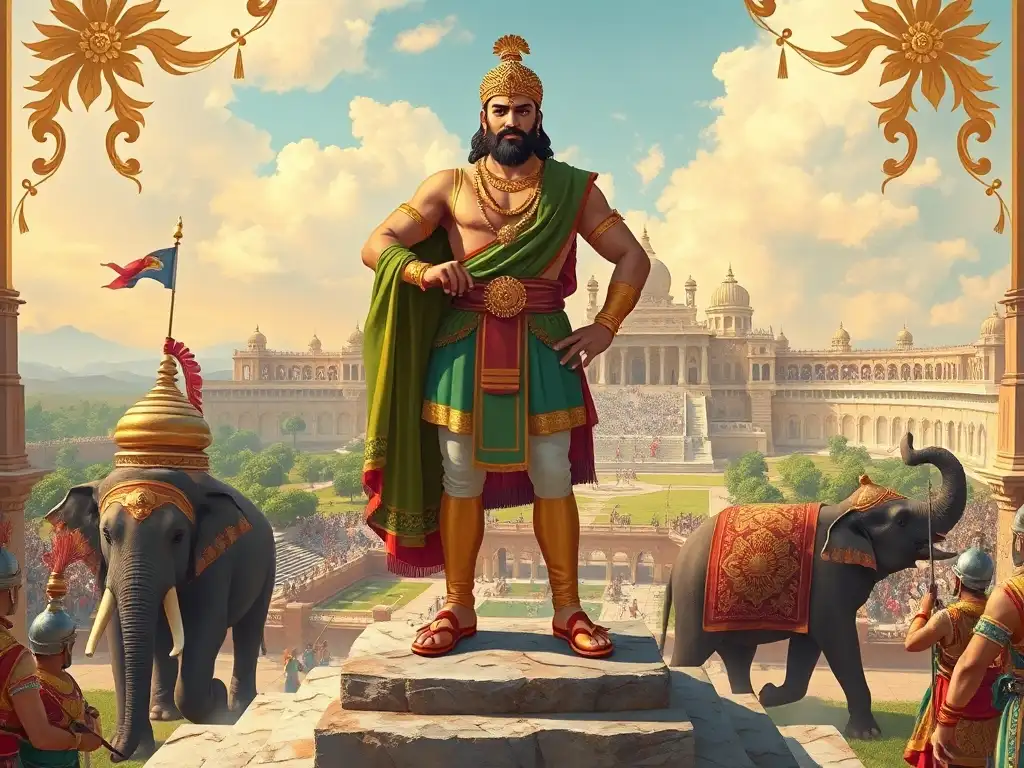
Chandragupta Maurya, the founder of the Mauryan Empire, is remembered not only for establishing one of the largest empires in ancient India but also for his profound legacy that shaped the course of Indian history. His strategic leadership enabled him to unite various regions and tribes under a single political entity, which was a significant achievement during a time characterized by fragmentation and conflict. The governance model he implemented laid the groundwork for subsequent rulers and set a precedent for centralized administration in Indian polity.
Chandragupta’s legacy is also enshrined in the economic and cultural advancements that flourished under his reign. He promoted trade and agriculture, which contributed to the prosperity of his empire. Furthermore, his relationships with the local rulers and the establishment of a well-defined administrative framework ensured stability and facilitated cultural exchanges that enriched the society of his time.
Long-Term Impact on Ancient Indian Civilization
The impact of Chandragupta Maurya on ancient Indian civilization was monumental. His establishment of the Mauryan Empire marked the beginning of a new era characterized by unprecedented political unity and cultural synthesis. The empire served as a model for subsequent dynasties, showcasing how effective governance can lead to peace and prosperity.
Chandragupta’s emphasis on law and order, as articulated in his advisor Kautilya's Arthashastra, provided a guiding philosophy for future rulers. His administrative practices, which included a bureaucratic system based on merit and the establishment of a spy network to ensure stability, influenced governance structures for centuries. This legacy of political organization and statecraft can be seen in various later empires, including the Gupta Empire, which further built on the foundations laid by Chandragupta.
Influence on Future Leaders and Empires
Chandragupta Maurya’s strategic leadership not only inspired contemporaneous leaders but also left a lasting influence on future generations. His ability to leverage alliances, adapt military tactics, and foster economic growth served as a blueprint for leaders who followed. Notably, emperors such as Ashoka, his grandson, expanded and consolidated the empire further, embodying the principles of governance and ethical leadership that Chandragupta espoused.
Moreover, the Mauryan model of governance influenced various Indian dynasties and served as a reference point for rulers in Southeast Asia and beyond, showcasing the far-reaching impact of his leadership. The principles of statecraft derived from his reign can be observed in the historical narratives of many subsequent empires, highlighting the significance of his strategic foresight.
Conclusion
Summary of Chandragupta Maurya’s Strategic Leadership
Chandragupta Maurya’s strategic leadership was characterized by his ability to unify diverse territories, create a centralized administration, and promote economic stability. His military acumen, coupled with his diplomatic skills, enabled him to conquer and consolidate power, establishing one of the greatest empires in ancient history. The governance principles and administrative frameworks he established became foundational for future rulers, underscoring the effectiveness of his leadership strategies.
Reflection on His Role in Shaping Indian History
Reflecting on Chandragupta Maurya’s role in shaping Indian history, it is evident that he was a pivotal figure whose actions reverberated through the ages. His vision for a unified India set the stage for cultural and political developments that followed. As the progenitor of the Mauryan Empire, Chandragupta not only changed the trajectory of his time but also left an indelible mark on the collective memory of Indian civilization. His legacy continues to be a source of inspiration for leaders and scholars alike, emphasizing the importance of strategic leadership in the quest for unity and progress.
Further Reading
To deepen your understanding of Chandragupta Maurya's life and his remarkable strategic leadership, numerous resources are available. These materials provide comprehensive insights into his reign, military tactics, and the socio-political context of ancient India.
Recommended Books and Articles on Chandragupta Maurya
-
"The Mauryan Empire" by Romila Thapar
This book offers an in-depth analysis of the Mauryan Empire, focusing on its formation under Chandragupta Maurya and the subsequent developments during his reign. Thapar's expertise in ancient Indian history makes this a must-read for anyone interested in the period.
-
"Chandragupta Maurya: The Founder of the Mauryan Empire" by R.C. Majumdar
A detailed biography that chronicles Chandragupta's rise to power, his political strategies, and his alliance with Chanakya, this book provides valuable insights into his strategic leadership.
-
"Arthashastra" by Kautilya (Chanakya)
Written by Chandragupta’s mentor, this ancient treatise on statecraft and military strategy reflects the principles that guided Chandragupta’s leadership. It is essential for understanding the strategic thinking of the time.
-
"The Great Maurya: A Historical Narrative" by R. S. Sharma
This narrative explores the cultural and political landscape of the Mauryan Empire, emphasizing Chandragupta's role in unifying the Indian subcontinent.
-
"Chandragupta Maurya: The Emperor of India" - Various Articles
Several scholarly articles discuss Chandragupta’s innovative military tactics, his diplomatic strategies, and his efforts in establishing a robust administrative system.
Related Topics in Ancient Indian History
-
The Mauryan Empire's Expansion
Explore how Chandragupta’s strategic leadership led to the expansion of the Mauryan Empire, including the conquest of territories and the establishment of trade routes.
-
Chanakya and His Influence on Chandragupta
Investigate the role of Chanakya, the brilliant strategist and political advisor, and how his teachings shaped Chandragupta’s approach to governance and warfare.
-
The Impact of the Mauryan Empire on Indian Civilization
Delve into the lasting effects of the Mauryan Empire on Indian culture, religion, and politics, and how Chandragupta’s reign laid the groundwork for future empires.
-
The Role of Religion in the Mauryan Empire
Analyze how Chandragupta’s conversion to Jainism influenced his policies and the socio-religious landscape of India during and after his reign.
-
Military Strategies of Ancient Indian Leaders
Compare Chandragupta's military tactics with those of other ancient Indian leaders, highlighting the unique aspects of his strategic brilliance that contributed to his success.
- Introduction to Chandragupta Maurya
- Early Life and Influences
- Rise to Power
- Strategic Leadership of Chandragupta Maurya
- Legacy of Chandragupta Maurya
- Conclusion
- Further Reading
- What was the significance of Chandragupta Maurya in Indian history?
- How did Chandragupta Maurya demonstrate strategic leadership?
- What role did Chanakya play in Chandragupta's rise to power?
- What were some key achievements of the Mauryan Empire under Chandragupta?
- How did Chandragupta Maurya's reign influence future Indian rulers?
Frequently Asked Questions
What was the significance of Chandragupta Maurya in Indian history?
Chandragupta Maurya is known as the founder of the Mauryan Empire, which was the first large-scale empire in ancient India, marking a significant shift in political organization and governance.
How did Chandragupta Maurya demonstrate strategic leadership?
Chandragupta Maurya exhibited strategic leadership by uniting various smaller kingdoms and employing military tactics that led to the overthrow of the Nanda Dynasty, establishing a centralized authority.
What role did Chanakya play in Chandragupta's rise to power?
Chanakya, also known as Kautilya, was Chandragupta's mentor and strategist, providing him with guidance and tactics that were crucial for his political and military success.
What were some key achievements of the Mauryan Empire under Chandragupta?
Under Chandragupta, the Mauryan Empire saw territorial expansion, the establishment of a strong administrative system, and the promotion of trade, which significantly enhanced its economic prosperity.
How did Chandragupta Maurya's reign influence future Indian rulers?
Chandragupta's strategic leadership and governance set a precedent for future rulers, emphasizing the importance of centralized rule, military organization, and effective administration in maintaining a vast empire.
Final Reflection: The Enduring Legacy of Chandragupta Maurya's Strategic Leadership
Chandragupta Maurya's strategic leadership is not just a tale from the past; it resonates profoundly in today's world of governance and management. His ability to unite diverse factions and establish a vast empire serves as a timeless lesson in the importance of vision and strategy in leadership. As we navigate the complexities of modern society, the principles that guided Chandragupta become increasingly relevant, reminding us that effective leadership is rooted in both intelligence and adaptability.
The influence of Chandragupta's strategic brilliance extends far beyond the historical context of the Mauryan Empire; it continues to shape our cultural and social landscapes today. His methods of diplomacy, military strategy, and governance have inspired countless leaders throughout history, demonstrating that the essence of leadership transcends time. Leadership is not about being in charge. It is about taking care of those in your charge.
This quote encapsulates the heart of Chandragupta's approach, emphasizing that true leadership is about serving and uplifting others.
As we reflect on the lessons derived from Chandragupta Maurya's life, I invite you to consider how you can embody his strategic principles in your own journey. What can you learn from his ability to unite and lead? Whether in your personal life, career, or community, think about how you can apply these timeless strategies to inspire and empower those around you. Embrace the challenge of leadership with the same courage and foresight that defined Chandragupta's reign, and you may find yourself creating a legacy of your own.
Unveil Your Strategic Brilliance Today!
Thank you for exploring the remarkable journey of Chandragupta Maurya and the strategic brilliance that founded the Mauryan Empire. By diving into his story, you've gained insights into leadership and decision-making that resonate even in today's world.
Now, it’s time to take that knowledge and apply it! Here are a few actionable steps to enhance your understanding and engagement with this fascinating topic:
- Reflect on Chandragupta's leadership: **Identify a significant decision in your life** that could benefit from his principles—write it down and make a plan.
- Join a discussion group: Seek out online forums or local history clubs focused on Ancient India—share your thoughts and learn from others.
- Explore further: Read additional books or articles about the Mauryan Empire—discover how these strategies laid the groundwork for future leaders.
How can you implement a strategy from Chandragupta’s life to enhance your own leadership skills today?