
The Legacy of Krishnadevaraya: A Study of His Reign in the Vijayanagara Empire

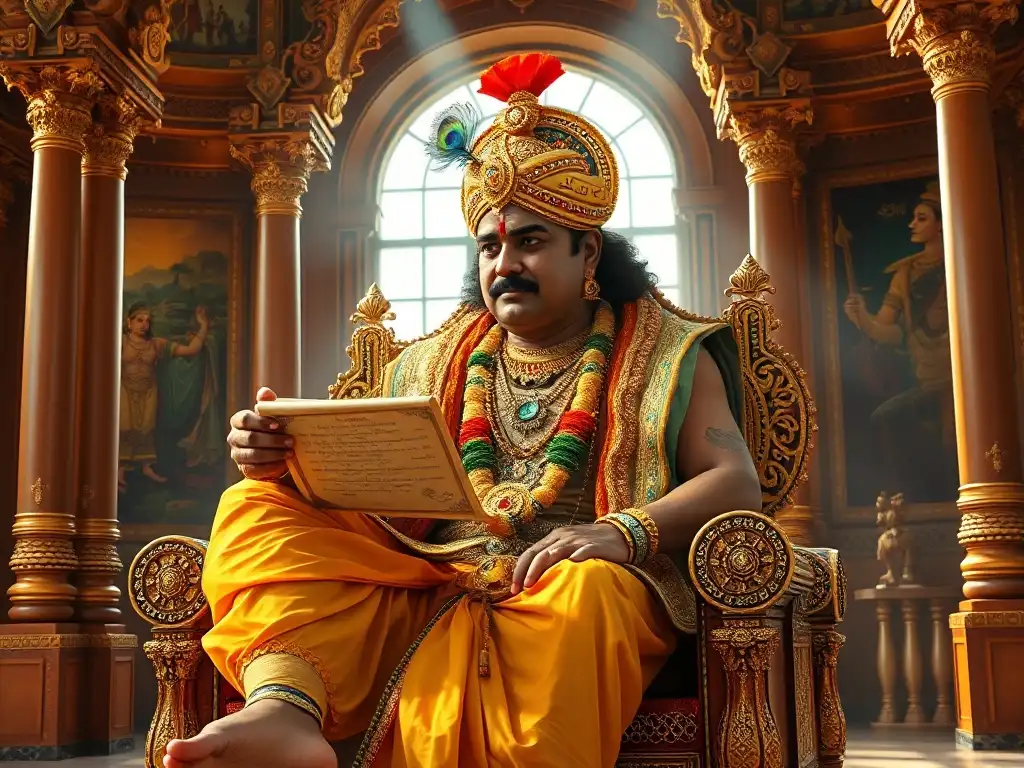
Welcome to Ancient India History, where we embark on a fascinating journey through the rich tapestry of ancient Indian civilizations. Delve into the legacy of Krishnadevaraya, a remarkable ruler of the Vijayanagara Empire, whose reign not only shaped the cultural landscape of his time but also left an indelible mark on history.
What were the secrets behind his extraordinary leadership and the flourishing of art, architecture, and trade during his rule? Join us as we uncover the dynamic history and extraordinary contributions of this key historical figure, setting the stage for an exploration that promises to deepen your understanding of India's vibrant past.
Introduction to Krishnadevaraya and the Vijayanagara Empire
Krishnadevaraya, one of the most illustrious rulers of the Vijayanagara Empire, reigned from 1509 to 1529 CE and is often celebrated for his significant contributions to the cultural and political landscape of southern India. His rule marks a golden age in the empire's history, characterized by military conquests, architectural advancements, and a flourishing of the arts and literature. Under his leadership, the Vijayanagara Empire not only expanded its territories but also became a beacon of prosperity and cultural richness in the Indian subcontinent.
Krishnadevaraya was a patron of the arts and literature, famously known for his court, which hosted renowned poets and scholars. His contributions to the Kannada, Telugu, and Sanskrit languages remain influential, making him a pivotal figure in the cultural renaissance of his time. The empire's capital, Hampi, became a thriving hub of commerce, art, and architecture, showcasing the remarkable achievements of Krishnadevaraya's reign.
As we delve deeper into the legacy of Krishnadevaraya, we will explore the historical context of the Vijayanagara Empire, the importance of his reign, and the lasting impact of his contributions on Indian history.
Overview of the Vijayanagara Empire's Historical Context
The Vijayanagara Empire emerged in the 14th century as a response to the decline of the Delhi Sultanate and the invasions of various Muslim rulers in southern India. Founded by Harihara I and Bukka Raya I, the empire sought to establish a stable rule and protect Hindu culture and traditions. Over the years, it grew into one of the most powerful empires in South India, encompassing vast territories that included parts of present-day Karnataka, Andhra Pradesh, Tamil Nadu, and Maharashtra.
By the time Krishnadevaraya ascended to the throne, the empire was already experiencing a period of relative stability and prosperity. This era is marked by notable achievements in trade, agriculture, and urbanization. The empire's wealth allowed for extensive military campaigns, which further expanded its influence. Krishnadevaraya capitalized on this momentum, leading successful expeditions against various rival kingdoms and consolidating his power.
The empire's historical context also highlights the importance of religion and culture. The rulers of the Vijayanagara Empire were staunch supporters of Hinduism and played a crucial role in the revival of Hindu religious practices, architecture, and scholarship. This cultural renaissance set the stage for Krishnadevaraya's reign, as he continued to promote these values while also embracing diverse influences from neighboring regions.
Importance of Krishnadevaraya in Indian History
Krishnadevaraya's significance in Indian history cannot be overstated. His reign is often seen as a high point in the Vijayanagara Empire, marked by military successes, cultural flourishing, and administrative reforms. He is credited with expanding the empire's boundaries through decisive military campaigns against the Deccan Sultanates and strengthening its defenses against external threats.
Beyond military prowess, Krishnadevaraya's contributions to art and architecture are monumental. Under his patronage, magnificent temples such as the Virupaksha Temple and the Vithala Temple were constructed, showcasing intricate carvings and architectural brilliance. His support for literature led to the creation of classics in Kannada and Telugu, including the famous "Amuktamalyada," a poetic work that reflects his poetic prowess and understanding of governance.
Moreover, Krishnadevaraya's legacy extends to his role as a unifier of diverse cultures. His reign fostered an environment where various communities coexisted and thrived, promoting a sense of shared identity. This cultural amalgamation laid the groundwork for future generations to build upon, ensuring that the contributions of the Vijayanagara Empire would resonate throughout Indian history.
The study of Krishnadevaraya's reign offers profound insights into the complexities of ancient Indian civilization, showcasing how one leader's vision and initiatives can leave an enduring legacy in the annals of history.
- Introduction to Krishnadevaraya and the Vijayanagara Empire
- Overview of the Vijayanagara Empire's Historical Context
- Importance of Krishnadevaraya in Indian History
Early Life and Ascension to Power
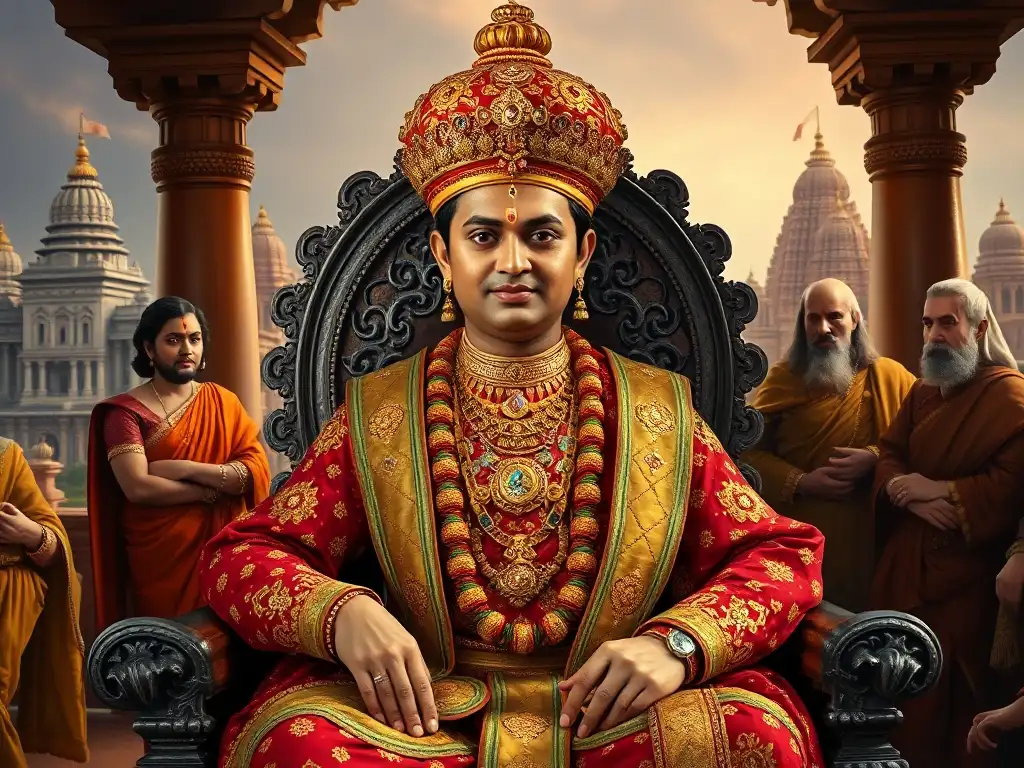
Birth and Background of Krishnadevaraya
Krishnadevaraya was born in 1471 in Hampi, a city that would later become the capital of the Vijayanagara Empire. He was the son of Tuluva Narasa Nayaka, a prominent military leader and governor in the Vijayanagara Empire. His mother, a member of the noble family, played a significant role in his early education and upbringing.
Krishnadevaraya belonged to the Tuluva dynasty, which ascended to power after the decline of the Sangama dynasty. The family’s military prowess and administrative capabilities were well recognized, laying a solid foundation for Krishnadevaraya's future. Growing up in an environment rich with political intrigue and military strategy, he was well-prepared to take on leadership roles from a young age.
His education was comprehensive, encompassing not only the martial arts and military tactics that were essential for a ruler but also the cultural and religious traditions that defined the empire. This blend of skills would later allow him to emerge as one of the most celebrated emperors in Indian history.
Factors Leading to His Rise in the Vijayanagara Empire
Several critical factors contributed to the rise of Krishnadevaraya within the Vijayanagara Empire:
- Military Competence: From an early age, Krishnadevaraya exhibited exceptional military skills. His participation in various military campaigns against neighboring kingdoms helped him gain recognition and respect within the empire.
- Political Turmoil: The Vijayanagara Empire experienced significant political instability following the death of his cousin, Emperor Devaraya II. This chaos created a power vacuum, allowing ambitious leaders like Krishnadevaraya to assert their influence.
- Support from Nobility: Krishnadevaraya garnered the support of influential nobles and military leaders, crucial for establishing his authority. His ability to forge alliances and maintain loyalty among his supporters was instrumental in his rise.
- Cultural Renaissance: The period leading up to his reign was marked by a cultural renaissance in the Vijayanagara Empire. The promotion of literature, art, and architecture provided an environment that celebrated leadership, and Krishnadevaraya embodied these ideals.
- Religious Tolerance: Krishnadevaraya's policies of religious tolerance helped unify the diverse population of the empire, which was crucial for his political stability and acceptance among various communities.
Key Events During His Ascension
Krishnadevaraya's ascension to the throne was marked by several pivotal events that showcased his leadership and strategic acumen:
- Defeating Rivals: In 1509, after a series of military campaigns, Krishnadevaraya ascended to the throne following the death of his brother, Vira Narasimha. He quickly consolidated power by defeating rival claimants, including the forces of the Bahmani Sultanate.
- Coronation and Imperial Expansion: His formal coronation took place in 1510, marking the beginning of an era of expansion. His campaigns against the Bahmani Sultanate and the Deccan sultanates significantly enlarged the empire's territory.
- Military Campaigns: Krishnadevaraya’s military expeditions, including the successful invasion of Goa in 1510, set the stage for the Vijayanagara Empire's emergence as a dominant power in South India. These campaigns not only expanded the empire but also increased its wealth and resources.
- Cultural Patronage: His reign was also characterized by significant patronage of literature and the arts. The famous Telugu poet Allasani Peddana flourished under his rule, creating works that celebrated the emperor's achievements and the cultural richness of the empire.
- Diplomatic Efforts: Krishnadevaraya established diplomatic relations with various kingdoms, enhancing trade and cultural exchanges. His strategic alliances with foreign powers further solidified his position and promoted stability within his empire.
These key events not only highlight Krishnadevaraya's rise to power but also set the groundwork for his illustrious reign, marking him as a pivotal figure in the Krishnadevaraya Vijayanagara Empire history.
Reign of Krishnadevaraya: A Golden Era
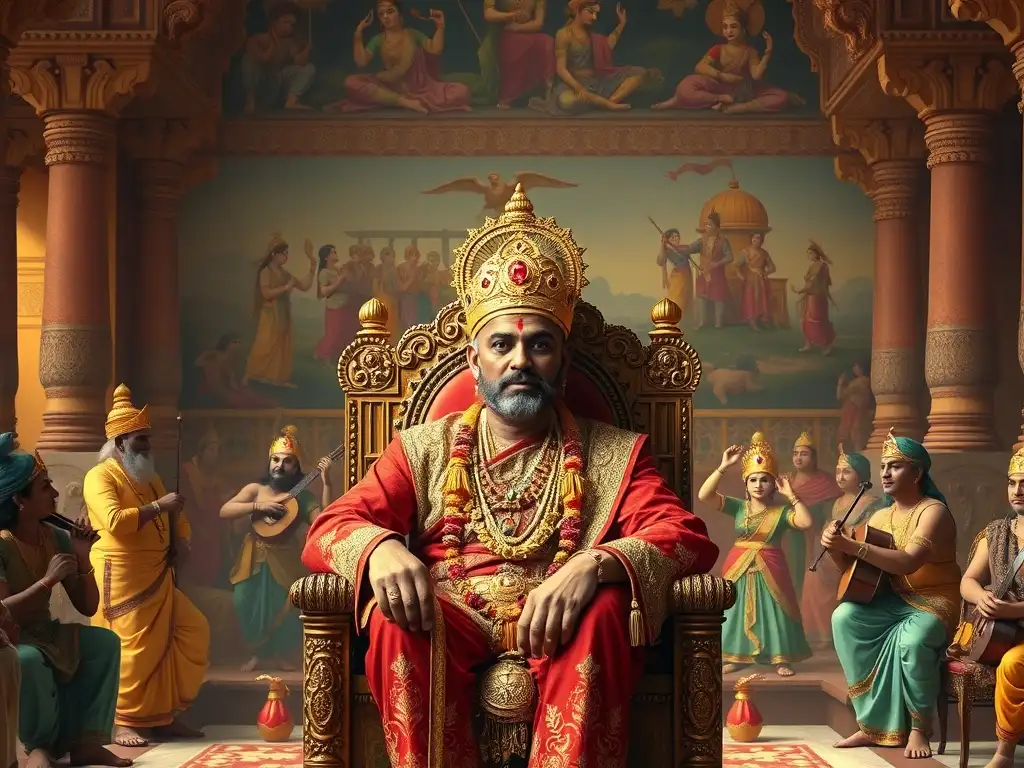
Political Achievements and Governance
Krishnadevaraya's reign from 1509 to 1529 is often heralded as a golden era in the history of the Vijayanagara Empire, characterized by significant political achievements and effective governance. His administration is noted for its stability and prosperity, which can largely be attributed to his strong leadership and vision.
One of the hallmarks of Krishnadevaraya's rule was his ability to consolidate power and maintain a vast empire that stretched across South India. He implemented a centralized administrative system that streamlined governance and improved efficiency. The king appointed capable ministers and regional governors, known as Nayaks, who were entrusted with local administration, thus ensuring that the empire was well-managed from the grassroots level.
Furthermore, Krishnadevaraya was a patron of the arts and culture, advocating for a flourishing environment that celebrated literature, music, and architecture. Under his rule, the empire witnessed the construction of magnificent temples and monuments, such as the iconic Vijaya Vittala Temple in Hampi, which exemplified the artistic excellence of the period.
Administrative Reforms Under Krishnadevaraya
Krishnadevaraya's administrative reforms were pivotal in enhancing the efficiency of governance. He standardized revenue collection methods, which minimized corruption and improved the state’s income. The introduction of land surveys allowed for the assessment of agricultural productivity, leading to fair taxation based on crop yields.
Additionally, he established a judicial system that ensured justice was accessible to all citizens. This system included the appointment of judges at various levels, who were responsible for settling disputes and maintaining law and order. By promoting meritocracy, Krishnadevaraya ensured that capable individuals occupied key administrative positions, thus fostering a sense of loyalty and accountability within the bureaucracy.
Moreover, to further bolster the economy, Krishnadevaraya invested in infrastructure development, including roads and irrigation systems, which facilitated trade and agriculture. His focus on public welfare and prosperity contributed significantly to the empire's stability during his reign.
Diplomacy and Foreign Relations
Krishnadevaraya was not only a formidable ruler but also an astute diplomat. His reign was marked by strategic alliances and relationships with neighboring kingdoms, which played a crucial role in maintaining the empire's sovereignty and expanding its influence. He was known for his diplomatic skills, often employing marriage alliances to strengthen ties with powerful local rulers.
The king engaged in trade relations with foreign powers, including the Portuguese, who were emerging as significant players in the Indian Ocean trade. Through these interactions, he not only boosted the empire's economy but also created a cultural exchange that enriched the Vijayanagara Empire.
Furthermore, Krishnadevaraya's diplomatic efforts included military pacts with various regional chieftains, ensuring a united front against common enemies. His ability to navigate complex political landscapes was instrumental in securing peace and stability throughout the empire.
Military Campaigns and Expansion
Krishnadevaraya's military campaigns were central to the expansion and consolidation of the Vijayanagara Empire. His reign witnessed several successful military expeditions that not only increased the territory under his control but also established the empire as a dominant power in South India.
Major Battles and Their Significance
Among the most notable battles fought during Krishnadevaraya's reign was the Battle of Raichur (1520), where he led his forces to victory against the Sultan of Bijapur. This battle was significant as it marked the expansion of the Vijayanagara Empire into territories previously controlled by the Deccan Sultanates. The victory at Raichur not only asserted Krishnadevaraya's military prowess but also demonstrated the strategic importance of the region in securing trade routes.
Another key military engagement was the campaign against the Gajapati Kingdom of Odisha, which resulted in the annexation of territories that enhanced the empire's coastal influence. These victories reinforced the empire's position as a formidable power in South India and established Krishnadevaraya as a respected military leader.
The success of these campaigns contributed to the empire's wealth and resources, which were crucial in supporting further administrative and cultural endeavors.
Strategies and Tactics Employed
Krishnadevaraya's military strategies were characterized by a combination of traditional warfare techniques and innovative tactics. He utilized a well-organized army, which included infantry, cavalry, and war elephants, to execute complex battle formations. His ability to adapt to different combat situations was instrumental in achieving victories over numerically superior forces.
Moreover, Krishnadevaraya placed a strong emphasis on intelligence and reconnaissance, ensuring that his forces were well-informed about enemy movements and strategies. He also employed psychological warfare, often demoralizing his opponents before engaging in battle.
The king's emphasis on training and discipline in his military ranks ensured that his soldiers were well-prepared for combat. His leadership style instilled a sense of loyalty among his troops, which proved essential in maintaining morale during extended campaigns.
Through these military endeavors and strategies, Krishnadevaraya not only expanded the Vijayanagara Empire but also left a lasting legacy that would influence the region's history for generations to come.
Cultural Contributions and Patronage
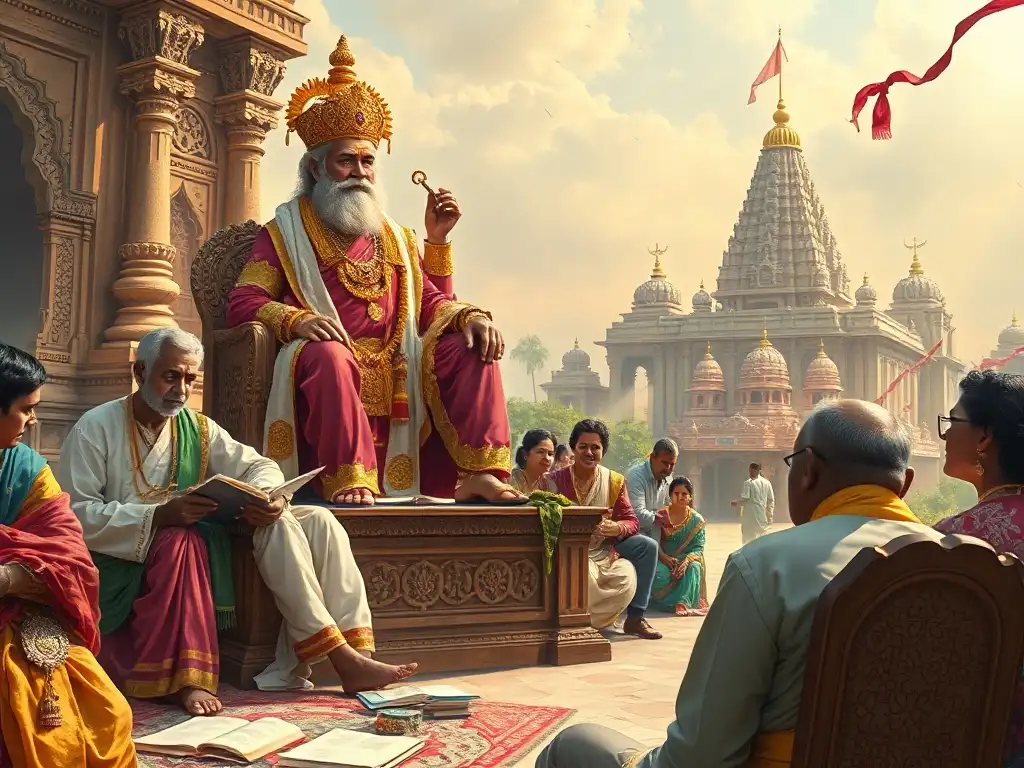
Promotion of Arts and Literature in the Vijayanagara Empire
Krishnadevaraya's reign from 1509 to 1529 marked a golden era for the arts and literature within the Vijayanagara Empire. His patronage significantly influenced the cultural landscape, promoting a renaissance of artistic expression and literary innovation.
Influence on Poetry and Literature
Krishnadevaraya was not only a ruler but also an accomplished poet himself. He penned the famous Telugu work, Amuktamalyada, which narrates the story of the divine love between Lord Vishnu and his devotee, highlighting the cultural ethos of the time. His court attracted renowned poets like Allasani Peddana, often referred to as the "Aadhi Kavi" (the first poet) of Telugu literature. Under his reign, the Telugu language flourished, and literary works were produced that combined rich traditions with contemporary themes.
The emperor's support for literature extended beyond poetry; he also encouraged the compilation and preservation of texts in various languages, including Kannada and Sanskrit. This literary renaissance contributed to a profound cultural legacy that influenced subsequent generations.
Architectural Developments and Innovations
Krishnadevaraya's patronage was pivotal in the realm of architecture as well. The Vijayanagara Empire witnessed the construction of grand temples and palaces that blended stylistic elements from various regions, creating a unique architectural identity. The Vitthala Temple in Hampi stands as a testament to this era, with its intricate carvings and the famous stone chariot, reflecting the artistic prowess of the time.
Innovations in architecture during his reign also included the use of decorative pillars, advanced water management systems, and expansive royal complexes. The emphasis on building temples dedicated to Hindu deities not only showcased religious devotion but also served as a means to unify the empire under a common cultural banner.
Religious Tolerance and Cultural Syncretism
Krishnadevaraya's reign is noted for its remarkable religious tolerance and cultural syncretism, which played a crucial role in unifying the diverse population of the Vijayanagara Empire.
Support for Various Religions
While Krishnadevaraya was a devout Hindu, he exhibited a profound respect for other religions, including Islam and Jainism. His administration included officials from different faiths, fostering an environment of inclusivity. This approach not only strengthened political alliances but also encouraged the flourishing of a multicultural society.
The emperor's patronage of various religious institutions demonstrated his commitment to promoting harmony among different communities. He commissioned the construction and restoration of several mosques and Jain temples, emphasizing the importance of coexistence and mutual respect among faiths.
Festivals and Cultural Celebrations
Festivals during Krishnadevaraya's reign were grand affairs, reflecting the empire's cultural richness. Celebrations of Dasara, Ugadi, and other traditional festivals were marked by elaborate processions, music, and dance, engaging people from all walks of life.
These festivals served as an opportunity for cultural exchange, where various traditions converged, showcasing the empire's diversity. The emperor himself often participated in these celebrations, reinforcing the idea that cultural identity was not only about religion but also about shared customs and communal joy.
Krishnadevaraya's legacy in the Vijayanagara Empire is characterized by his substantial contributions to the arts and literature, his promotion of religious tolerance, and his efforts to foster a unified yet diverse cultural identity. His reign stands as a remarkable example of how leadership can shape a civilization's cultural landscape, leaving an indelible mark on history.
Economic Growth and Trade Under Krishnadevaraya
Agricultural Advancements and Their Impact
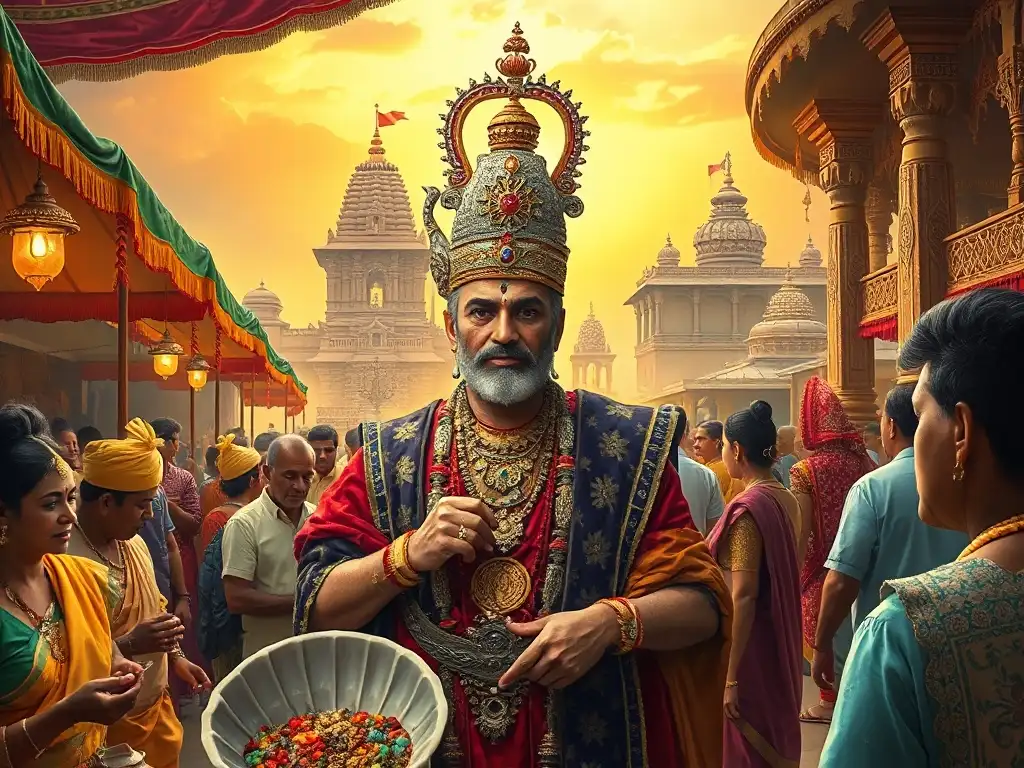
Krishnadevaraya's reign (1509-1529) marked a significant period of agricultural innovation within the Vijayanagara Empire, contributing to its economic prosperity. One notable advancement was the introduction of new irrigation techniques, which included the construction of dams and water reservoirs. These structures not only improved water management but also expanded arable land, enabling farmers to cultivate various crops year-round.
- Crop Diversification: The emphasis on agricultural advancements led to the cultivation of diverse crops such as rice, sugarcane, and cotton. This diversification enhanced food security and provided raw materials for burgeoning industries.
- Agricultural Policies: Krishnadevaraya implemented policies that encouraged agricultural productivity. He provided incentives for farmers, such as tax reductions during drought years, which motivated them to increase production without the fear of financial ruin.
The impact of these advancements was profound, leading to increased agricultural outputs that supported a growing population and contributed to the empire's overall wealth.
Trade Relations with Other Kingdoms
Under Krishnadevaraya, the Vijayanagara Empire became a hub of trade, establishing robust relations with various neighboring kingdoms and regions. The empire's strategic location facilitated trade routes that linked it to both domestic and international markets.
- International Trade: The empire engaged in trade with regions as far as the Middle East, Southeast Asia, and even Europe. Commodities such as spices, textiles, and precious stones were highly sought after, enhancing the empire’s reputation as a center for commerce.
- Diplomatic Relations: Krishnadevaraya's diplomatic acumen fostered alliances with other kingdoms, which further secured trade routes. For instance, alliances with the Sultanates of Deccan not only facilitated trade but also protected the empire from external threats.
The flourishing trade relations not only enriched the empire but also introduced cultural exchanges that influenced art, literature, and technology within the Vijayanagara realm.
Influence on the Economy of the Vijayanagara Empire
The economic strategies employed by Krishnadevaraya had lasting impacts on the Vijayanagara Empire's economy. His reign is often characterized by a blend of agriculture, trade, and cultural patronage, creating a balanced and thriving economy.
- Revenue Generation: The agricultural advancements and trade relations resulted in increased revenue for the empire. This revenue was crucial for funding military campaigns, public works, and cultural endeavors, ensuring the empire’s stability and growth.
- Urbanization: With economic prosperity came urban development. Cities such as Hampi flourished, becoming bustling centers of trade and culture. The influx of wealth attracted artisans, scholars, and merchants, creating an environment where arts and literature could thrive.
- Cultural Patronage: Krishnadevaraya's economic policies allowed for generous patronage of the arts and temple constructions, which in turn stimulated local economies and reinforced the cultural identity of the empire.
The economic growth under Krishnadevaraya was not just a byproduct of agricultural advancements and trade but a deliberate strategy that solidified the Vijayanagara Empire's position as a dominant power in South India, leaving a legacy that continued to influence the region long after his reign.
Legacy of Krishnadevaraya in Historical Perspective
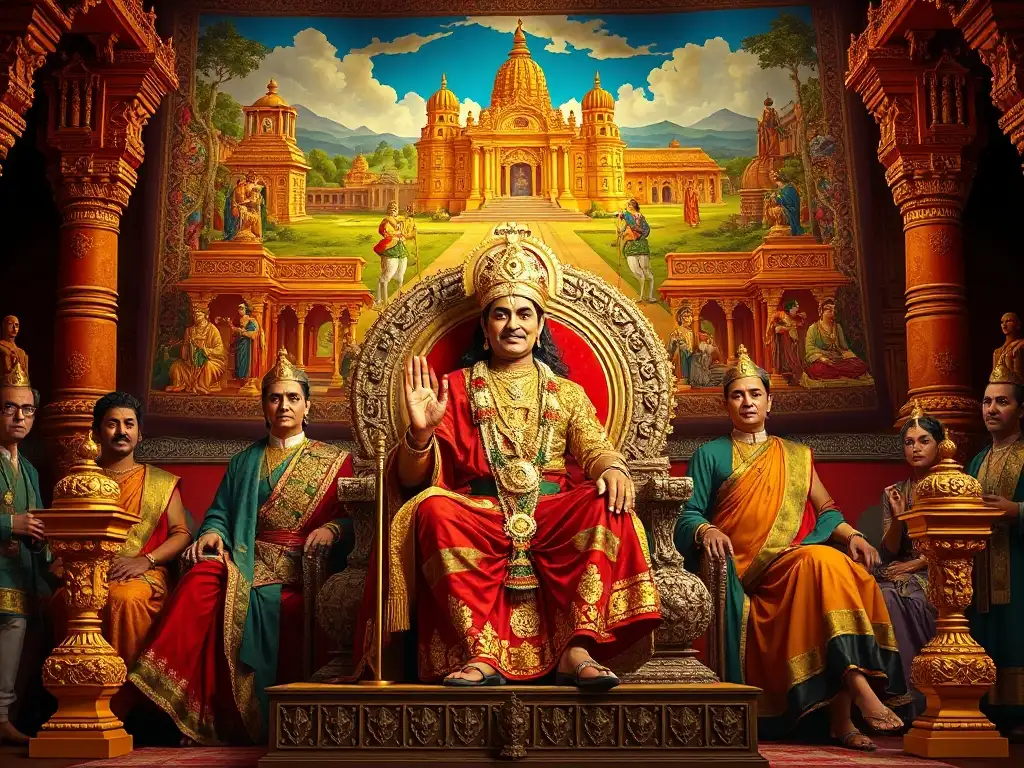
The legacy of Krishnadevaraya, who ruled the Vijayanagara Empire from 1509 to 1529, is profound and multifaceted, shaping the course of South Indian history and influencing subsequent generations. His reign is often characterized by military conquests, cultural patronage, and administrative reforms, which collectively contributed to the empire's stability and prosperity. Krishnadevaraya's policies fostered a climate of economic growth and cultural renaissance, making him a pivotal figure in the annals of Indian history.
Influence on Subsequent Rulers and Empires
Krishnadevaraya's reign set a precedent for future rulers within the Vijayanagara Empire and beyond. His successful military campaigns against neighboring kingdoms, such as the Deccan Sultanates and the Gajapatis of Odisha, not only expanded the territory but also strengthened the empire's military prowess. This military success inspired later emperors to adopt similar strategies of expansion and consolidation.
Moreover, the administrative framework established by Krishnadevaraya became a model for governance in South India. He emphasized meritocracy, appointing officials based on ability rather than lineage, which enhanced the efficiency of the state. His revenue reforms, which included systematic land surveys and the introduction of a standardized tax system, provided a sustainable economic model that subsequent rulers emulated.
Culturally, Krishnadevaraya's patronage of literature and the arts had a lasting impact. He was a poet himself, composing works in Kannada, and he encouraged the flourishing of Telugu literature. The era witnessed the rise of notable poets like Allasani Peddana, who became a cornerstone of Telugu literary tradition. This cultural renaissance influenced later rulers who continued to support the arts, ultimately shaping regional identities and cultural heritage.
Krishnadevaraya's Impact on Modern Indian History
The significance of Krishnadevaraya extends into modern Indian history, where his legacy is often invoked in discussions about regional pride and identity. His reign is viewed as a golden age in South Indian history, characterized by advancements in art, architecture, and literature. The structures built during his rule, such as the iconic Vittala Temple in Hampi, continue to attract scholars and tourists alike, standing as a testament to his architectural vision.
In contemporary India, discussions surrounding Krishnadevaraya often highlight themes of unity and tolerance, as he was known for fostering harmony among diverse religious communities. His rule was marked by a notable lack of sectarian strife, which serves as an example in modern discourse on communal harmony.
Additionally, Krishnadevaraya's emphasis on education and learning resonates with modern initiatives aimed at promoting literacy and knowledge. His court was a hub for scholars and thinkers, which has inspired educational reforms in the region. Educational institutions today often draw inspiration from his commitment to learning, looking to replicate the intellectual environment he cultivated.
Commemoration and Cultural Memory in Contemporary India
Krishnadevaraya's legacy is commemorated in various forms across contemporary India, particularly in Karnataka and Andhra Pradesh. Statues, memorials, and cultural festivals celebrate his contributions, serving as a reminder of his significance in the region's history. The annual Krishnadevaraya Jayanti is observed with great enthusiasm, highlighting his enduring influence on local culture and identity.
In addition to public celebrations, Krishnadevaraya is often featured in literature and cinema, portraying his life and achievements as an inspiration for future generations. His character embodies the ideals of leadership, valor, and cultural patronage, making him a subject of admiration and respect in popular narratives.
Furthermore, educational curricula in South Indian states include comprehensive studies of his reign, ensuring that future generations recognize his contributions to the rich tapestry of Indian history. By instilling pride in his legacy, contemporary society continues to honor the values and achievements of Krishnadevaraya, reinforcing his place in the collective memory of India.
Conclusion
Summary of Krishnadevaraya's Contributions to the Vijayanagara Empire
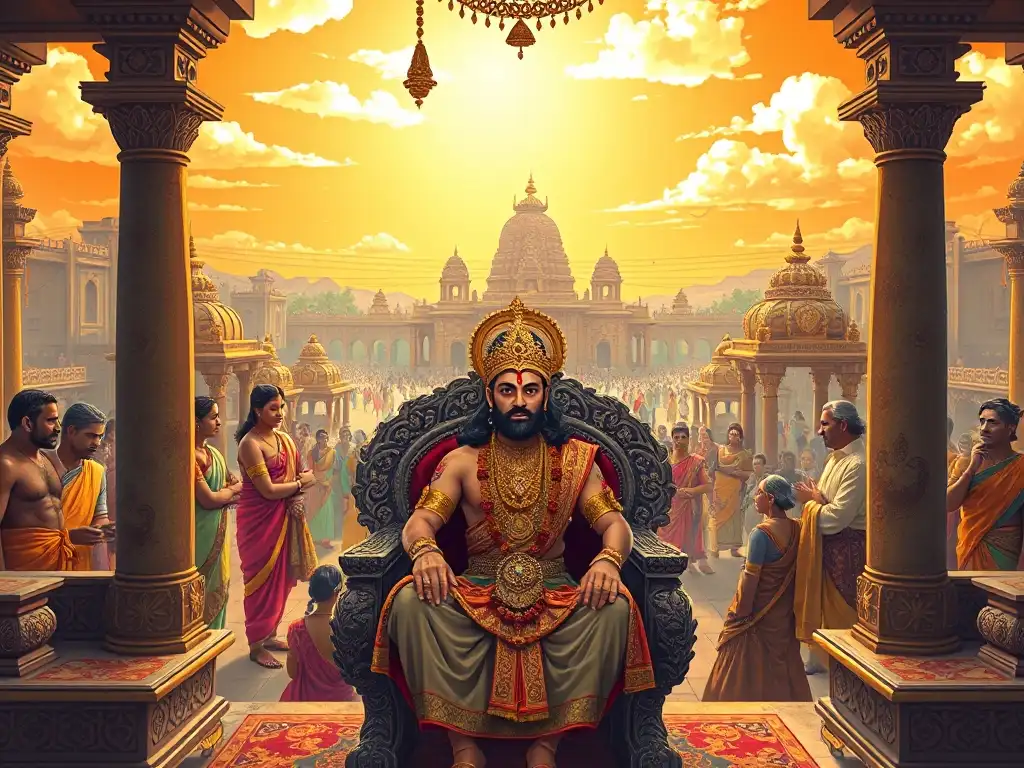
Krishnadevaraya, who ruled the Vijayanagara Empire from 1509 to 1529, is celebrated as one of the most illustrious rulers in Indian history. His reign marked a zenith in the empire's political, cultural, and economic landscape.
- Political Achievements:
- Expansion of Territory: Krishnadevaraya significantly expanded the empire, incorporating regions that now form parts of modern-day Karnataka, Andhra Pradesh, Tamil Nadu, and Telangana. His military campaigns against the Bahmani Sultanate and other regional powers solidified Vijayanagara's dominance in South India.
- Administrative Reforms: He implemented a structured administration that enhanced governance, including the establishment of a council of ministers and the promotion of local governance through village assemblies.
- Cultural Flourishing:
- Patron of Arts and Literature: Under his reign, the empire became a cultural hub. He patronized numerous poets, artists, and scholars, leading to the flourishing of Telugu literature. The most notable among them was the poet Allasani Peddana, who was honored with the title "Kavi Rajahansa."
- Architectural Advancements: The period saw remarkable architectural achievements, including the construction of grand temples and structures, most notably the iconic Vithala Temple in Hampi, which is renowned for its stone chariot and musical pillars.
- Religious Tolerance:
- Support for Various Faiths: Krishnadevaraya was known for his inclusive policies, promoting a sense of unity among Hindus and Muslims. He respected and supported various religious practices, which contributed to social harmony within the empire.
- Economic Prosperity:
- Trade and Agriculture: His reign witnessed significant economic growth, driven by agriculture and trade. The empire became a vital trade center, with flourishing commerce in spices, textiles, and precious stones, enhancing its wealth and influence internationally.
Reflection on the Importance of His Legacy in Ancient Indian History
The legacy of Krishnadevaraya is pivotal in understanding the historical trajectory of the Vijayanagara Empire and its impact on ancient Indian history. His contributions have left an indelible mark, not just on the empire itself but also on the cultural and political landscape of South India.
- Cultural Integration: The cultural renaissance during his reign laid the groundwork for the rich tapestry of South Indian art, literature, and architecture that followed. The emphasis on local languages and literature fostered a sense of identity and pride among the people, influencing generations to come.
- Model of Governance: Krishnadevaraya's administrative innovations serve as a model of effective governance that blended central authority with local autonomy. His ability to maintain stability and promote prosperity in a diverse and multi-religious empire is still referenced in contemporary discussions about governance and unity in diversity.
- Influence on Future Generations: The legacy of Krishnadevaraya transcends his time, inspiring subsequent rulers and leaders in the region. His vision of a prosperous and culturally rich society continues to resonate in the cultural ethos of South India today.
Krishnadevaraya's reign is not merely a chapter in the history of the Vijayanagara Empire; it is a significant period that shaped the cultural and political identity of ancient India. His achievements reflect the heights of governance, culture, and unity that can be achieved, making him a pivotal figure in the narrative of Indian history.
Frequently Asked Questions
What was the significance of Krishnadevaraya in the Vijayanagara Empire?
Krishnadevaraya is celebrated for his remarkable contributions to the cultural and economic prosperity of the Vijayanagara Empire, particularly during the 16th century.
How did Krishnadevaraya influence art and architecture?
Under Krishnadevaraya's reign, there was a flourishing of art and architecture, with the construction of magnificent temples and palaces, showcasing the empire’s rich heritage.
What were some key achievements of Krishnadevaraya?
Krishnadevaraya is noted for his military conquests, expansion of territory, and the establishment of trade routes, which greatly enhanced the empire's influence and wealth.
How did Krishnadevaraya contribute to literature?
He was a patron of scholars and poets, leading to a literary renaissance in the Vijayanagara Empire. His court was home to the Ashtadiggajas, a group of renowned poets.
What is the legacy of Krishnadevaraya today?
Krishnadevaraya's legacy endures in Indian history as a symbol of strength and cultural richness, with his reign often regarded as the golden age of the Vijayanagara Empire.
Final Reflection: The Enduring Legacy of Krishnadevaraya in the Vijayanagara Empire
The legacy of Krishnadevaraya remains profoundly relevant today, as it exemplifies the heights of cultural and administrative excellence that can be achieved through visionary leadership. His reign not only marked a golden age for the Vijayanagara Empire but also set a benchmark for governance and cultural patronage that resonates in contemporary discussions about effective leadership and national identity. The lessons learned from his rule remind us that great leaders can inspire progress and unity, even in the face of adversity.
Crucially, Krishnadevaraya's influence extends beyond mere historical significance; it continues to shape the cultural and social landscape of India. His commitment to arts, literature, and architecture has left an indelible mark that still inspires artists and scholars today. As the poet Allasani Peddana, one of his court poets, aptly stated, A king is the soul of his kingdom, and his virtues are the virtues of his people.
This sentiment encapsulates how Krishnadevaraya's values and vision fostered a rich cultural milieu that encouraged creativity and intellectual growth, a legacy that we can still witness in the vibrant cultural tapestry of modern India.
As we reflect on the lessons from Krishnadevaraya's reign, let us consider how we can embody the principles of leadership, cultural appreciation, and unity in our own lives. Take a moment to think about how you can contribute to your community, celebrate your heritage, and promote the values of collaboration and creativity that Krishnadevaraya championed. By doing so, we honor his legacy and ensure that the spirit of the Vijayanagara Empire continues to inspire future generations.
Unveil the Legacy of Krishnadevaraya Today!
Thank you for diving into the rich history of Krishnadevaraya and the Vijayanagara Empire! Your interest not only broadens your understanding of ancient leaders but also connects you to a legacy that significantly shaped India's past. Now, let's take that knowledge further and bring this remarkable legacy to life!
Here’s how you can make an impact:
- Join a history group or online community dedicated to exploring the Vijayanagara Empire. Share your insights on Krishnadevaraya's contributions and learn from others!
- Visit a local museum or cultural center that features exhibits on Indian history. Take a closer look at artifacts from the era and connect with their fascinating stories.
- Imagine what it would be like to lead a diverse empire like Krishnadevaraya did. Write a short essay or blog post reflecting your thoughts, and share it with friends or on social media!
What aspect of Krishnadevaraya’s legacy resonates with you the most, and how will it inspire your own journey?