

Indus Valley Civilization - Technology and Science
Indus Valley Civilization - Technology and Science
54 articles in this topic
Start here
- Indus Valley Civilization - Technology and ScienceThe Indus Valley Civilization: Pioneers of Advanced Water Management Systems
- Indus Valley Civilization - Technology and ScienceThe Science Behind the Indus Valley's Advanced Weaving Techniques
- Indus Valley Civilization - Technology and ScienceThe Craftsmanship Behind Indus Valley Jewelry: A Blend of Art and Science
Read more about this topic
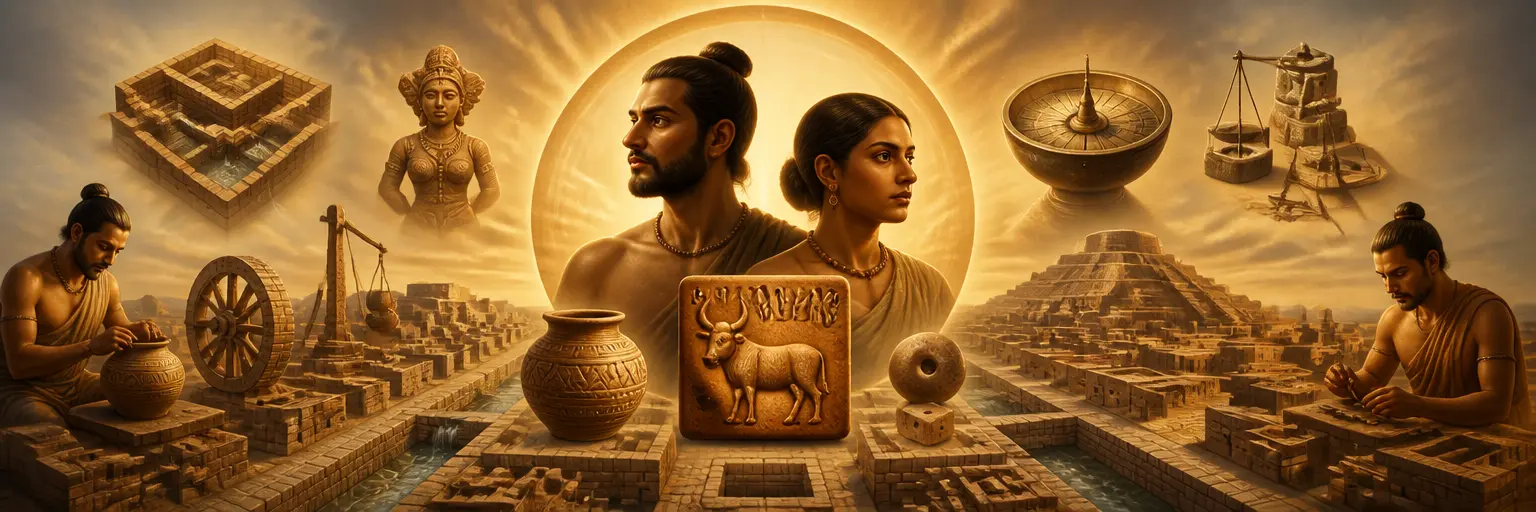
Explore the remarkable technology and science of the Indus Valley Civilization 🔬🏺—a pioneering chapter of ancient Indian history known for advanced urban planning, sophisticated drainage systems, standardized weights and measures, metallurgy, craft production, and innovative water management. Discover how Harappan engineers and artisans shaped early civilization through practical knowledge, scientific thinking, and enduring archaeological achievements.
More in Indus Valley Civilization - Technology and Science
Indus Valley Civilization - Technology and Science
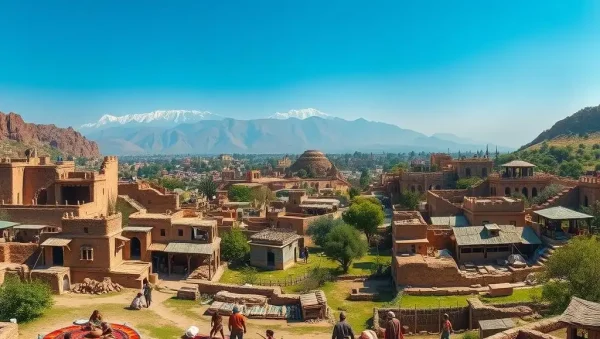
How the Indus Valley Civilization's Innovations Shaped Future Societies
Indus Valley Civilization - Technology and Science
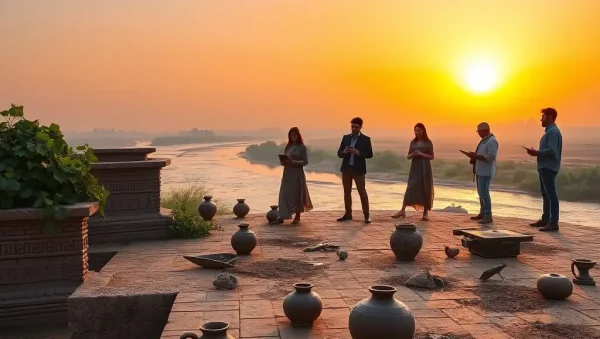
Discovering the Lost Technologies of the Indus Valley: What We Still Don’t Know
Indus Valley Civilization - Technology and Science
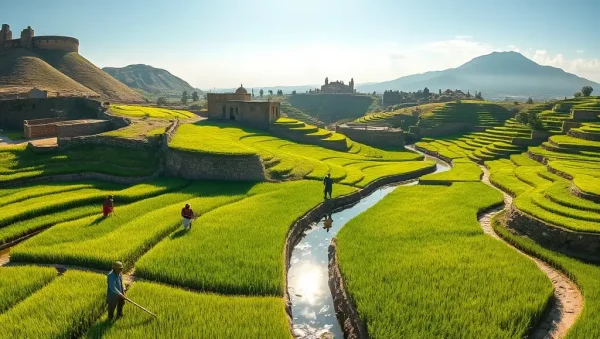
How the Indus Valley Civilization Influenced Agricultural Practices in Asia
Indus Valley Civilization - Technology and Science
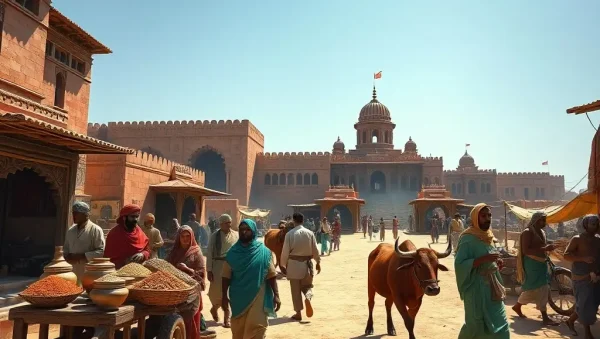
The Role of the Indus Valley Civilization in the Evolution of Trade Technologies
Indus Valley Civilization - Technology and Science
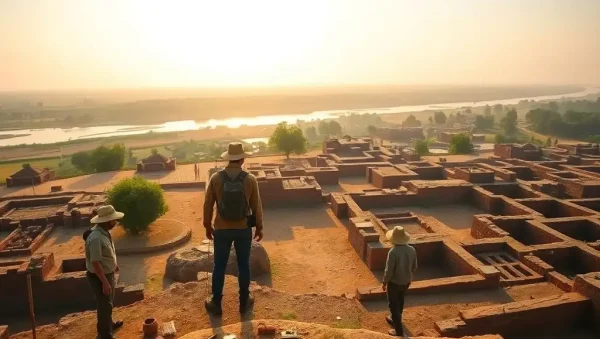
How the Indus Valley Civilization Set the Stage for Future Scientific Discoveries
Indus Valley Civilization - Technology and Science
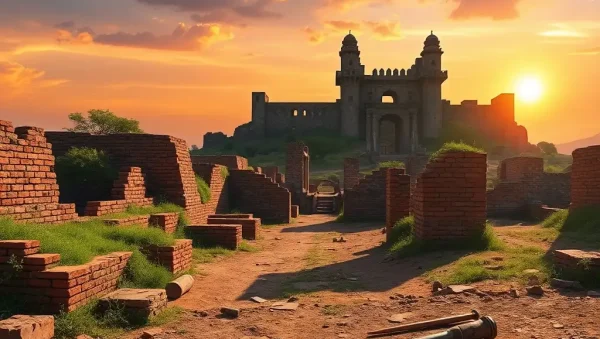
The Mysterious Decline of Indus Valley Technology: What Happened?
Indus Valley Civilization - Technology and Science
How the Indus Valley Civilization Influenced the Development of Astronomy
Indus Valley Civilization - Technology and Science
The Role of Astronomy in Indus Valley Society: Ancient Observations and Tools
Indus Valley Civilization – Technology and Science 🏺
Explore the remarkable achievements of the Indus Valley Civilization, also known as the Harappan Civilization, through its advanced technology, scientific knowledge, engineering, and urban planning. This subcategory of Ancient Indian Civilizations examines how cities such as Harappa, Mohenjo-daro, Dholavira, and Lothal developed sophisticated systems for water management, architecture, trade, craft production, agriculture, and measurement. Discover how archaeological evidence reveals the ingenuity of one of the world’s earliest urban societies and its lasting importance in Ancient India history.
🏙️ Advanced Urban Planning and Architecture
Readers can learn how Indus Valley cities were designed with carefully organized streets, residential areas, public structures, defensive walls, and specialized neighborhoods. Many settlements followed a planned layout, often using straight roads and well-defined building blocks, demonstrating a strong understanding of urban design, construction methods, geometry, and civic organization.
This section explores the use of standardized baked bricks, durable foundations, multi-room houses, courtyards, granaries, and monumental structures. Articles also examine the Great Bath at Mohenjo-daro, the unique city planning of Dholavira, and the possible functions of Harappan public buildings, offering insight into early South Asian architecture and engineering.
💧 Water Management and Sanitation Engineering
The Indus Valley Civilization is famous for its sophisticated approach to water conservation, drainage systems, sanitation, and public health. Archaeological sites reveal covered drains, household bathrooms, wells, soak pits, reservoirs, and carefully constructed channels that helped manage wastewater and support daily life in growing cities.
Readers will discover how Harappan engineers adapted their water technology to different environments. Dholavira’s reservoirs, Mohenjo-daro’s wells, and the extensive drainage networks found across settlements demonstrate practical knowledge of hydrology, construction, maintenance, and resource management in ancient India.
📏 Mathematics, Measurement, and Standardization
This section investigates the mathematical knowledge of the Harappan people through standardized bricks, stone weights, measuring tools, geometric designs, and carefully planned structures. The widespread use of consistent proportions suggests an organized system of measurement, trade regulation, engineering accuracy, and craftsmanship.
Readers can explore the possible units of length and weight used by Indus Valley communities, as well as the importance of standardization in commerce and construction. Although the Indus script remains undeciphered, archaeological evidence provides valuable clues about practical mathematics and the administration of an extensive civilization.
🌾 Agriculture, Irrigation, and Food Technology
Harappan technology was closely connected to agriculture and food production. Articles in this subcategory examine the cultivation of wheat, barley, pulses, sesame, cotton, and other crops, along with evidence of animal domestication, storage facilities, ploughing practices, and agricultural tools.
Readers will also learn how communities managed seasonal floods, rainfall, rivers, and changing landscapes. The study of granaries, storage jars, hearths, ovens, and food remains helps explain ancient farming technology, irrigation practices, nutrition, crop processing, and economic organization in the Indus Valley Civilization.
⚒️ Metallurgy, Craftsmanship, and Manufacturing
Discover the impressive technical skills of Harappan artisans, who worked with copper, bronze, gold, silver, shell, ivory, stone, faience, and terracotta. This section covers metal casting, alloy production, bead-making, pottery, textile manufacture, ornament production, and the specialized tools used by ancient craftspeople.
Objects such as bronze figurines, copper implements, etched carnelian beads, painted ceramics, seals, and shell bangles reveal a high degree of precision and artistic control. Readers can explore how Harappan metallurgy and craft technology supported domestic life, long-distance trade, social identity, and cultural exchange.
🚢 Transportation, Trade, and Maritime Technology
The Indus Valley Civilization maintained trade networks across South Asia and with regions such as Mesopotamia, Oman, and the Persian Gulf. Readers can examine the technologies that supported this commerce, including carts, boats, river transport, caravan routes, dockyards, standardized weights, seals, and durable storage containers.
Lothal is especially important for understanding Harappan maritime activity and possible port technology. This section explores how geography, river systems, coastal settlements, and navigational knowledge helped connect Indus cities with distant communities, making the civilization an important center of ancient trade and transportation.
🔬 Scientific Knowledge and Archaeological Evidence
Explore what archaeology reveals about Harappan science, including observations of natural resources, seasonal cycles, animal behavior, human health, materials, and the built environment. Scientific methods such as satellite imagery, remote sensing, archaeobotany, zooarchaeology, metallurgy analysis, and radiocarbon dating continue to expand our understanding of this ancient civilization.
Readers will also find balanced discussions of what is known, what remains uncertain, and why careful interpretation is essential. Because the Indus script has not yet been conclusively deciphered, researchers rely on material evidence, settlement patterns, laboratory analysis, and comparative archaeology to reconstruct Harappan technology and science.
🧠 Frequently Asked Questions About Indus Valley Technology and Science
What technologies were developed by the Indus Valley Civilization?
The Indus Valley Civilization developed advanced drainage systems, standardized baked bricks, wells, reservoirs, urban layouts, metalworking techniques, pottery production, bead-making, weighing systems, and transport technologies. These innovations supported city life, agriculture, sanitation, trade, and craft specialization.
Why is Harappan drainage technology considered advanced?
Harappan cities often included household bathrooms, private and public wells, covered street drains, soak pits, and carefully planned wastewater channels. This reflects a strong understanding of sanitation engineering, water management, construction standards, and urban public health.
Did the Indus Valley people use mathematics?
Yes. Standardized weights, bricks, building proportions, measuring instruments, and geometric layouts indicate practical mathematical knowledge. Mathematics was likely used in construction, land organization, craft production, trade, and the administration of cities.
What metals did the Harappans use?
Harappan artisans worked with copper, bronze, gold, silver, lead, and other materials. They produced tools, weapons, ornaments, vessels, figurines, and household objects, demonstrating expertise in metallurgy, casting, shaping, polishing, and alloy production.
How do historians study Harappan science if the Indus script is undeciphered?
Researchers study buildings, tools, seals, pottery, bones, plant remains, metals, settlement layouts, and environmental data. Archaeological science, laboratory testing, remote sensing, and comparisons with neighboring civilizations help reconstruct the technological and scientific achievements of the Indus Valley Civilization.