
Maurya Empire - Administration and Governance

Maurya Empire - Administration and Governance
59 articles in this topic
Start here
- Maurya Empire - Administration and GovernanceThe Influence of Kautilya’s Arthashastra on Mauryan Administration
- Maurya Empire - Administration and GovernanceUnderstanding the Judicial System of the Maurya Empire: Justice and Fairness
- Maurya Empire - Administration and GovernanceA Deep Dive into the Maurya Empire’s Civil Service: Who Governed?
Read more about this topic
Explore how the Maurya Empire’s administration and governance created one of ancient India’s most powerful and organized states. Discover Emperor Ashoka’s reforms, the role of provincial governors, efficient taxation, military organization, espionage, and village administration through insights from the Arthashastra and Mauryan inscriptions. 🏛️📜 Learn how centralized authority, public welfare, justice, and infrastructure shaped Mauryan rule and influenced the development of governance in Ancient Indian history.
More in Maurya Empire - Administration and Governance
Maurya Empire - Administration and Governance
How Trade and Economy Influenced the Mauryan Administrative Policies
Maurya Empire - Administration and Governance
The Concept of Sovereignty in the Maurya Empire: A Historical Analysis
Maurya Empire - Administration and Governance
The Role of Religion in the Maurya Empire’s Governance: A Harmonious Blend
Maurya Empire - Administration and Governance
The Maurya Empire’s Approach to International Relations and Governance
Maurya Empire - Administration and Governance
Administrative Reforms of the Maurya Empire: A Study in Change and Adaptation

Maurya Empire - Administration and Governance
The Role of Rituals and Ceremonies in Mauryan Governance
Maurya Empire - Administration and Governance
The Maurya Empire’s Legacy in Modern Governance Systems in India
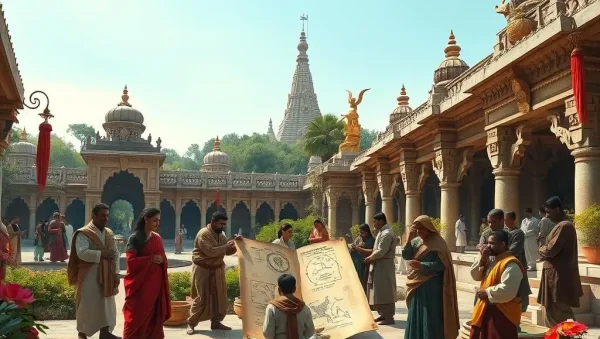
Maurya Empire - Administration and Governance
How the Maurya Empire Promoted Arts and Sciences through Administrative Support
🏛️ Maurya Empire Administration and Governance
Explore the administration and governance of the Maurya Empire, one of the most organized and influential political systems in ancient Indian history. This subcategory examines how Mauryan rulers governed a vast and diverse empire, managed provincial territories, collected taxes, maintained law and order, supervised trade, and supported a powerful military. Discover the administrative achievements of Chandragupta Maurya, Bindusara, and Emperor Ashoka, along with the ideas associated with Arthashastra, Mauryan bureaucracy, espionage, justice, and imperial policy.
👑 Mauryan Kingship and Central Government
Learn how the Mauryan emperor stood at the center of political authority and directed the administration of a large centralized state. Articles in this section explore the responsibilities of the king, the royal court, ministers, advisers, military commanders, and specialized officials who helped manage the empire.
Readers can expect detailed discussions of Mauryan monarchy, royal authority, succession, decision-making, and the relationship between the ruler and the people. This content explains how Mauryan governance combined political strategy, administrative discipline, military strength, and public welfare.
📜 Arthashastra and Mauryan Political Thought
Discover the importance of the Arthashastra, traditionally associated with Kautilya or Chanakya, in understanding ancient Indian statecraft. This section examines ideas about diplomacy, taxation, espionage, economic management, law, punishment, war, and the duties of rulers.
Readers will find clear explanations of how Kautilyan political theory influenced interpretations of Mauryan administration. Topics may include the ideal king, the seven elements of the state, foreign policy, intelligence networks, and the balance between strict control and effective governance.
🗺️ Provinces, Districts, and Local Administration
Explore how the Maurya Empire governed its extensive territories through provinces, districts, towns, and rural settlements. The empire’s administrative structure allowed the central government to supervise distant regions while relying on provincial governors and local officials.
This section explains the role of provincial administration, royal princes, governors, municipal authorities, village leaders, and tax officials. Readers can learn how communication, inspections, written records, and local institutions supported Mauryan control across northern, central, and parts of southern India.
💰 Taxation, Revenue, and Economic Administration
Understand how the Mauryan state financed its army, bureaucracy, public works, and royal institutions through a systematic revenue system. Articles cover land revenue, agricultural taxation, customs duties, tolls, fines, forest resources, mines, and state-controlled economic activities.
Readers will discover why tax collection in the Maurya Empire was essential to imperial stability. The content also explores farming, irrigation, trade regulation, weights and measures, marketplaces, artisans, merchants, and the economic responsibilities of Mauryan officials.
⚖️ Law, Justice, and Social Order
Examine the legal and judicial practices used to maintain order throughout the Mauryan Empire. This section discusses courts, judges, punishments, administrative regulations, property disputes, contracts, crimes, and the enforcement of royal law.
Special attention is given to the changing approach to governance under Ashoka, whose policies emphasized dhamma, moral conduct, compassion, and tolerance. Readers can compare the disciplinary principles described in the Arthashastra with Ashoka’s efforts to promote ethical behavior and social harmony.
🕵️ Espionage, Intelligence, and Internal Security
Learn about the sophisticated intelligence system associated with Mauryan governance. Historical discussions describe the use of spies, informants, inspectors, and secret agents to monitor officials, identify threats, gather information, and protect the state.
This content explains how Mauryan espionage supported political stability and administrative accountability. Readers can explore the role of intelligence in detecting corruption, preventing rebellion, monitoring public opinion, and managing relations between the central government and provincial authorities.
🛡️ Military Organization and Imperial Protection
Explore the structure of the powerful Mauryan army, which helped establish and defend one of the largest empires in ancient India. Topics include infantry, cavalry, chariots, elephants, military administration, fortifications, weapons, recruitment, and strategic planning.
Readers will understand how Mauryan military power supported territorial expansion and protected trade routes and frontier regions. The section also considers the transformation of imperial policy after the Kalinga War and Ashoka’s emphasis on diplomacy, welfare, and moral influence.
🛣️ Infrastructure, Trade, and Public Works
Discover how Mauryan officials supported roads, transport, irrigation, communication, urban planning, and commercial activity. Efficient infrastructure enabled the movement of armies, merchants, administrators, and information across the empire.
Articles explain the importance of roads, rest houses, wells, canals, marketplaces, and urban administration in Mauryan India. Readers can also learn how state regulation encouraged economic growth while strengthening the connection between imperial centers and local communities.
🕊️ Ashoka’s Dhamma and Welfare Administration
Study Emperor Ashoka’s distinctive approach to governance after the Kalinga War. His inscriptions provide valuable evidence about moral administration, religious tolerance, nonviolence, humane treatment, and concern for the welfare of people and animals.
This section explores the work of Dhamma Mahamatras, public welfare initiatives, medical facilities, roadside amenities, and efforts to promote respect among different religious and social groups. Readers will see how Ashoka combined imperial authority with ethical ideals and public responsibility.
🪨 Edicts, Inscriptions, and Historical Evidence
Examine the rock edicts and pillar edicts that reveal important information about Mauryan administration and governance. These inscriptions, issued across the empire, provide direct evidence of Ashoka’s policies, officials, communication methods, and vision of kingship.
Readers can learn how historians use Ashokan inscriptions, Buddhist texts, Greek accounts, archaeological discoveries, and the Arthashastra to reconstruct Mauryan political history. The section also considers the strengths and limitations of each source.
❓ Frequently Asked Questions About Maurya Empire Administration
What was the main feature of Mauryan administration?
The main feature was a centralized system of government led by the emperor and supported by ministers, provincial governors, military officials, tax collectors, judges, and inspectors. This structure helped manage the empire’s large territory and diverse population.
How did the Maurya Empire collect taxes?
The Mauryan state collected revenue mainly through land taxes on agricultural production. Additional income came from customs duties, trade taxes, fines, mining, forests, tolls, and state-controlled industries. Officials were responsible for assessing and collecting revenue.
What role did the Arthashastra play in Mauryan governance?
The Arthashastra is an important text for understanding ancient Indian ideas about statecraft, administration, economics, diplomacy, espionage, justice, and warfare. Although scholars debate its exact relationship with Mauryan practice, it offers valuable insight into political thought of the period.
What changed in administration under Emperor Ashoka?
After the Kalinga War, Ashoka placed greater emphasis on dhamma, compassion, religious tolerance, and public welfare. He appointed Dhamma Mahamatras, issued ethical edicts, supported welfare measures, and encouraged officials to communicate more closely with the population.
What sources tell us about Mauryan administration?
Important sources include Ashoka’s rock and pillar edicts, the Arthashastra, Buddhist and Jain literature, Greek accounts such as those connected with Megasthenes, archaeological evidence, coins, inscriptions, and remains of ancient cities and infrastructure.