
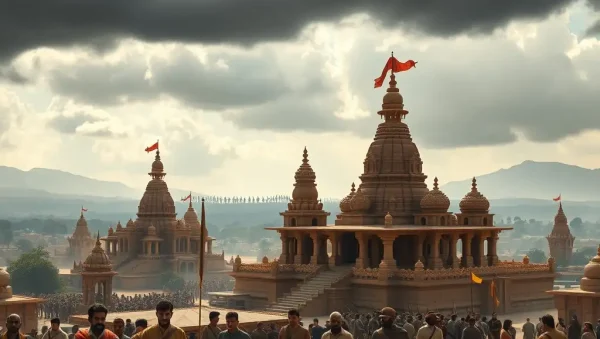
Maurya Empire - Political Structure
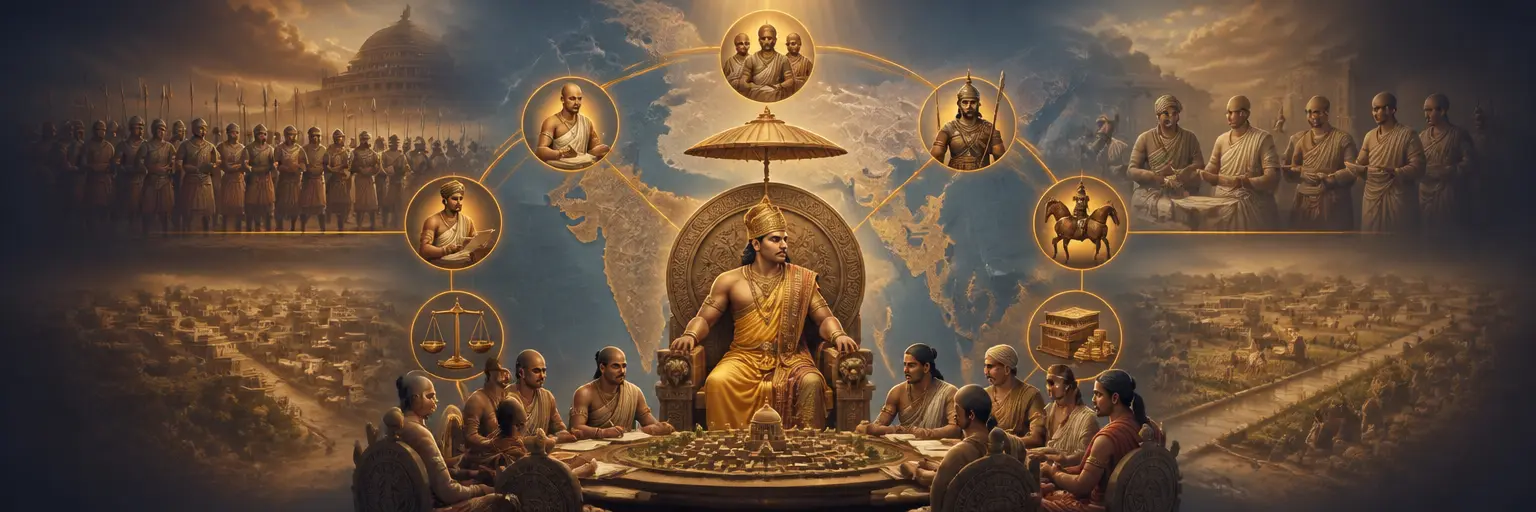
Maurya Empire - Political Structure
62 articles in this topic
Start here
- Maurya Empire - Political StructureThe Decline of the Maurya Empire: Political Failures and Lessons Learned
- Maurya Empire - Political StructureThe Relationship Between Economy and Politics in the Maurya Empire
- Maurya Empire - Political StructureThe Role of Public Opinion in Mauryan Politics: The Voice of the People
Read more about this topic
Explore the Maurya Empire’s political structure 🏛️—a sophisticated system of centralized administration, provincial governance, taxation, diplomacy, and military organization that helped unite much of ancient India. Discover the roles of emperors, ministers, governors, spies, and local officials, and learn how Mauryan rulers such as Chandragupta Maurya and Ashoka built one of the ancient world’s most influential empires.
More in Maurya Empire - Political Structure
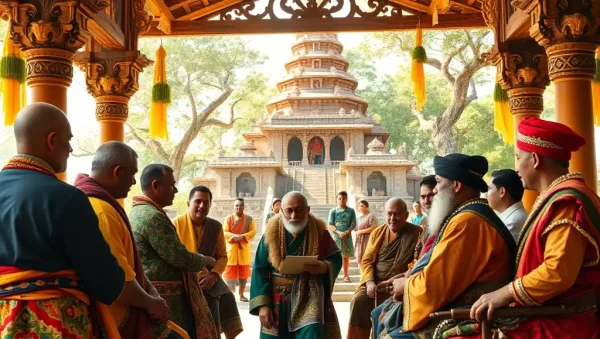
Maurya Empire - Political Structure
The Integration of Indigenous Practices into the Maurya Political System
Maurya Empire - Political Structure
From Local to Imperial: Understanding the Administrative Hierarchy of the Maurya Empire
Maurya Empire - Political Structure
How the Maurya Empire Established Political Legitimacy Through Religion
Maurya Empire - Political Structure
The Role of Military Alliances in the Political Strategy of the Maurya Empire

Maurya Empire - Political Structure
The Maurya Empire’s Administrative Innovations: Setting the Stage for Future Empires

Maurya Empire - Political Structure
The Maurya Empire’s Relationship with Local Rulers: A Study of Autonomy and Control
Maurya Empire - Political Structure
The Legacy of the Maurya Empire's Political Structure on South Asian History
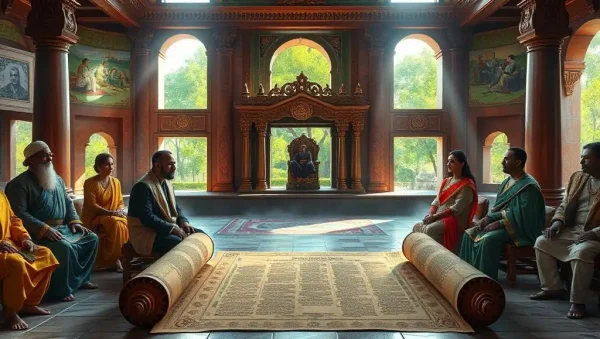
Maurya Empire - Political Structure
The Maurya Empire's Approach to Political Reforms: Innovation or Tradition?
🏛️ Maurya Empire Political Structure: Government, Administration and Imperial Power
Explore the political structure of the Maurya Empire, one of the most centralized and influential governments in ancient Indian history. This subcategory examines how Mauryan rulers governed a vast territory, organized provincial administration, controlled taxation, maintained law and order, and used military and intelligence systems to strengthen imperial authority. Discover how Chandragupta Maurya, Bindusara, and Emperor Ashoka developed a powerful state supported by ministers, officials, governors, spies, soldiers, and local administrators. Through clear historical analysis, readers can understand the Mauryan government system, imperial bureaucracy, political institutions, and administrative practices that shaped the history of Ancient India.
👑 Mauryan Kingship and Central Authority
The Maurya Empire was built around a strong and highly organized monarchy. The king served as the supreme authority over the army, legal system, economy, foreign policy, and administration. Topics in this section explain how Mauryan kingship combined royal power with practical governance, allowing the emperor to manage an extensive empire across northern, central, and parts of southern India.
Readers will learn how Chandragupta Maurya established imperial rule after defeating the Nanda dynasty and how later rulers expanded or transformed the state. Articles explore the responsibilities of the Mauryan monarch, the relationship between royal authority and public welfare, and Ashoka’s use of Dhamma as a political and ethical principle after the Kalinga War.
📜 The Arthashastra and Mauryan Political Thought
The Arthashastra, traditionally associated with Kautilya or Chanakya, provides valuable insight into ancient Indian political theory, statecraft, diplomacy, taxation, espionage, and military organization. This section examines important concepts such as the role of the ruler, the duties of ministers, the saptanga theory of the state, and strategies for maintaining political stability.
Readers can expect discussions of Kautilyan governance, administrative discipline, economic regulation, alliances, espionage networks, and the use of power in the Mauryan state. Although historians debate the exact relationship between the text and the historical Maurya Empire, the Arthashastra remains essential for understanding ancient Indian ideas about government and imperial administration.
🏢 Mauryan Administration and Bureaucracy
The Mauryan Empire depended on a complex administrative system designed to govern a large and diverse population. This section explores the hierarchy of officials, royal advisers, revenue officers, judges, military commanders, city administrators, and other functionaries who helped implement imperial policies. The Mauryan bureaucracy connected the central government with provincial and local institutions.
Articles explain how officials collected taxes, supervised trade, maintained infrastructure, monitored industries, and enforced royal orders. Readers will also discover how inscriptions, archaeological evidence, and literary sources help historians reconstruct the structure of the Mauryan administrative system and assess the level of centralization within the empire.
🗺️ Provinces, Districts and Local Government
To govern distant regions effectively, the Maurya Empire divided its territory into provinces and smaller administrative units. Important provincial centers, including Taxila, Ujjain, Tosali, and Suvarnagiri, helped the central government manage regional affairs. This section focuses on provincial administration in the Mauryan Empire and the role of royal representatives.
Readers will learn how princes, governors, district officials, village leaders, and local communities participated in imperial governance. The content also examines the balance between central authority and local customs, showing how the Mauryan state adapted its administration to different cultures, landscapes, and populations throughout ancient India.
⚖️ Law, Justice and Public Administration
Justice was an important responsibility of the Mauryan ruler and his officials. This section examines legal administration, punishment, judicial authority, and the role of royal courts in maintaining order. It also considers how Ashoka’s edicts encouraged compassion, restraint, fairness, and humane treatment while preserving the authority of the state.
Readers can explore the relationship between traditional legal practices, royal commands, social duties, and administrative regulations. By studying Mauryan justice and governance, visitors gain a deeper understanding of how political authority was exercised in everyday life and how the empire attempted to promote stability across its territories.
💰 Taxation, Revenue and Economic Control
A strong revenue system supported the Mauryan army, bureaucracy, public works, and royal institutions. This section explains the main sources of state income, including agricultural taxes, customs duties, trade revenues, fines, mining, forests, and regulated industries. The Mauryan taxation system was an essential foundation of imperial power.
Readers will discover how land revenue was assessed, how markets and trade routes were supervised, and how officials monitored economic activity. Articles also discuss irrigation, farming, roads, resource management, and state involvement in production, offering a detailed view of the relationship between ancient Indian economics and political administration.
🛡️ Military Organization and Imperial Expansion
The Maurya Empire maintained one of the most powerful military systems in ancient South Asia. This section explores the organization of infantry, cavalry, chariots, war elephants, commanders, forts, and military supply networks. The Mauryan army enabled Chandragupta Maurya to build an empire and defend its borders against internal and external threats.
Readers will learn how military strength supported territorial expansion, diplomacy, and centralized rule. Topics also examine the Seleucid-Mauryan relationship, frontier defense, strategic geography, and Ashoka’s change in policy after the Kalinga conquest, when moral governance and nonviolence became more prominent in imperial ideology.
🕵️ Intelligence Networks, Diplomacy and Foreign Policy
Information gathering was a significant part of Mauryan political strategy. This section examines the use of spies, informants, messengers, and intelligence officials to monitor officials, identify conspiracies, understand public opinion, and protect the ruler. Such networks helped the central government maintain control over a large and complex empire.
Readers will also explore Mauryan diplomacy, alliances, treaties, ambassadors, and relations with neighboring kingdoms. The study of foreign policy reveals how the Maurya Empire combined military power, negotiation, strategic marriages, and political intelligence to expand its influence in ancient India and beyond.
🪨 Ashoka’s Edicts and Dhamma Governance
Ashoka’s rock edicts and pillar edicts are among the most important primary sources for understanding Mauryan political structure. This section explains how these inscriptions communicated royal policies, ethical principles, administrative instructions, and messages about social harmony throughout the empire. The edicts provide direct evidence of Ashoka’s approach to governance.
Readers can learn about the officers known as Dhamma Mahamatras, the promotion of religious tolerance, welfare measures, respect for elders, humane treatment, and concern for animals. Ashoka’s government combined imperial authority with a public moral vision, making his reign a unique chapter in the history of ancient Indian civilization.
❓ Frequently Asked Questions About Maurya Empire Political Structure
What was the political structure of the Maurya Empire?
The Maurya Empire had a centralized monarchical political structure led by the emperor. The king controlled administration, taxation, justice, diplomacy, and the military through ministers, provincial governors, district officials, and local authorities.
Who established the Maurya Empire?
Chandragupta Maurya established the Maurya Empire around the late fourth century BCE after overthrowing the Nanda dynasty. With the guidance of Kautilya, he created a powerful centralized state that expanded across much of the Indian subcontinent.
What role did Kautilya play in Mauryan government?
Kautilya, also known as Chanakya or Vishnugupta, is traditionally described as Chandragupta Maurya’s adviser. He is associated with the Arthashastra, a major work on statecraft, administration, economics, diplomacy, espionage, law, and military strategy.
How was the Maurya Empire divided administratively?
The empire was organized into provinces, districts, towns, and villages. Important provinces were governed by royal princes or appointed officials, while local administrators managed taxation, justice, public works, and day-to-day governance under imperial supervision.
How did Ashoka change Mauryan political administration?
Ashoka maintained the centralized Mauryan state but placed greater emphasis on Dhamma, ethical conduct, religious tolerance, welfare, and nonviolence. His inscriptions show how moral principles were incorporated into imperial communication and public administration.